



- Building technology
- Translated with AI
Clean air for pure production conditions
Three-stage ventilation system from Camfil impresses with ISO 5 cleanroom class, long service life, and positive side effects
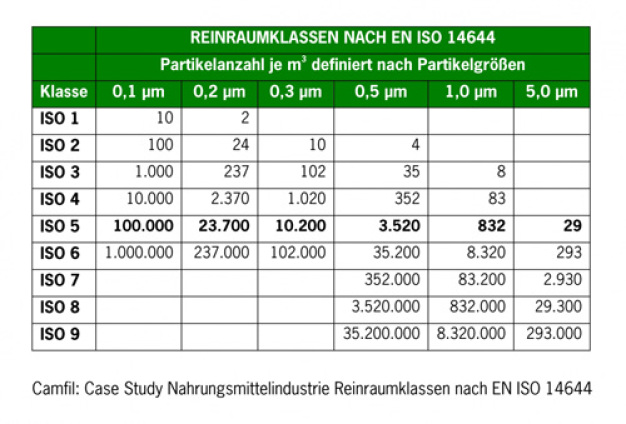
Figure 4 "Camfil CASE STUDY Food Industry Cleanroom Classes"
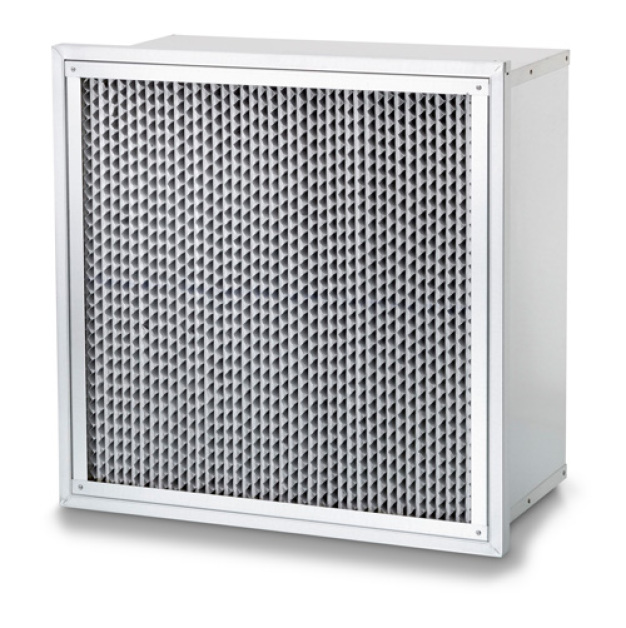
Camfil Airopac 3CPM-HF
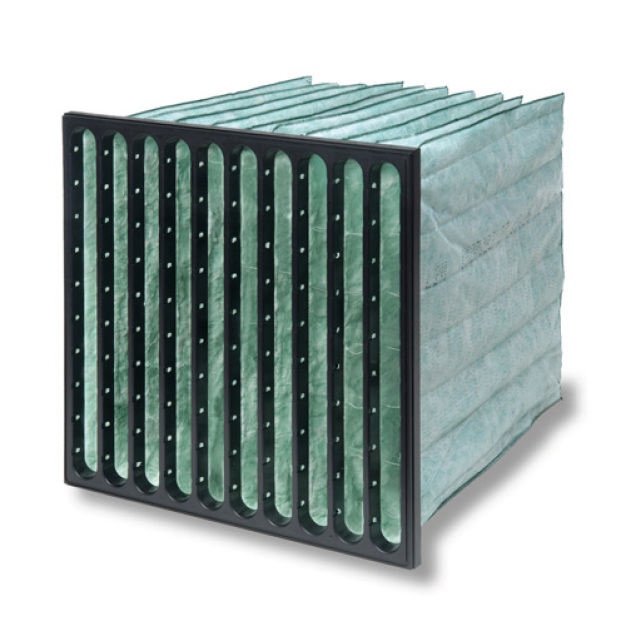
Camfil Hi-Flo XLT7
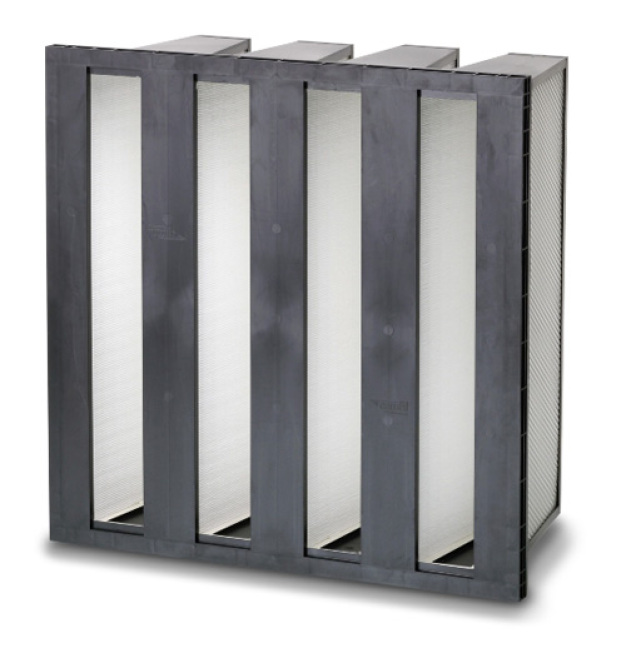
Camil Opakfil Absolute
Evaporation, Conveyance, and Cooling – To optimize the ventilation system and thus the product quality at a globally operating food manufacturer, these three production processes were the focus of the Camfil experts' planning. During the extraction and further processing of plant extracts, approximately 80,000 m³ of fresh air per hour should be directed through the halls according to cleanroom class ISO 5. Instead of a single filter stage as before, the specially tailored ventilation concept by Camfil, designed for high humidity and strongly fluctuating room temperatures, now includes three stages. Each was equipped with energy-efficient filter media that boast above-average long service lives. Although the additional two filter stages entail higher energy consumption, this is still lower than the costs previously incurred after each process for extensive cleaning and disinfection measures of the air handling systems.
What is usually viewed positively in private contexts and associated with vitality and health can become a serious trap in the food and confectionery industry: the supply of fresh air. Because the "enemy" of every beverage, meat, bakery, or confectionery manufacturer is "biological contamination." What is acceptable in pharmaceutical or medical technology production regarding hygiene should only be cheaper for the food industry. Because here, too, it is increasingly necessary to reduce germ concentrations to a tolerable minimum. Only in this way can the high consumer expectations regarding quality and shelf life of food and delicacies be met.
While in other industries the focus is primarily on the overall particle load of the production environment and the product itself, microorganisms – i.e., proliferating particles – are particularly in focus during food production and storage. They can enter the production stream millions of times during a manufacturing process and cause infection there. To ensure that the production environment does not become a source of microorganisms, besides a careful selection of the necessary equipment, systems, and components, the hygienic condition of the air plays an important role. Bacteria, mold spores, yeasts, or viruses present in the air are potential causes of early spoilage of the goods.
If no efficient air filtration systems are installed, these microorganisms generally have access via the fresh air supply to each production hall. Because the average outdoor air contains 200 to 1,500 bacteria per m³. When these come into contact with possibly clogged air conditioning systems, heat, humidity, or accumulated organic substances, their very rapid and millions-fold reproduction is pre-programmed. Possible consequences could include production outages, product recalls, additional costs for defect rectification and inspections, revenue losses, removal from shelves, and of course, damage to reputation.
Task
To absolutely prevent such scenarios and further secure the products and production processes, an internationally operating food manufacturer has been convinced by Camfil's air filter solutions: The core of its production chain is the extraction and further processing of a plant extract using hot water and its subsequent, step-by-step evaporation over various temperature cascades. "In designing a suitable air filtration solution, evaporation, conveyance, and subsequent cooling processes had to be considered as essential production steps," explains Frank Gänshirt, Segment Manager Food at Camfil. Here, approximately 16,600 tons of raw materials are processed daily, ultimately resulting in 2,700 tons of finished products. Since these are seasonal production cycles, the fresh air required for manufacturing—80,000 m³ per hour—also plays a significant role in ensuring as uninterrupted a process as possible.
For this purpose, the company aimed to achieve cleanroom class ISO 5, which according to EN ISO 14644 corresponds to the following particle counts per size and m³ of air: see Figure 4 "Camfil CASE STUDY Food Industry Cleanroom Classes".
The combination of high humidity with insufficient, single-stage air treatment via G4 filter cassette had previously led to severe contamination in the plant's air handling systems. To meet hygienic product requirements, a high cleaning and disinfection effort had to be undertaken after each production process.
Three-Stage Air Filtration Solution from Camfil
It was quickly clear to all involved that an effective air filtration solution would initially entail higher energy costs. However, Camfil's concept was a three-stage system with efficient filters: The first filter stage consisted of around 40 F7 class bag filters according to EN 779:2012 – also classified in energy efficiency class A (see below). The second stage was equipped with about 40 high-temperature compact filters, also of class F7. For the third filter stage, Camfil selected 40 H13 class particulate filters, which ensure efficient particle removal even with large air volumes. The high cleaning and disinfection effort or even plant shutdowns due to high humidity are now no longer an issue. The quality requirement according to ISO 5 can be maintained effortlessly, and the overall costs for operation and maintenance of the ventilation system have even decreased. Additionally, the modification of the ventilation system has contributed to an increase in product quality. Microbiological analyses confirm that the new ventilation system now eliminates almost all microorganisms from the air, allowing contamination-free production to proceed.
1. Filter Stage: Hi-Flo XLT7 Bag Filter, Filter Class F7 (see Figure 1):
- Low initial pressure difference
- Low energy consumption
- Newly developed medium for filter classes M6 – F9
- Proven conical bag design
- Long service life
2. Filter Stage: Airopac 3CPM-HF Compact Filter, Filter Class F7 (see Figure 2):
- High efficiency
- Long service life
- Easy and quick installation
- High-temperature resistant up to 110°C
3. Filter Stage: Opakfil Absolute Compact / HEPA Filter, Filter Class H13 (see Figure 3):
- Collection efficiency 99.95% in MPPS (most penetrating particle size)
- Designed for temperatures up to 70°C and humidity up to 100%
- Long service life and fully incinerable
- Suitable for high air volumes (up to 3,000 m³ per hour)
Efficient Filter Technology Instead of "Bacteria Scatterers"
Rising market demands and continuously increasing legal requirements are giving hygiene in the food industry an ever greater importance. Accordingly, air quality in the production process has never been more critical than today. Only with efficient filter and recirculation systems can microorganisms in the air be reduced.
Camfil has been providing filter technology for room climate conditions in all possible application areas for 50 years. "With high standards for research, development, and quality control, we design and distribute pioneering product solutions for air filter systems and cleanroom technology – especially for the food industry," says Gänshirt.
The following industry-specific product standards are available at Camfil:
- Combatting microbiological contamination
- Food certification for process-related components
- Compliance with EU Directive EC 1935/2004 for all products relevant to the food industry
- Products meet HACCP risk level (Hazard Analysis and Critical Control Points)
- Traceability, identification, and labeling of filters
- Guaranteed collection efficiency according to EN 779:2012
- Modular and flexible filter solutions
- Easy and safe handling
- Quick and efficient maintenance
- Customized access, e.g., for in-situ testing
- Corrosion resistance (stainless steel, plastics, polyester resin)
Decision-Making Aid for Energy Efficiency Classification
Currently, an average of ten to twenty percent of the total building energy consumption is used for heating, ventilation, and air conditioning. To reduce associated CO₂ emissions, the European Union, through relevant directives, calls for more efficient energy use, especially in public and commercial properties. Besides sustainability and environmental arguments, continuously rising electricity prices require energy-saving measures that also reduce operating costs. Many facility managers aim to select air filters within the required filter class that operate as effectively as possible while consuming minimal electricity. Until now, due to the lack of a uniform product declaration, the comparison of the filter market was only possible through the comparison of average efficiencies, which was very laborious and only limitedly effective.
To make air filter comparison somewhat more transparent and thus easier, Eurovent-certified air filter manufacturers last year adopted a standardized classification system across Europe and committed to communicating all relevant purchase information. Their product labels now include the filter class with the newly defined minimum efficiency via EN 779:2012, as well as additional data on initial efficiency, annual energy consumption, and the newly defined energy efficiency classes A to G for air filters. Furthermore, Camfil will now incorporate the energy efficiency classification and, if applicable, information on the minimum efficiency into the product name of its air filters. For example, the Hi-Flo XLT7 will receive the suffix A50+ for energy class A and a minimum efficiency of over 50%.
The more dust particles an air filter captures, the greater the energy expenditure to generate a constant airflow through the fan. The calculation of the new energy efficiency classes is based on both the measurement of filter efficiency and the pressure loss resulting from increasing dust accumulation. During a simulated test year in the laboratory, a representative value for energy consumption is determined based on the average pressure loss during this period. This energy value is used to assign an energy class between A (lowest energy consumption) and G (highest energy consumption).

Camfil GmbH
Feldstr. 26 - 32
23858 Reinfeld
Germany
Phone: +49 4533 2020
Fax: +49 4533 202202
email: info.de@camfil.com
Internet: http://www.camfil.com



