



- Translated with AI
Avoid contamination risk through highly specialized coating solutions
Sika Germany: Construction of high-security laboratories at the Friedrich-Loeffler-Institut on the island of Riems
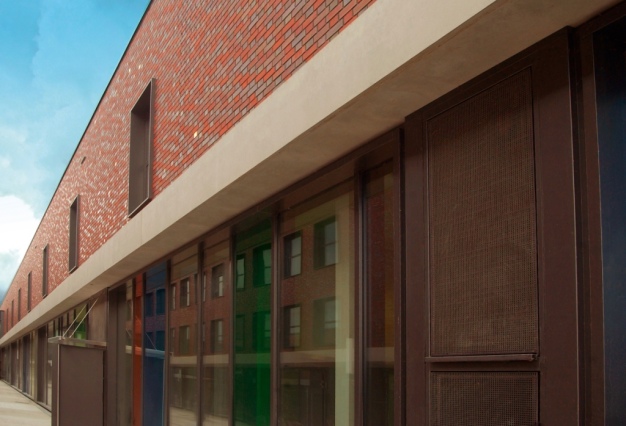
The Friedrich Loeffler Institute is located on the 20-hectare Baltic Sea island of Riems north of Greifswald.
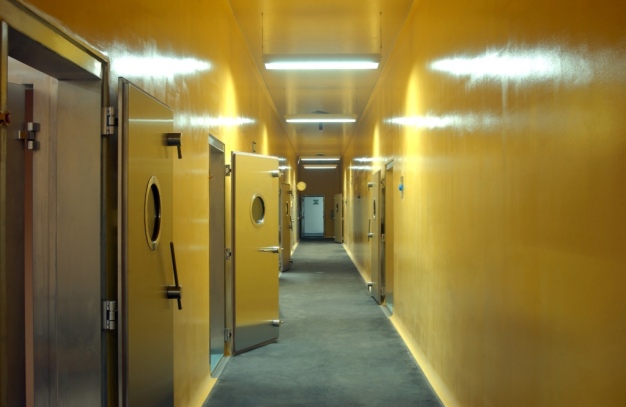
The research institution focuses on the prevention and control of animal diseases, the development of welfare-oriented husbandry systems, and the preservation of the genetic diversity of livestock.
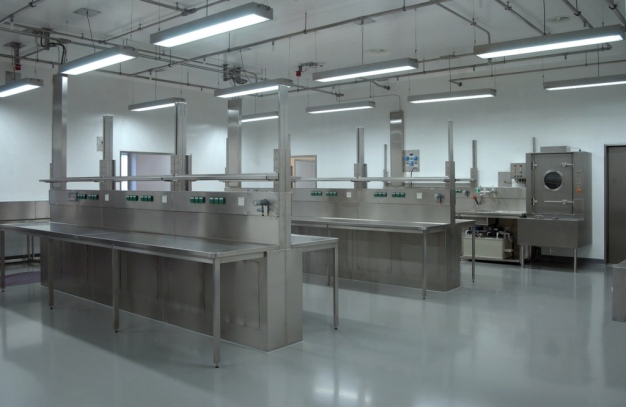
As part of the expansion of the research facility, two new buildings were constructed, comprising a total of 89 laboratories and 163 stable units – including a high-security laboratory of security level 4.
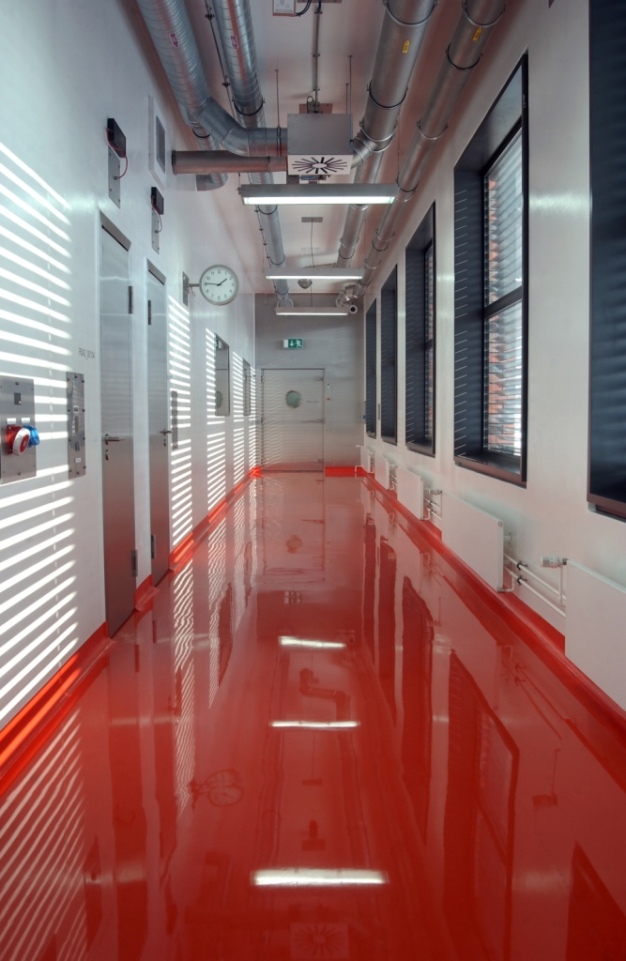
A total of 89,000 square meters of wall surface and 21,000 square meters of floor surface were coated at the Federal Research Institute for Animal Health.
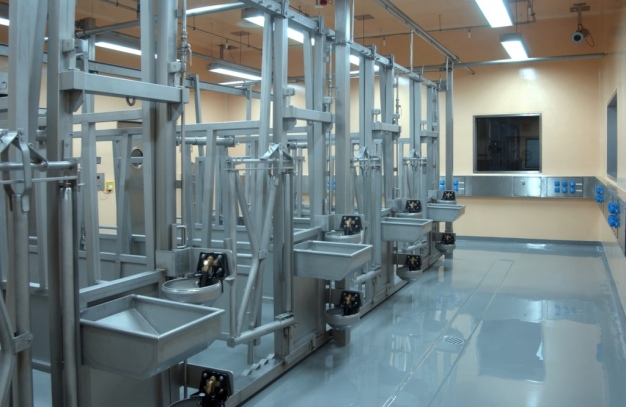
The laboratories and facilities with security levels 3 and 4 have been established in a "containment." In doing so, the building shell must be airtight and gas-tight.
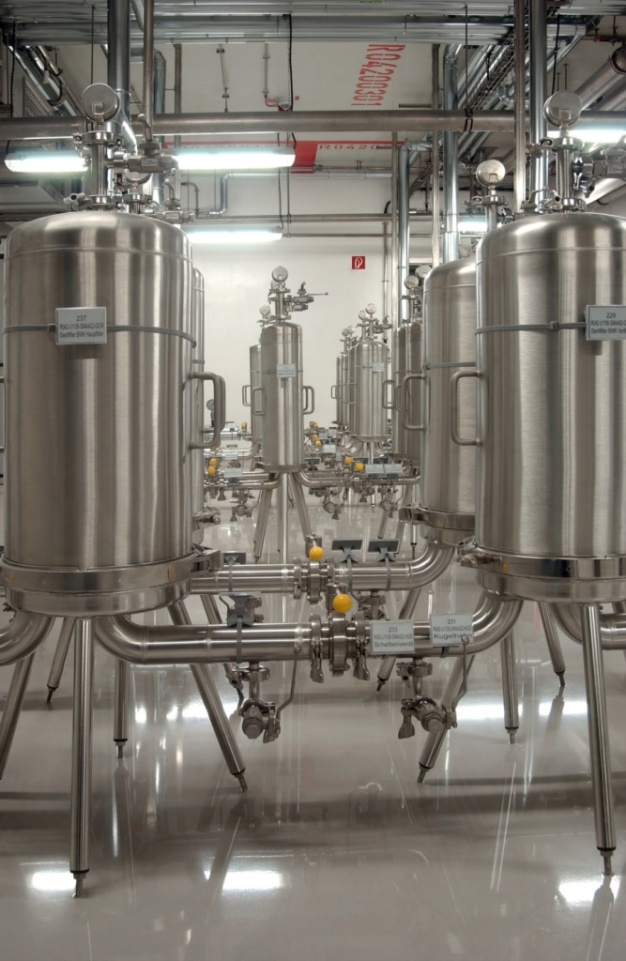
The construction of the high-security laboratory was additionally carried out in a box-in-box system: These sealed rooms have a separate air, water, and power supply.
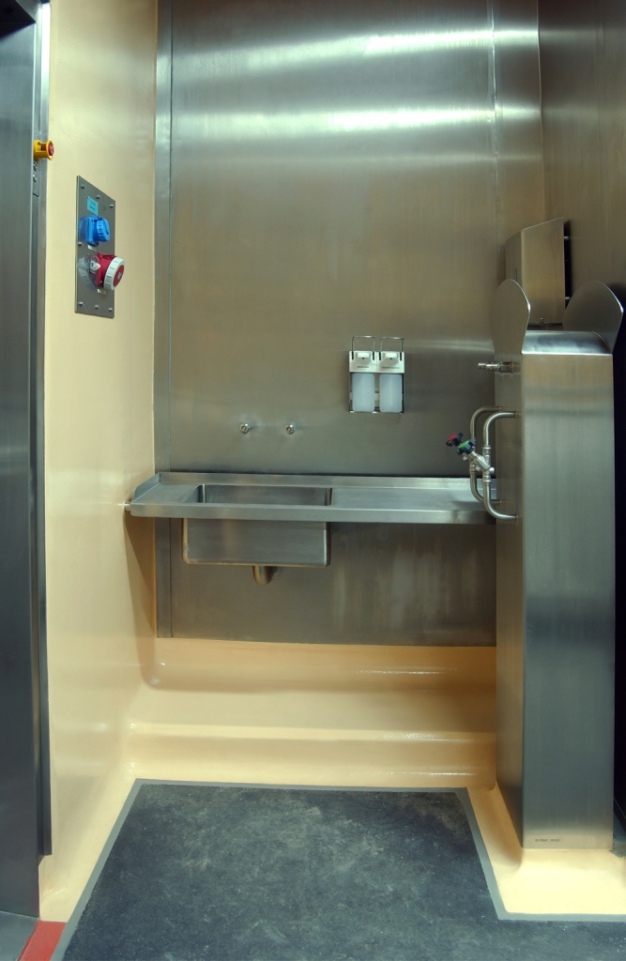
In all safety areas, the highest requirements applied to the floor coating: it must be waterproof and gas-tight, as well as resistant to acids, alkalis, and solvents.
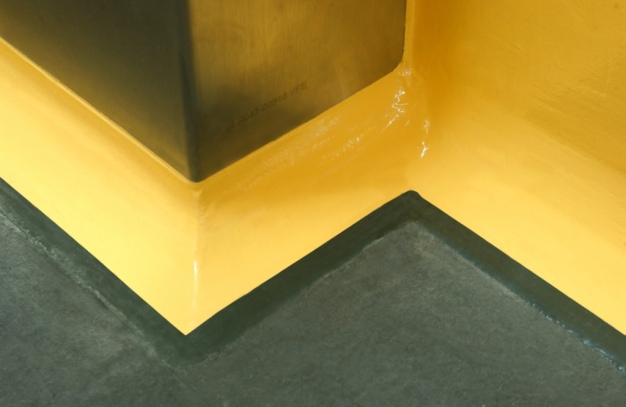
Approximately 60,000 meters of curved corners – formed with Sikafloor 156 – ensure seamless wall and floor transitions and guarantee easy disinfection and cleaning of the laboratories and stables.
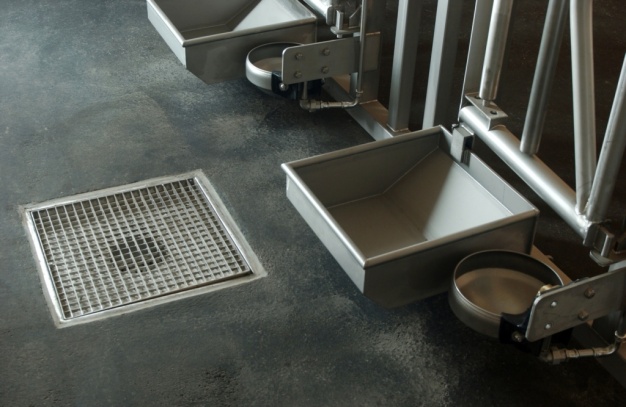
In the large animal stalls, the sealing of the 6,000 square meter floor area was carried out with the crack-bridging sealing layer Sikalastic-821.
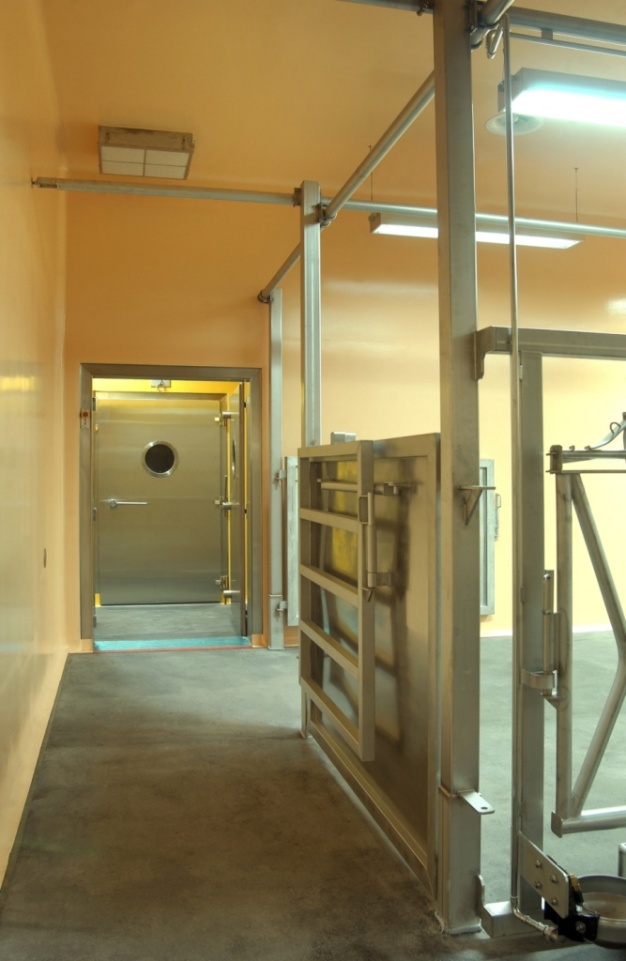
Sikagard-Wallcoat N seals wall surfaces in cleanrooms and at the same time gives them a glossy color.
In 1910, the physician, hygienist, and bacteriologist Friedrich Loeffler founded the world's first virological research facility on the Baltic Sea island of Riems near Greifswald. Today, the nationally and internationally recognized institution functions as a federal research institute for animal health and an independent federal authority under the Federal Ministry of Food and Agriculture. The focus of their work is on the health and well-being of farm animals and the protection of humans from zoonoses – infections transmissible from animals to humans. Research goals include the prevention and control of animal diseases, the development of animal welfare-compliant housing systems, and the preservation of the genetic diversity of livestock. Additionally, the institute is committed to the efficient use of feedstuffs for the production of high-quality animal-derived food products.
As part of the expansion of the Friedrich Loeffler Institute, two new building complexes were constructed, totaling 62,500 square meters. These house 89 laboratories and 163 stalls for large and small animals, built to various biosafety levels – including a laboratory with the highest safety level 4 for large animals. Until now, only two such high-security laboratories existed worldwide, one in Canada and one in Australia. To prevent the escape of infectious agents, the new buildings had to meet the highest safety standards. The laboratory and stall areas of biosafety levels 3 and 4 were constructed in a so-called containment. The building shells were completely sealed airtight and gas-tight. The level 4 laboratory had to be additionally constructed within a box-in-box system. For this purpose, highly secure, enclosed rooms were installed within the new research complex, each with separate air, water, and power supplies.
Highest demands on material solutions
To meet the high standards of technology and safety in the coating of 21,000 square meters of floor space and 89,000 square meters of wall area, special care was taken in selecting the construction materials and their technical implementation. The responsible parties chose system solutions from Sika Deutschland GmbH for the realization of the laboratories and stalls. The Stuttgart-based chemical manufacturer offers complete coating and surface protection systems for floors, walls, and ceilings that meet even the extraordinary and very strict requirements of safety laboratories. Additionally, high-performance sealing solutions are part of Sika’s product portfolio.
Floor coatings for highly sensitive applications
The requirements for the floors were particularly high: a floor covering was needed for all safety areas that is waterproof, gas-tight, and easy to clean. The surfaces must also be resistant to acids, alkalis, and solvents, and compatible with disinfectants. All these properties are combined in a single system solution, applied according to the different safety levels in the various building sections.
In the area with increased safety requirements, the approximately 6,000 square meters of floor area were first primed with Sikafloor-156 epoxy resin binder. Subsequently, a layer of Sikafloor-381 was applied. This highly chemical-resistant topcoat was specially developed by Sika Deutschland for highly sensitive applications in cleanrooms. It ensures low VOC emissions and minimal particle release and is qualified according to the criteria of the industry association “Cleanroom Suitable Materials” (CSM). In another area with a 15,000-square-meter floor, sealing was performed with Sikafloor-2530 W. This epoxy resin dispersion also exhibits high chemical resistance and is additionally decontaminable. Therefore, Sikafloor-2530 W is used not only in laboratories but also in production and storage halls.
Wall and ceiling coatings for cleanrooms
Several coating systems from Sika Deutschland with different compositions were used for the walls of the research building. To seal the pores in the concrete in the cleanrooms, the PCC mortar Sika Icoment-520 was applied, and the walls were then leveled with the well-adhering epoxy dispersion filler Sikadur-331 W. The wall was finally sealed with a colored coating of Sikagard-Wallcoat N, which is compatible with the dispersion. Sikadur-331 W and the CSM-tested Sikagard-Wallcoat N are specifically suitable for use in cleanrooms. Together, they form a wall coating that guarantees particularly high resistance to chemicals and effective contamination protection according to DIN 24415. This layered system was applied to a total of 38,000 square meters of wall area in the Friedrich Loeffler Institute.
In another section of the building, a 36,000 square meter wall was coated. The system consisting of Sikafloor-156 for priming and SikaCor 277 for protective coating proved ideal. The durable SikaCor 277, based on epoxy resin, serves as a protective overlay for steel and concrete against chemically aggressive media, such as those needed in clarifier plants for floors and walls. The walls of the research facility also received an intermediate layer with Sikadur-331 W and a topcoat with the highly resistant SikaCor EG 5. The latter is suitable even for heavily stressed steel structures and ensures a permanently decorative appearance thanks to its excellent chalking and color stability. In another building section with a 15,000-square-meter wall area, the responsible parties opted for a layered system with Sikafloor-156 for priming and Sikagard Wallcoat N for colored sealing.
To ensure easy disinfection and cleaning of the laboratories and stalls, all wall-floor, wall-wall, and wall-ceiling joints were formed as coves with Sikafloor-156 epoxy mortar – totaling 60 kilometers of coves. Additionally, about 15,000 meters of ceiling and floor markings were applied for safety zone identification, using SikaCor EG 5.
High-performance sealing solutions
In addition to floor coatings, certain building sections required secure building sealing. Here too, Sika Deutschland offered suitable product solutions. The 6,000-square-meter floor sealing of the large animal stalls was carried out with Sikalastic-821, an elastic, crack-bridging sealing layer beneath cast asphalt. The Tricoflex sealing system was also used, especially suitable for sealing structures in contact with wastewater and slurry – including applications in animal stalls. Its high adaptability allows reliable sealing of complex joint profiles such as profile concrete floors or components with small cross-sections like drainage channels. For sealing construction joints, Sika Fuco injection hoses and crack injection products were also used.
Sika Deutschland solutions enable rapid implementation
Thanks to the fast processing of the products, most of the coating work was completed within two years. The project’s swift execution was primarily due to the numerous specialists involved: at times, up to 70 craftsmen from the Leipziger Säurebau GmbH, a building protection company, worked simultaneously in two shifts on wall, ceiling, and floor coatings. The delivery of the substantial quantities of products also represented a logistical challenge, which was flawlessly managed thanks to excellent organization and without material shortages. The deliveries were always “just in time” – sometimes even with a two-day lead time.

Sika Deutschland CH AG & Co KG
Kornwestheimer Straße 103-107
70439 Stuttgart
Germany
Phone: +49 172 4565531
email: kelling.fadime@de.sika.com
Internet: http://www.sika.de