- Buildings & Rooms
- Translated with AI
ABOPR Pressedienst B.V., Büro München
Assembly of laser modules in the cleanroom
Flexible, freestanding wall and ceiling modules make the room system adaptable and expandable
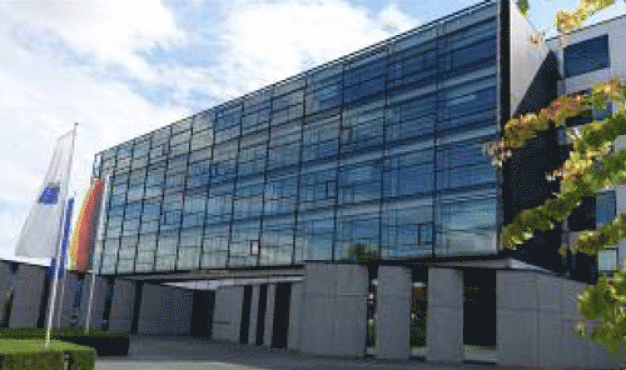
Already in 2012, the laser technology experts at TRUMPF Werkzeugmaschinen GmbH + Co. KG installed a cleanroom facility at the Ditzingen site, where ISO 5 class flowboxes are used to assemble processing optics and laser beam guidance assemblies. (Source: Nerling Systemräume GmbH)
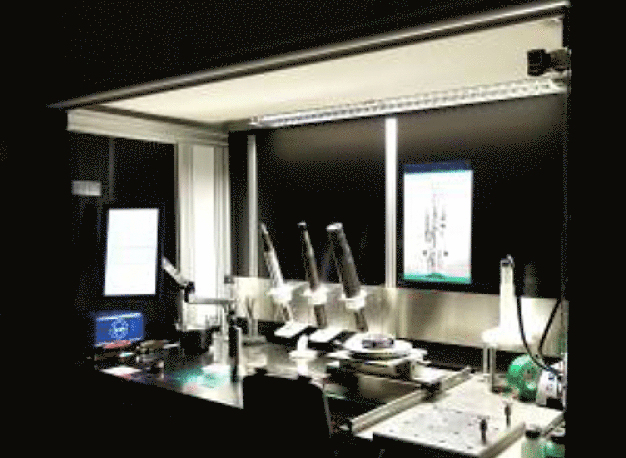
Already in 2012, the laser technology experts at TRUMPF Werkzeugmaschinen GmbH + Co. KG installed a cleanroom facility at the Ditzingen location, where ISO 5 class flowboxes are used to assemble processing optics and laser beam guidance assemblies. (Source: Nerling Systemräume GmbH)
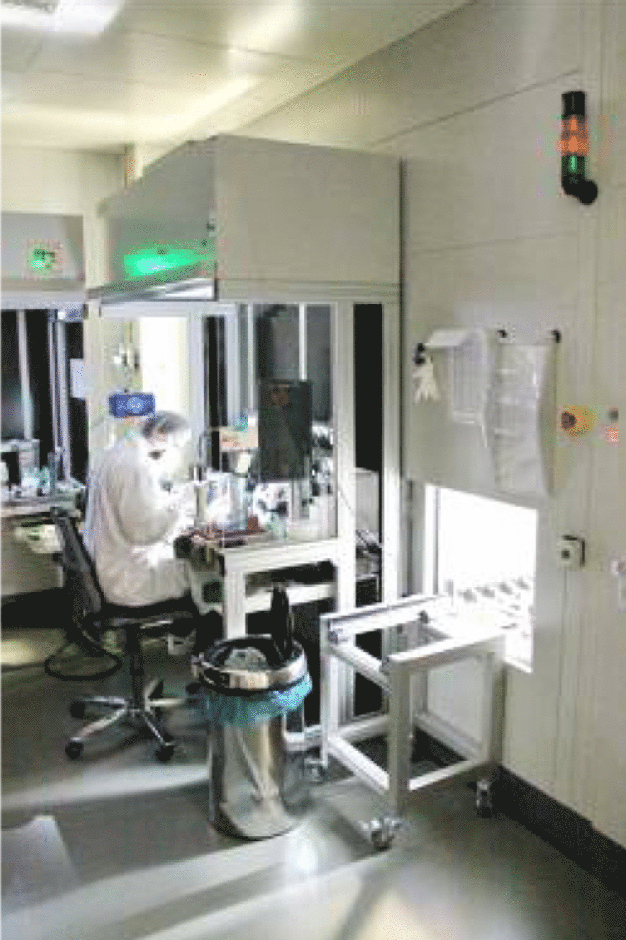
To enable the high purity class in the flow boxes and to keep all components as particle-free as possible, a comparable cleanliness class must also be maintained outside the boxes, inside the cleanroom cabin. The cleanroom is therefore classified as ISO 8 and has an additional assembly area of ISO 7 class. (Source: Nerling Systemräume GmbH)
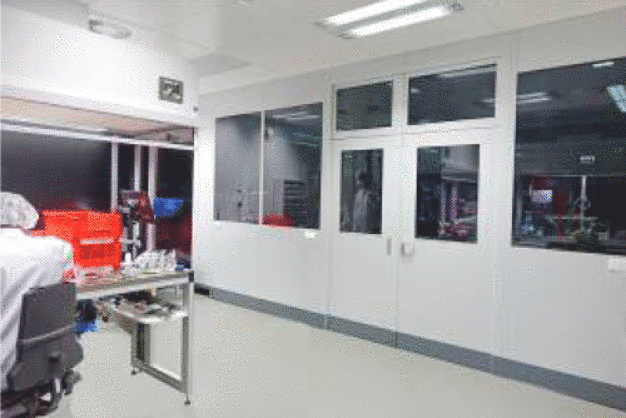
The entire wall and ceiling system used at TRUMPF is freestanding. Additionally, the room system is modularly constructed, making it easy to expand and dismantle. (Source: Nerling Systemräume GmbH)
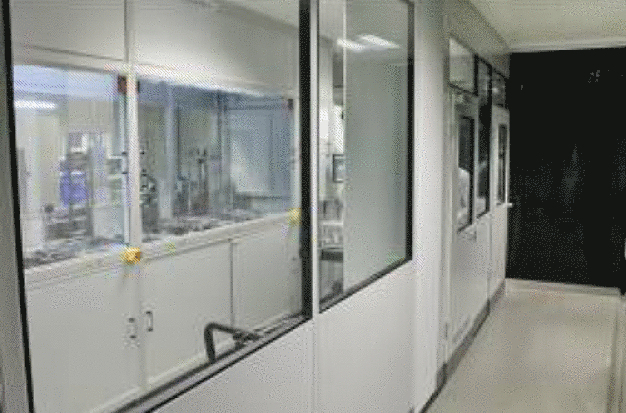
A 7-zone ultrasonic cleaning system is located upstream of the assembly and integrated into the cleanroom, transporting the cleaned material directly into the assembly room. It was procured parallel to the cleanroom and had to be incorporated into the planning. (Source: Nerling Systemräume GmbH)
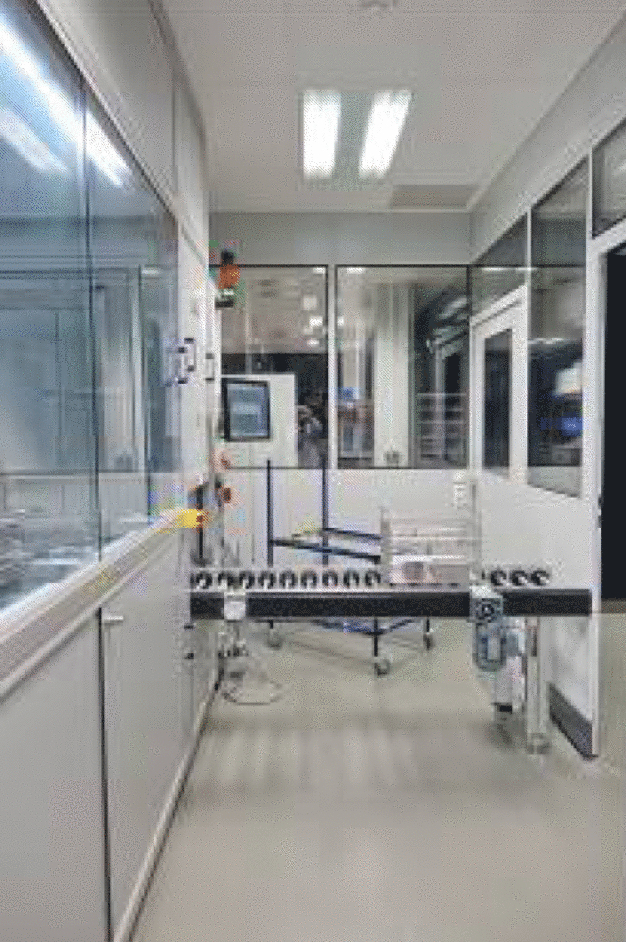
Located upstream of the assembly and integrated into the cleanroom is a 7-zone ultrasonic cleaning system that directly transports the cleaned material into the assembly room. It was procured parallel to the cleanroom and had to be incorporated into the planning. (Source: Nerling Systemräume GmbH)
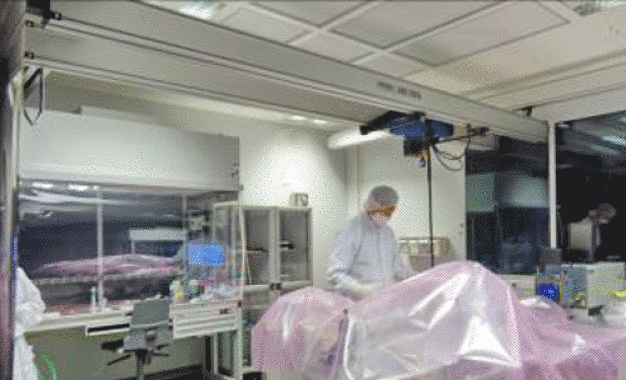
Nerling installed a hanging crane system with a payload of 250 kg, with two supports completely concealed behind the cleanroom wall. The other two are located behind a steel sheet cladding in the room corners. (Source: Nerling Systemräume GmbH)
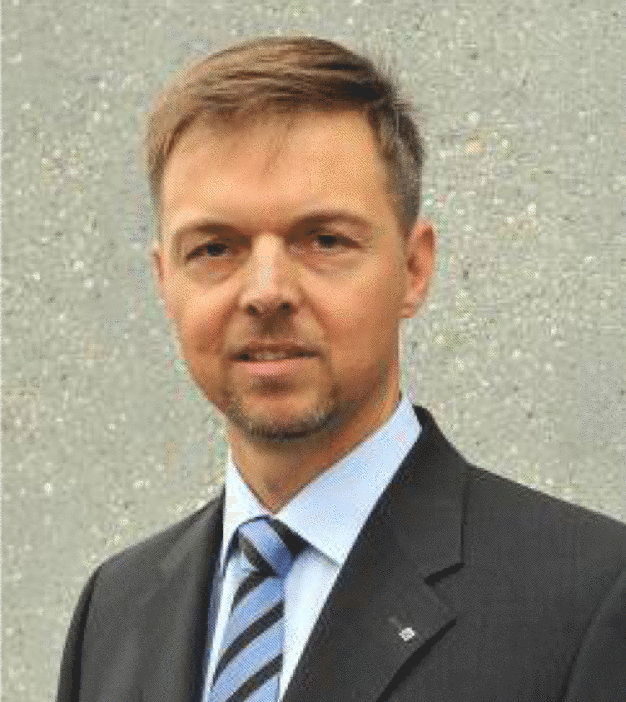
"Since the business development at TRUMPF is very dynamic, we wanted to have a flexible cleanroom system from the very beginning," explains Dipl.-Ing. Frank Schaffert, Group Leader PE Optics at TRUMPF Werkzeugmaschinen GmbH + Co. KG. "It should be possible to modify it as needed or even relocate it to another site if necessary." (Source: TRUMPF Werkzeugmaschinen GmbH + Co. KG)

"Also, the recirculated air partial air conditioning is based on a modular concept. This has another fundamental advantage: if one of the devices fails, all the others continue to operate smoothly," says Jan Kürbis, project manager for cleanroom technology at Nerling Systemräume GmbH. (Source: Nerling Systemräume GmbH)
When assembling components for high-performance lasers, the premises must meet the highest standards of technical cleanliness. In 2012, the laser technology experts from TRUMPF therefore installed an ISO 8 cleanroom system at the company's headquarters in Ditzingen. The cleanroom builders commissioned by Nerling Systemräume GmbH designed this according to a modular concept; the system can now be used very flexibly, reconfigured if necessary, and even relocated to another site. The entire system is also freestanding, so vibrations from the stamping machines in the workshop above do not transfer. Furthermore, despite a raw ceiling height of approximately 3.60 m, with suspended ceilings and installations, a clear ceiling height of 2.90 m was achieved using a very low plenum. In 2014, the system was expanded to gain additional capacity and a crane system was installed, whose supports are almost invisibly integrated into the load-bearing structure.
"In the cleanroom, processing optics and laser beam guidance assemblies are assembled. This mostly happens in ISO 5 class flowboxes," explains Dipl.-Ing. Frank Schaffert, group leader PE Optics at TRUMPF Werkzeugmaschinen GmbH + Co. KG. These conditions are a prerequisite for the components to be free of particles larger than 50 µm. "Such particles would burn into the lenses when heated by the laser, cause shadows, and prevent the laser machine from cutting properly. The consequence would be a failure of the unit," Schaffert continues. Organic particles of this size are therefore manually removed from the optics at TRUMPF using ultraviolet light in a dedicated step. To enable the high purity class in the flowboxes and keep all components as particle-free as possible, a similar cleanliness level must also be maintained outside the boxes, within the cleanroom cabin. The 9.75 x 9.66 m cleanroom ordered by Nerling in 2012, with a personnel airlock, has an ISO 8 class and features an additional assembly area of ISO 7 class.
Prior to assembly and integrated into the cleanroom is also a 7-zone ultrasonic cleaning system, which transports the cleaned material directly into the assembly room. Also connected is a disc laser used for the acceptance testing of the assembled processing optics. In addition to the cleaning system and laser room with an ante-room and two walk-in material airlocks, the overall system room, measuring 31.03 x 10.20 m, also included a cleanroom and an office until its expansion in 2014. To increase capacity in the assembly area, these spaces were recently converted into an ISO 8 cleanroom, and an additional crane system was integrated into the load-bearing structure.
Expandable and demountable modular cleanroom system
"An important requirement was to obtain a cleanroom system as flexible as possible," explains Schaffert. "It should be possible to reconfigure or expand it as needed, and potentially even relocate it to another site." For this reason, it was to be as freestanding as possible, with its own load-bearing structure, and not suspended from the ceiling. This should also prevent vibrations caused by stamping machines in the floor above from transferring to the cleanroom.
"To meet these requirements, a fully load-bearing system was used in the ceiling construction, which is spanned freely over 10 meters. The ceiling supports were partly mounted on the system walls, partly using freestanding portals in the area of the building walls," says Jan Kürbis, project manager for cleanroom technology at Nerling Systemräume GmbH. "The entire wall and ceiling system we used at TRUMPF is freestanding." Additionally, the system is modularly constructed, making it easy to expand and dismantle. "The freed elements can be reused in a system-compliant manner during renovations. For example, we reused wall elements from the office that we dismantled during this year's expansion elsewhere in the system," explains Kürbis.
Replaceable lamps and FFUs
The recirculation partial climate control is also based on a modular concept with fully autonomous, zonal direct evaporator air conditioning units. "This has a further fundamental advantage: if one of the units fails, all others continue to operate smoothly," explains Kürbis. Increasing the cooling capacity of the system in Ditzingen with more units is also possible. The same applies to the modular filter fan units (FFU) with energy-efficient EC technology, responsible for particle separation according to the required cleanliness classes, drawing conditioned air from the above plenum. These units also have the same dimensions as the special luminaires with mirror grid inserts used, allowing both to be replaced as needed.
The entire room system is supplied with hall air to meet hygienic air exchange requirements, and overpressure in the cleanroom area is maintained via a separate ventilation system with 1,000…1,500 m³/h hall air intake. The MSR technology used, housed in two control cabinets directly on the wall of the cleanroom cabin, enables control and monitoring of the air conditioning units, ventilation system, and all FFUs via a 15" color web display. "This allows each room to be monitored individually and each component to be visualized graphically," explains Kürbis.
Very low plenum
One of the biggest challenges in this project was the limited space of the existing building structure into which the system room was to be integrated. "The height of the raw ceiling was comparatively low at 3.645 m, and there were many suspended ceilings and installations that had to be considered during planning," says Schaffert. To achieve a clear ceiling height of 2.9 m in the cleanroom, a very low plenum was constructed. The technology was carefully planned in detail, and specially low FFUs in custom design were used.
The cleaning system was procured parallel to the cleanroom and had to be integrated into the planning. This was especially important because the system was delivered only after the completion of the cleanroom. "Since we generally deliver our system rooms turnkey, acting as general contractors for our customers, we also took on the necessary layout, scheduling, and control coordination with the system manufacturer," says Kürbis. Additionally, an existing exhaust system for the cleaning system was integrated into the system control.
Visually appealing room system
"With the crane that was additionally integrated into the load-bearing structure of the cleanroom during the 2014 expansion project, it was particularly important to us that the supports should be as unobtrusive as possible," explains Schaffert. Nerling installed a Demag KBK double-girder suspension crane system with a 250 kg payload, approximately 5.50 m crane runway length, and approximately 4.0 m girder length, equipped with an electric chain hoist. "The entire steel support structure for the crane and the ceiling cladding measures a total of 9.42 x 5.86 m," says Kürbis. "We were able to hide two supports completely behind the cleanroom wall. The other two are concealed behind steel sheet cladding in the room corners."
TRUMPF placed great importance on the appearance of the system, both externally and internally. "It should blend harmoniously into the modern architecture of the company premises," says Schaffert. For this reason, all windows were glazed seamlessly, and the electrical wiring was housed within the hollow walls, so no cables are visible in the room. Since the outdoor units, whose location is directly visible from the process center, should also look as neat as possible, the cooling lines were laid underground.
"We are extremely satisfied with the implementation of the modular cleanroom system by Nerling and its expansion this year," says Schaffert. The expansion created space for ten additional workstations, five of which are already equipped. "We therefore still have capacity for the future," concludes the group leader.

Nerling Systemräume GmbH
Benzstraße 54
71272 Renningen
Germany
Phone: +49 7159 16340
Fax: +49 7159 163430
email: ralf.nerling@nerling.de
Internet: http://www.nerling.de