- Buildings & Rooms
- Translated with AI
Visions for climate-friendly cleanroom operation
STZ EURO: Future-proof resource conservation based on VDI 2083-19
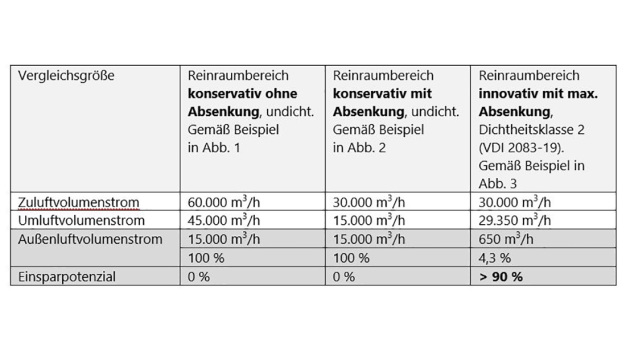
Table 1: Comparison of airflow requirements with/without lowering and energy-saving potential in lowering operation for heating/cooling/dehumidification and humidification (excluding electrical energy for fans).
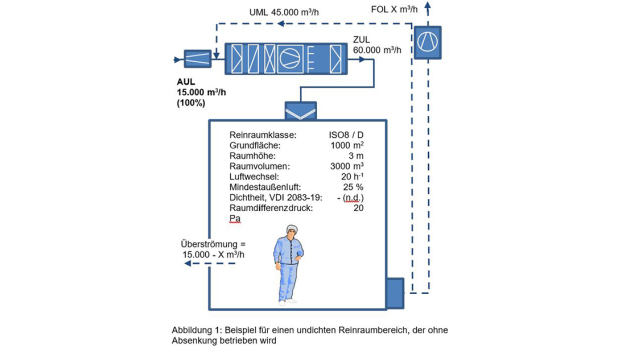
Figure 1: Example of a leak-tight, conservatively designed cleanroom area operated without depressurization.
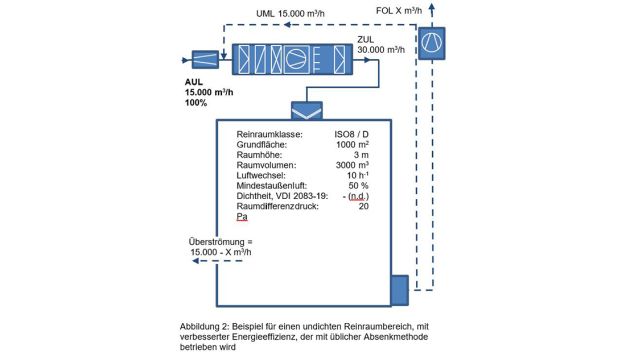
Figure 2: Example of a leaky, conservatively designed cleanroom area with improved energy efficiency, operated using the standard lowering method.
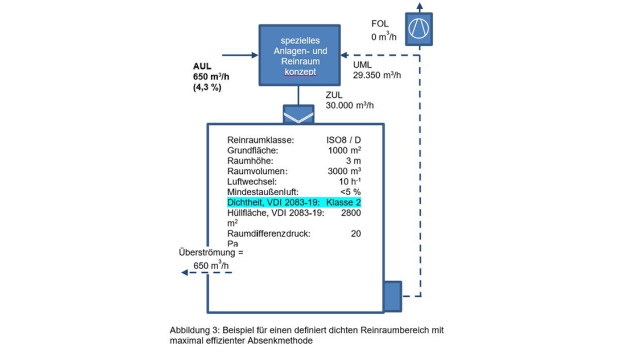
Figure 3: Example of an innovatively designed and precisely defined cleanroom area, with the most efficient lowering method.

Dipl.-Ing. (FH) Michael Kuhn, Head of the Steinbeis Transfer Center for Energy, Environmental, and Cleanroom Technology, Lecturer for Cleanroom Technology, and Chairman of VDI 2083-19.
For many cleanroom applications, a defined airtightness is not required, especially if compliance with product protection or environmental protection does not demand it. Nevertheless, it can make sense to achieve a airtightness as defined by VDI 2083 Sheet 19 in order to specifically and economically save energy – perhaps even more often than previously thought, according to STZ EURO.
In very many cleanrooms, production is not continuous but occurs in single or double-shift operation. During idle phases, significant energy savings can be achieved by reducing the operation of the cleanroom. This is often not implemented because there are concerns about quality losses or technical prerequisites are lacking. Additionally, since simply reducing air exchange rates and lowering the electrical power consumption of the fans often only results in relatively small savings potentials, this approach is quite understandable. Concepts based on VDI 2083-19, however, offer interesting and new perspectives. Not to mention the goals of resource-efficient production, future CO2 taxes, and the necessity of achieving climate targets.
If, during the reduction phase, not only the activity of the fans but also the supply of fresh outside air is limited, much more potential could be unlocked. Fresh outside air must be heated, cooled, humidified, and dehumidified. Proportional to the outside air volume flow, energy savings of over 90% compared to normal operation can be realized here. The prerequisite for this is the implementation of a airtightness concept based on VDI 2083-19. Because, through the defined airtightness according to VDI 2083-19 combined with a coherent ventilation and automation concept, reducing the outside air supply drastically not only makes the process more energy-efficient but also ensures compliance with defined limits, such as room differential pressure.
"Implementing a maximally efficient reduction operation is, of course, an idealistic idea. But it is high time to tap into this potential for savings. In doing so, traditional design criteria, such as the percentage allocation of outside air volume flow relative to the total air flow, should be questioned. A new perspective on reduction operation in cleanroom technology could potentially make a significant difference," says Dipl.-Ing. (FH) Michael Kuhn, head of STZ EURO. "Furthermore, a digital plant simulation can already demonstrate and optimize potential savings and operational safety during the planning phase."

STZ EURO Steinbeis-Transferzentrum
Energie-, Umwelt- und Reinraumtechnik Offenburg
Badstraße 24a
77652 Offenburg
Germany
Phone: +49 781 20354711
email: mkuhn@stz-euro.de
Internet: http://www.stz-euro.de