


- Walls
- Translated with AI
Dr. Daniel Feyerlein
Variability in space systems
The demand for smart wall system solutions for digital and hygienic rooms is steadily increasing.
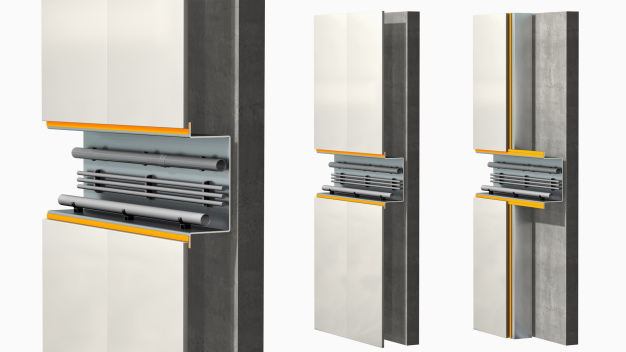
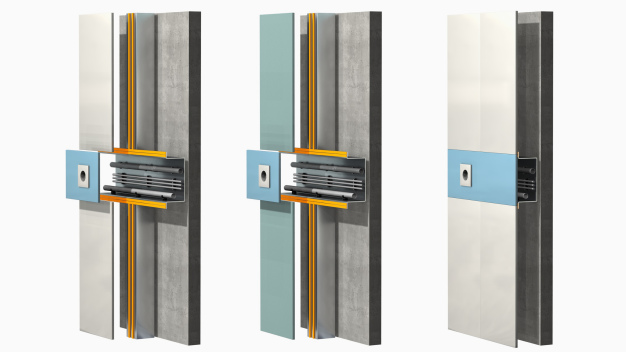
In the context of increasing digitization and flexible space design in modern functional rooms, the integration of technological infrastructure is becoming increasingly important. The demand for an innovative solution for, e.g., drywall walls or modular wall systems in spaces with heightened requirements for usability variability, as well as aesthetics and hygiene, is growing.
The core of a future-oriented wall solution is variability in room usage and intelligent management of media supplies, ideally integrated invisibly into the wall construction. The requirements for cleanrooms, e.g., for the installation and maintenance of IT and medical gases, especially in facilities such as operating rooms, intensive care units, and sterilization areas, are also continuously evolving. A modular wall system designed for this purpose, with integrated media channels, could be the ideal answer to the challenges of modern digital cleanrooms.
This article explores the requirements and potentials of such a system. A modern wall system allows flexible adaptation to various room concepts and their technical requirements. It enables quick expansion or modification of functional rooms without major structural interventions or long-term operational disruptions.
Problems of digital rooms: Cable management
In digital rooms such as server rooms, offices, operating theaters, or intensive care units, wiring is often problematic. Conventional solutions often lead to cluttered cable routes in, for example, cable ducts, which are difficult to access, installed as surface-mounted variants, and may require extensive maintenance. This not only complicates the installation of new technologies but also increases the risk of failures and disruptions.
Problems of cleanrooms: Upgrade capability and downtime
Cleanrooms equipped with state-of-the-art technology require regular upgrades to meet the latest technical standards. However, these upgrades are often associated with long downtimes because existing systems are difficult to adapt or expand. Therefore, a new wall system should be modular and easy to modernize, minimize downtime, and maintain hygienic standards.
Problems of conventional rooms: Unattractive aesthetics and poor adaptability
In many rooms, flexibility regarding usage is limited. Changes in room use or design modifications require complex and costly adjustments. Additionally, existing wall systems with digital requirements are often visually unappealing and do not offer opportunities for individual customization.
The integration of digital technologies, flexibility in use, and adherence to strict hygiene standards require innovative interior architecture solutions. Today's requirements for a novel interior wall system, specifically developed for the demands of modern digital cleanrooms, offer a solution for these issues. Especially medical and digital rooms have specific requirements that go beyond merely complying with hygiene regulations. They require seamless technology integration and the ability to respond quickly and efficiently to changing usage conditions.
In addition to the regular requirements for interior wall solutions for sound and thermal insulation, load-bearing capacity, fire classification, etc., modern wall solutions must meet a variety of functional, aesthetic, and technical requirements to satisfy the needs of today's construction projects. These requirements vary depending on the application area but include the following key aspects:
Flexibility and Modularity: Adaptability
Modern interior wall solutions must be flexible and adaptable to meet the demands of changing room uses. Particularly in spaces with high requirements, modular wall systems are advantageous and play an essential role as IT or media integrations increase.
Aesthetics and Design: Customization
The surface design of modern interior walls is an important factor for the room ambiance and its requirements. Different materials, colors, and textures are used. Constructive solutions for digitalization of rooms are also demanded. Modern interior walls offer a wide range of design possibilities that can be easily adapted to individual requirements or design specifications.
Integrated Technology: Intelligent Solutions
Modern interior wall solutions offer the possibility to invisibly integrate technological systems such as power lines, lighting, heating, IT, or smart home technologies. Wall solutions should allow straightforward routing of cables and technical installations.
Maintenance and Durability: User Demands
The materials chosen for construction should be easy to maintain so that walls can be cleaned and maintained without significant effort. Modern interior walls must be robust and resistant to everyday stresses to ensure a long service life.
Cost and Time Efficiency: Economy
Fast and straightforward installation reduces construction times and labor costs. Lightweight walls and drywall systems are particularly suitable for this purpose. Cost-conscious solutions that are economical both in procurement and maintenance, as well as in variable usage, can become key factors.
Functional Versatility: Multifunctionality
Walls can take on additional functions, such as acting as room dividers, storage elements (e.g., built-in shelves), or as surfaces for interactive technologies (e.g., whiteboard walls or multimedia displays). A modern digital room can be efficiently adapted to changes in use.
Modern interior wall solutions must combine all these requirements to enable optimal room design both aesthetically and functionally. Depending on the building type and usage, different priorities are set to meet specific needs. Accordingly, structural solutions are tailored specifically for drywall walls or modular wall systems.
One way to meet these requirements is to integrate a media channel into the wall system, as proposed by the patented concept INDUCTUS. This offers several advantages:
Aesthetics and Cleanliness
Cables and connections for power, data, telephone, or other media such as medical gases are routed invisibly within the wall, resulting in a tidy and elegant appearance. At the same time, hygienic requirements can be better maintained.
Flexibility and Customizability
Integrated media channels can be designed to accommodate various connections and extensions. This allows future technology requirements to be considered and the system to be easily and quickly adapted or expanded.
Hygiene
By integrating media into the wall covering via a dedicated media channel, a hygienic and easy-to-clean surface can be created. A surface-bonded construction adapted for this purpose can also ensure the hygienic requirements of a smooth wall surface.
Future Security
Modern wall systems should provide access points and interfaces for executing trades, allowing initial installations, maintenance, or repairs to be carried out without breaking into the wall. As technology evolves rapidly, an integrated media channel enables easier upgrades, e.g., replacing old network cables with new ones, without extensive construction work.
A novel wall system with integrated media channels can become the ideal solution for modern digital cleanrooms. Such a media channel must be adaptable to the requirements of a cleanroom, e.g., a hygienically sealed channel integrated into the wall construction. It not only meets high standards of hygiene and functionality but also allows flexible, cost-efficient, and future-proof room design. Through technology integration and easy retrofitting, it offers a long-term solution for hospitals, laboratories, and other sterile environments that depend on continuous technological advancement.
More information at: http://www.inductus.de
Dr. Daniel Feyerlein
91161 Hilpoltstein
Germany