




- Translated with AI
Vacuum drying - Even under the most extreme conditions
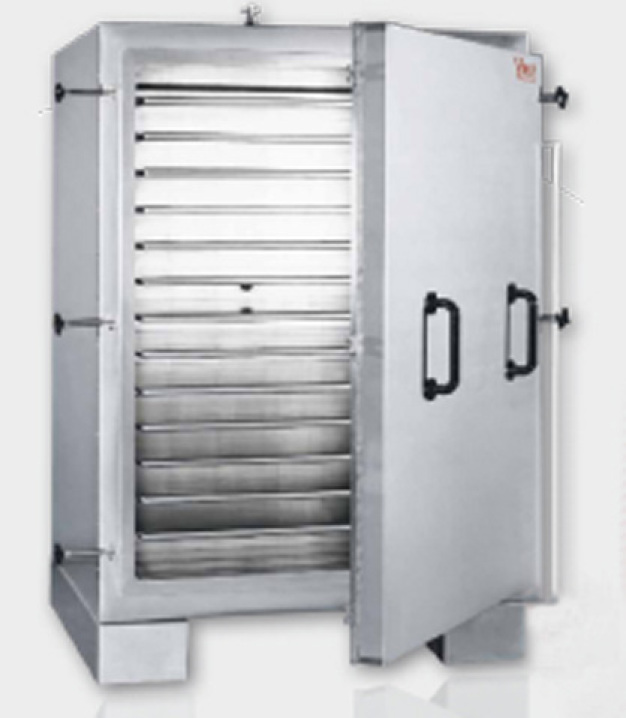
Vacuum drying - Even under the most extreme conditions
Vacuum drying is now indispensable in many drying processes in the fields of pharmaceuticals, biotechnology, chemistry, and cosmetics. Intermediate and final products such as
e.g., granulates, powders, pastes can be gently dried under vacuum at low temperatures. Heat-sensitive pharmaceutical products can be economically dried in this way by lowering the pressure in the vacuum chamber, resulting in shortened drying times. Powders are not agitated due to the lack of convection. Evaporating liquids, such as flammable solvents, can be recovered again.
Moisture-sensitive products, such as medical suture material, can already be dried during packaging. Even with nearly sealed products, a low final vacuum and heating in multiple cycles result in an extremely low residual moisture. By flooding with dry nitrogen during the final sealing of the packaging, re-absorption of moisture is prevented. To avoid condensation, it is possible to heat all walls of the inner container, including the door.
Vacuum drying cabinets can be electrically heated. However, the most economical option is the use of steam or hot water, as these heating media can be used from other process steps. In these configurations, even dryers for easily flammable solvents can be installed in explosion hazard areas. Installation in cleanrooms is also possible.
The vacuum dryers comply with regulatory requirements, e.g., FDA. All safety regulations and good manufacturing practice (GMP) rules have been observed.
Vacuum pump stations, for example for solvent recirculation, are part of the accessories, as are loading systems, special materials, CIP cleaning systems, and custom software.
Vötsch Industrietechnik GmbH
35447 Reiskirchen-Lindenstruth
Germany



