
- EDP, Hardware, Software
- Translated with AI
Touch/Display Integration with a focus on Optical Bonding
Using optical bonding for durable touch displays
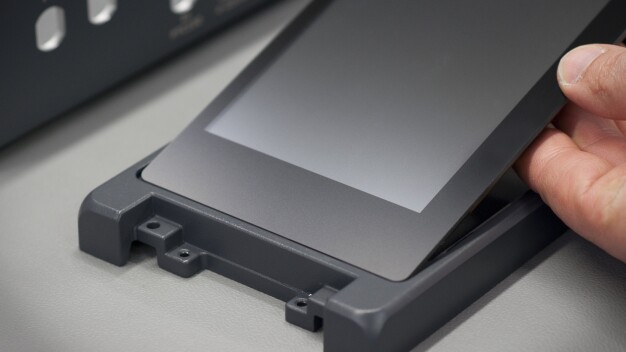
Gluing the touch/display unit: The complete unit is inserted into the housing and fixed there with an adhesive layer. (Copyright: BOPLA Housing Systems GmbH)
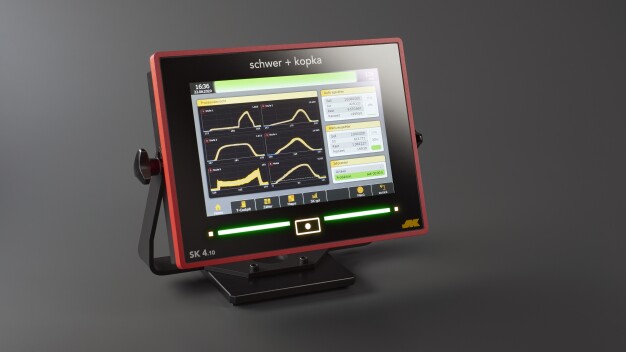
This HMI system is used, for example, in the process industry: capacitive touchscreen combined with a capacitive button. (Copyright: BOPLA Housing Systems GmbH)
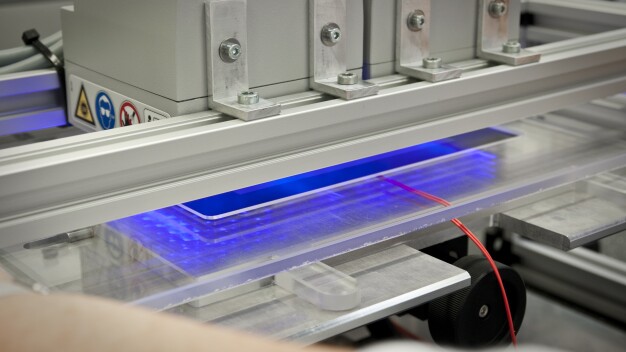
Curing with Wet Bonding using UV light: The liquid bonding of the components promises particularly high optical quality and mechanical stability. (Copyright: BOPLA Housing Systems GmbH)
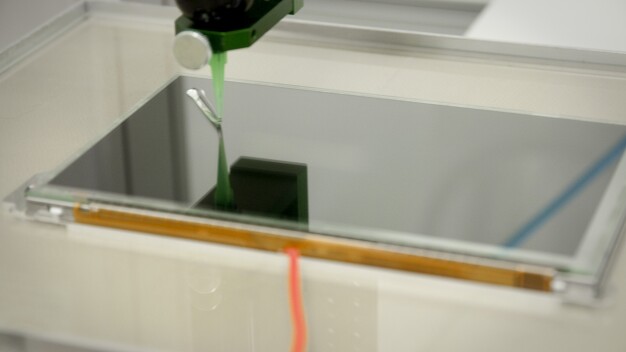
Optical Bonding at BOPLA: The glass front is combined with the touchscreen or display using the Optical Bonding process. (Copyright: BOPLA Gehäuse Systeme GmbH)
They give machines their first face and simplify processes: HMI systems are an integral part of modern working life. To optimize them, Optical Bonding plays an important role. The bonding process significantly enhances the functionality of HMI systems. As more industries rely on HMI systems, Optical Bonding is gaining increasing relevance. What are the key aspects of this process? What are the advantages of this method?
The onboard computer in combine harvesters, the control of large industrial plants, or medical devices such as CT scanners – HMI systems are used across various industries. Human-machine interfaces are no longer absent from everyday work. And the trend is to use these systems in even more areas – today primarily with intuitive touch displays similar to tablets.
However, the systems must withstand challenging external conditions depending on their location of use. These can include environmental influences or hygiene requirements. This is where Optical Bonding comes into play: This method is used in touch/display integration, i.e., the installation of an HMI user interface into device housings. Optical Bonding involves different bonding techniques to hermetically connect displays with touch sensors and cover glasses into a single unit. The goal: a significant improvement in device functionality.
Many industries – high demands
Cold temperatures at night, warm temperatures during the day – both HMI systems used indoors, such as in industrial halls, and those used outdoors must withstand temperature fluctuations. These can significantly affect the functionality and durability of the devices in the form of condensation moisture if there is an air gap between the display and the front glass with the touch sensor. Moisture not only impairs the screen display but also negatively impacts the lifespan of the sensitive electronics inside displays. However, if the air gap is filled with Optical Bonding material, i.e., an adhesive, the internal temperature of the application remains constant, and no condensation moisture forms inside the device.
At the same time, the bonding material also prevents the ingress of dust and dirt particles. This protection against dust and dirt is especially important when the HMI system is used outdoors, for example in agricultural vehicles. Another challenge for outdoor HMI systems is sunlight exposure. If the device is exposed to the sun daily, it can overheat and, in the worst case, become inoperable. Optical Bonding offers a solution for this problem as well: by using UV-qualified bonding material, heat dissipation occurs. The heat from the LED backlighting and the display surface is transferred through the bonding material to the cover glass. This prevents the LEDs from overheating, thereby increasing their lifespan.
Optical Bonding also offers advantages in terms of readability. In specialized environments such as medical technology, critical lighting conditions affect the displays. While an air gap causes light to refract and reflect, a touch display filled with bonding material increases contrast. The bonding material has a similar refractive index to glass, thus possessing similar optical properties. This results in glare-free optics. Thanks to minimal contrast loss, HMIs can operate more energy-efficiently with less power.
Optical Bonding also makes display applications and touch panels much more robust. The bonding process serves as a mechanical reinforcement of the device. The cover glass is firmly bonded to the display via Optical Bonding. In case of glass breakage, it acts as a shatter protection; the device becomes more resistant to vibrations, shocks, and impacts. This is particularly advantageous for mobile devices in vehicle construction and medical applications.
The right process for different requirements
There are several bonding techniques in Optical Bonding for different requirements. The bonding method depends on the selection of components, system integration, and application requirements. Customer wishes are decisive, as Thorsten Penassa from BOPLA Enclosure Systems GmbH explains. "Desired display formats, shapes, specific quantities, and budget constraints – all these factors must be considered when choosing the bonding method," says Penassa. The head of system integration at BOPLA needs to know this, as the company offers its customers, among other things, touch/display integration of HMI systems and also deals with Optical Bonding.
In Optical Bonding, BOPLA distinguishes between two processes – Dry Bonding and Wet Bonding. "Dry Bonding is also called lamination. In this process, the bonding material is cut to the size of the visible display surface and used to fill the air gap between the front glass and the back of the touch sensor uniformly. The touch sensor must be flexible or semi-flexible. A highly transparent adhesive layer is laminated behind the cover glass under high optical requirements. For example, no dust particles should be between the units, and no bubbles should form. This is the challenge with this process. You can roughly imagine it as a highly transparent double-sided tape," explains Penassa. Using pressure and heat, the sensor and cover glass are bonded together. This process is relatively inexpensive and time-efficient. If the customer requires large quantities of devices in a short time, Dry Bonding is the preferred method. However, the options for printing on the cover glass are limited in this process.
Wet Bonding, on the other hand, is suitable for hard-to-hard connections, i.e., when a rigid sensor is to be bonded with the cover glass. In this process, a liquid adhesive is applied to the touch sensor. UV light then cures the adhesive. According to Penassa, this also occurs under high optical requirements. This method is the most common because it is flexible to use. Since UV light is used for curing, it is particularly gentle on materials. In this method, the liquid adhesive fills the air gap between the display surface and the sensor back. If the customer desires a frameless or zero-bezel display, the Wet Bonding process is only conditionally suitable.
The environment increases the demands on the system and the housing into which the HMI system is integrated. Whether resistive or capacitive touchscreens, displays, or keyboards – depending on the customer and industry, the requirements for the mechanical and electronic integration of HMI systems can vary significantly. While industrial applications, for example, need to be particularly robust, hygiene is also of great importance in medical technology.
From a side issue to a significant sector
Optical Bonding marked the beginning of a fundamental change: When Thorsten Penassa started at BOPLA nearly twelve years ago, the enclosure technology specialist already offered display integration, but it was rather secondary, he recalls. The topic of "display integration" gained real momentum at BOPLA when the company began offering wet bonding integration about ten years ago. Today, the company offers touch/display integration in various forms tailored to customer needs: solutions with continuous front foil (resistive touchscreens) or continuous cover glass (capacitive touchscreens), where no dirt edges are allowed – for example in medical technology or the food industry. It is also possible to combine a touchscreen with a conventional membrane keypad.
BOPLA has developed a dedicated potting technology for touch/display integration. In this process, the display or the entire HMI unit is fixed from behind with an additional layer and potting compound. This means that the entire weight of the display and electronics is not only supported by the cover glass. "This makes the device even more stable. And it is so effective that we always recommend this to our customers during display integration," says Penassa. This process ensures that the HMI unit is tension-free from behind and can withstand larger temperature fluctuations.
BOPLA Gehäuse Systeme GmbH
32257 Bünde
Germany