


- R+D & Community of Interest
- Translated with AI
Klaus Jacob
Three decades of research for purity
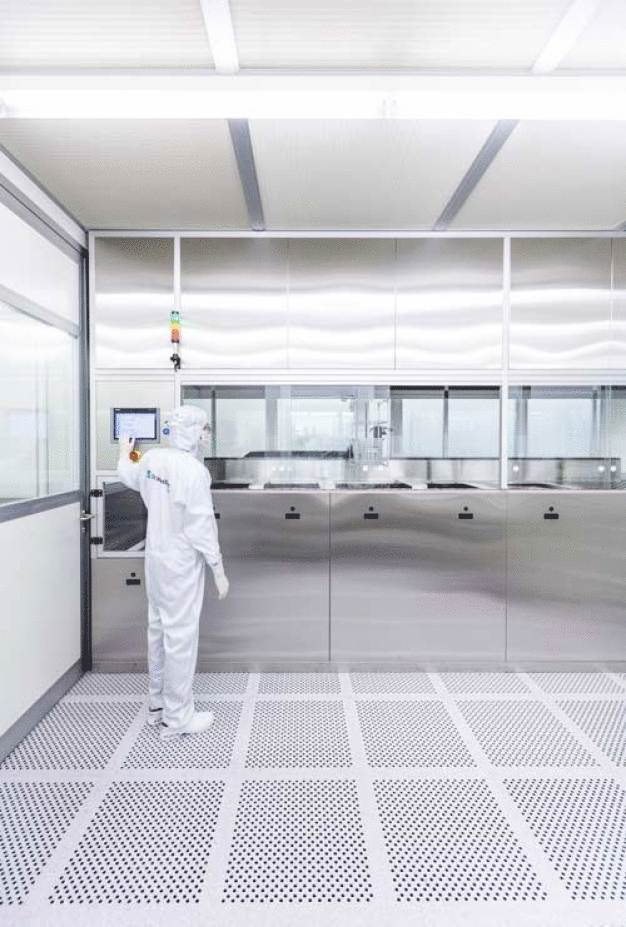
Ultrasound precision cleaning of components in a cleanroom of air cleanliness class ISO 1.
Satellite
Consumables
Consumables
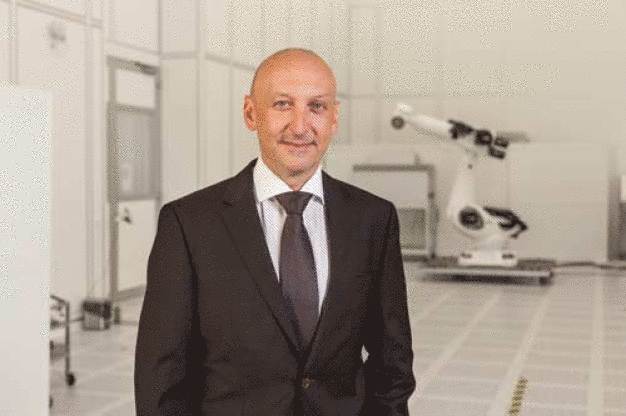
Dr.-Ing. Udo Gommel
It all started with a car wash system. An IPA department was just working on optimizing this system when a request came from the Federal Ministry of Research and Technology asking whether the institute could deal with cleanroom technology. That was 30 years ago, when the golden age of home computers began and the circuits became so small that dust particles increasingly caused problems. The then institute director, Prof. Rolf Dieter Schraft, wryly remarked that if you can clean cars, you can also get semiconductors clean. So, the department, whose head was Wolfgang Schmutz (his slogan: "Give dirt no chance"), entered the field of cleanliness technology with government funding. Initially, it had only 6 employees; today, there are 50.
Miniaturization Drivers
Since those beginnings, the department has grown steadily, with extensive renovations and expansions approximately every five years. The expansion was driven by technological developments. The increasing miniaturization of electronic and mechanical components caused the requirements for purity to grow ever stronger. The IPA not only accompanied this process but significantly influenced it. Its strength lies in its versatility: the department possesses not only the world's largest research cleanroom of ISO Class 1, where components of almost any size can be cleaned, but also highly precise devices for validating the work. "The combination of cleaning and evaluation is unique," says Udo Gommel, the energetic head of the "Reinst- and Microproduction" department.
Highlights
The trained physicist has been working at the IPA for 20 years and has been leading the department for 8 years. Looking back, he recalls several highlights. One such is the engagement in Romania. The Stuttgart team built a manufacturing plant for LEDs for the company Microelectronica, from conception to commissioning. The start was in September 2012. The unusual external conditions proved to be the greatest challenge: the high-tech plant was to be built in a dilapidated factory building from Cold War times. "In the basement, water was waist-high," Gommel recalls. And precisely this damp basement, a breeding ground for mold and other contaminants, was intended for the cleanrooms. The manufacturing required only ISO Class 8, but a separate analysis laboratory with much higher standards was planned alongside. It was to meet ISO Class 1, ten million times cleaner than the production environment. The Swabians ultimately succeeded in transforming the damp basement areas into a cleanroom. Today, a computer tomography device about the size of a wardrobe stands in the ultra-clean analysis laboratory—unique in the world.
How crucial clean working conditions have become for economic success is demonstrated by an example from the automotive industry. An internationally active supplier had a comprehensive cleanliness concept created by the IPA experts. Its implementation reduced scrap by 55 percent. Given the high production volumes, this resulted in cost savings of around one million euros per year.
Aerospace
One of the institute's highlights is also its entry into space travel. After years focusing on industrial production, a coincidence opened up a new field. In 2009, the European Space Agency (ESA) inquired whether the Stuttgart experts could sterilize components of a Mars probe. Killing microbes was not part of their scope, but they offered cleaning instead. Gommel had little hope of competing against established providers at the time. But he received the contract. Because sterilization, whether with chemicals or heat, leaves behind dead microorganisms, a thorough cleaning makes a "tabula rasa," and very gently at that.
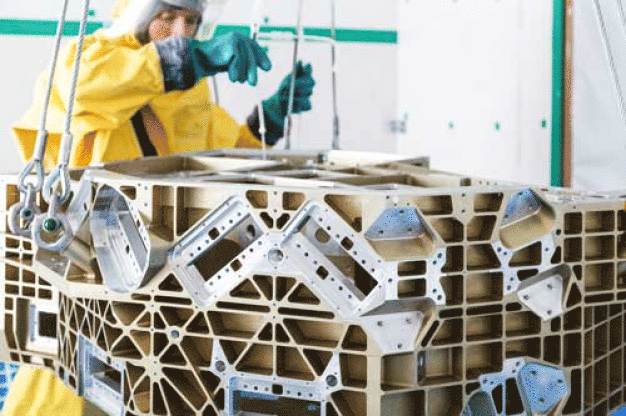
The aerospace division has since vigorously advanced research in Stuttgart, as the requirements here are particularly strict. Currently, nearly two dozen projects with different focuses are underway. Highlights include "ExoMars" from the European Space Agency (ESA) and the satellite mission "EnMap." With a reliable industrial partner, a strategic partnership for the coming years is even planned. The institute has cleaned almost all 13,000 parts of the Earth observation satellite "EnMap," including a four-ton aluminum block. For this heavy component, the staff even had to build a temporary cleanroom the size of a small house—under significant time pressure.
The Mars project under ESA's auspices was even more demanding, as the probe launched on March 14 is searching for signs of life on the neighboring planet. To avoid false signals, no organic substances from Earth may be carried along. This further increases the purity requirements. A very gentle cleaning process developed in Stuttgart has proven particularly effective: the CO2 snow blasting process. Originally used in the USA to remove paint from aircraft fuselages, the IPA experts refined it into a method with the highest cleaning efficiency. Instead of hard CO2 pellets, they use smaller, softer snow crystals. Contaminants are dislodged by the temperature shock, loosened, and can be vacuumed away. To increase the penetration depth, surrounding nitrogen accelerates the jet to supersonic speeds. Another recent innovation is the use of supercritical carbon dioxide. For example, the interior of hose lines with closed cavities can be cleaned by flushing them with a pressure of 70 bar.
Cleanroom Standards and Guidelines
The Stuttgart "cleanroom experts" not only assist companies with all tricky questions of cleanliness technology but also participate in developing standards and guidelines. Equipped with an extensive array of devices capable of measuring and evaluating even the smallest contaminants, they are well prepared. Many committees at home and abroad that deal with cleanliness are supported by IPA staff. Whether it’s designing a cleanroom or classifying surface cleanliness, the Stuttgart team is involved. And not only that—the department even has its own certification seal.
"Fraunhofer TESTED DEVICE"
The "Fraunhofer TESTED DEVICE" logo is known and protected worldwide, from Germany to Australia. Customers can have individual parts or entire systems used in cleanrooms—ranging from cables to robots—tested and certified for cleanroom suitability. Depending on the issue, criteria include particle emission, outgassing, chemical resistance, or cleanability. The customer receives, alongside the certificate, a detailed test report. Over the past 16 years, the IPA has examined more than 1,700 products across various industries, from electronics to food technology. Each year, at least 100 new products are added.
Standards by Industry Associations
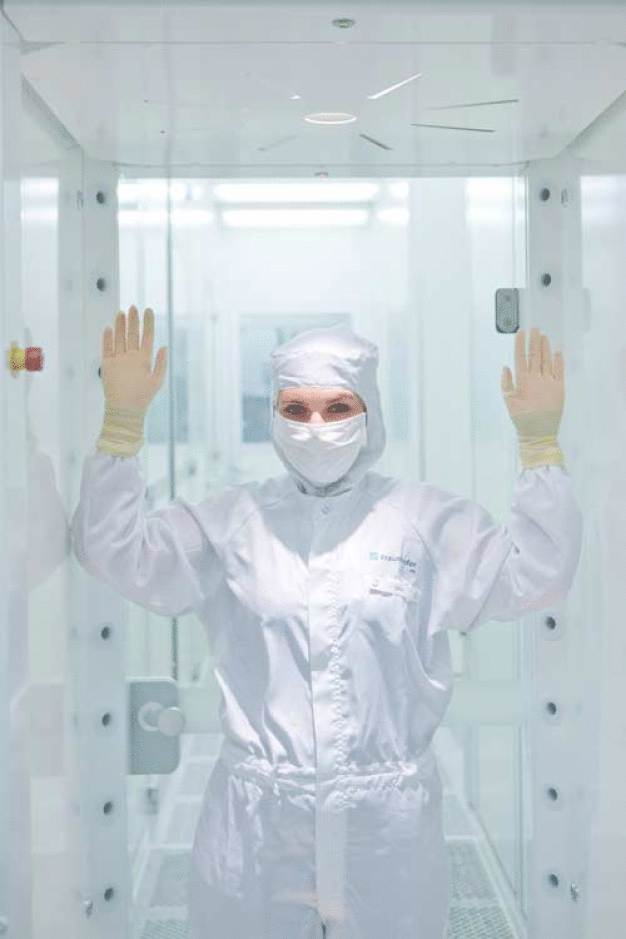
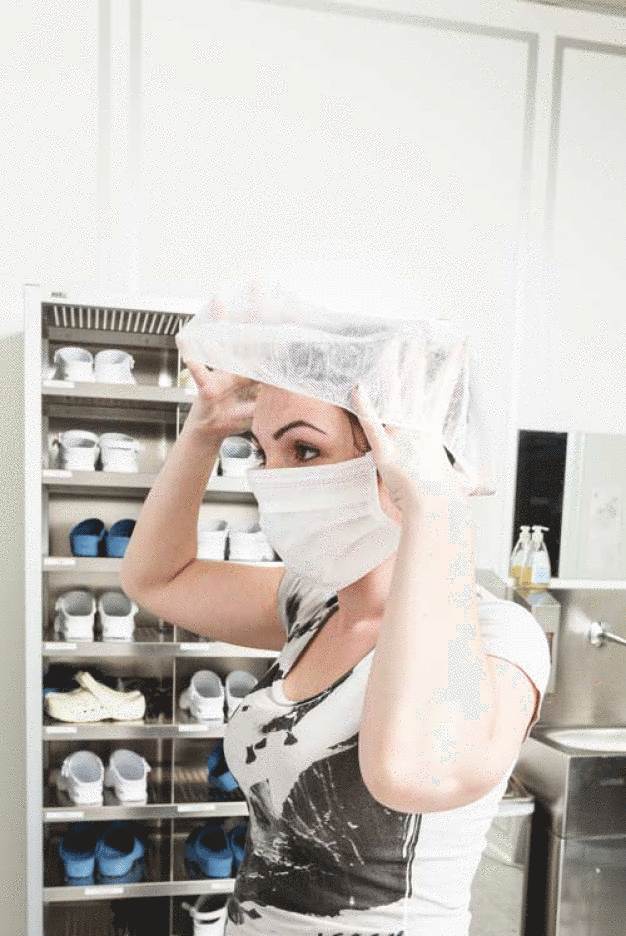
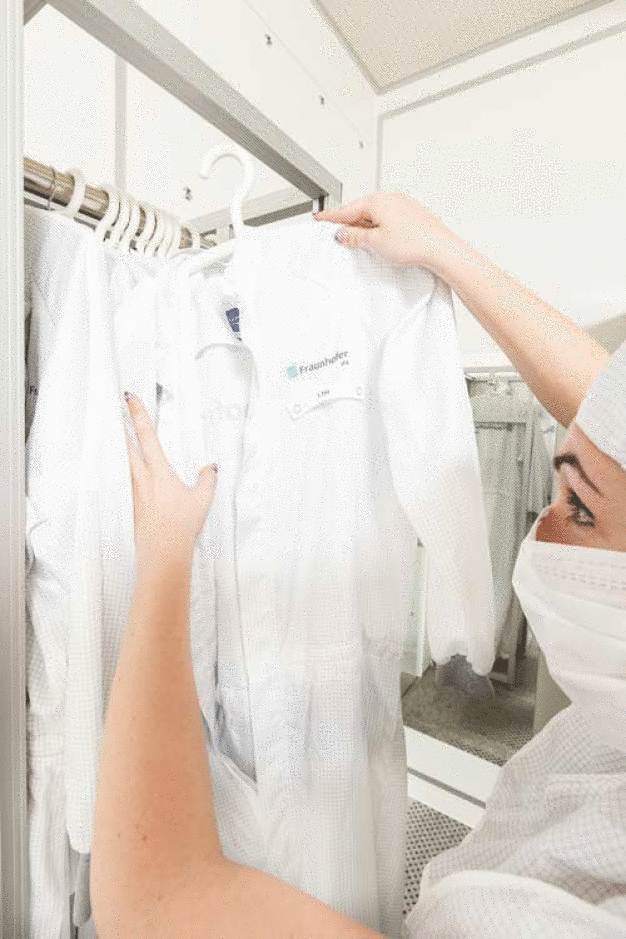
Although many internationally recognized standards already exist in cleanliness technology, there are still gray areas. The IPA aims to change that. It has initiated two consortia with representatives from industry and research to promote further standardization. The first concerns consumables used in cleanrooms, such as coveralls, gloves, or wipes. Although these disposable items can cause contamination through abrasion or outgassing, reliable rules on their specifications are lacking. The "Cleanroom Suitable Consumables" industry group aims to establish standards. Equally important is the second industry group, which deals with medical products like implants and syringes. Because contamination can lead to infections or rejection reactions in patients, the "MediClean" consortium aims to ensure the necessary safety, even for medical technology companies ultimately responsible for their products.
Knowledge Transfer via Training
The IPA imparts its expertise, acquired over three decades, through training sessions. Since 2005, around 2,500 people have been introduced to cleanliness techniques, partly at the Stuttgart institute, partly through on-site training at their respective companies. Since 2011, successful graduates receive a QMC certificate (Quality Management Center) according to VDA standards.
IPA expert Gommel is convinced that the cleanroom department will continue to grow in the coming years. The increasing miniaturization leads to ever higher demands on cleanroom technology. "We see no end to this development." The challenges associated with Industry 4.0 cannot be tackled without a dust-free environment.

Fraunhofer-Institut für Produktionstechnik und Automatisierung IPA
Nobelstraße 12
70569 Stuttgart
Germany
Phone: +49 711 970 1667
email: joerg-dieter.walz@ipa.fraunhofer.de
Internet: http://www.ipa.fraunhofer.de