


- Floor
- Translated with AI
Prof. Dr. Andreas Gerdes, Frank Bähr
Thoughtful flooring choices conserve resources and budgets
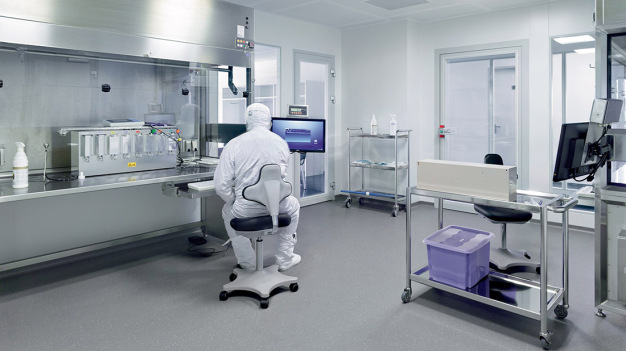
nora systems Cleanroom laboratories in clinics Ries Nördlingen
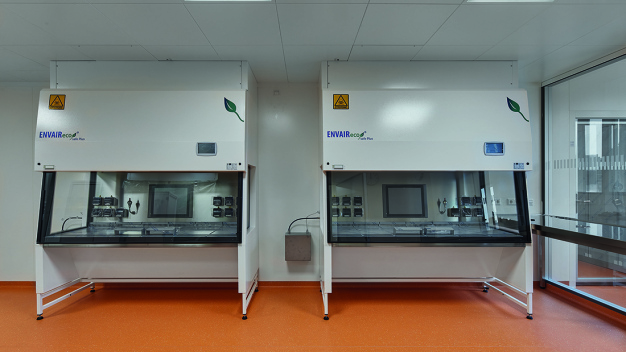
nora systems Cleanroom laboratories in clinics pharmacy Tübingen
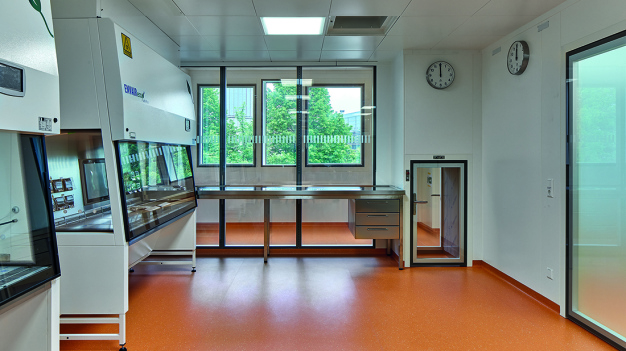
nora systems Cleanroom laboratories in clinics pharmacy Tübingen

Frank Bähr, Nora Market Segment Manager for Industry, manages key accounts in Southern Germany and Switzerland. He is the contact person for specialized areas such as laboratories, cleanrooms, and ESD zones.

Prof. Dr. Andreas Gerdes, Scientific Director of KIT Innovation HUB, and his team have developed a knowledge-based selection process for choosing sustainable soils for the pharmaceutical industry.
Sustainability and careful resource management are becoming increasingly important in the manufacturing industry. This not only influences the manufacturing processes themselves but also affects the design of cleanrooms and GMP areas. When selecting flooring, a holistic approach must consider various factors: the properties of the products, their use or performance in the cleanroom component, as well as the ecological impacts on the overall structure.
Functional and ecological requirements for flooring
A careful product selection tailored precisely to the specific process requirements is paramount when outfitting cleanrooms and GMP areas. The flooring materials used there must meet high standards. They should emit very low levels of particles and have a low outgassing behavior (TVOC). It is also essential that the floors are easy to clean and possess high resistance to media. Additionally, electrostatic discharge capability may be required for comprehensive ESD protection (Electrostatic Discharge). The EG-GMP guideline or the classification according to ISO 14644 are decisive for choosing cleanroom floors. Besides these diverse functional requirements, ecological factors are increasingly important for planners and building owners. It is important to note that building materials, in this case flooring materials, can only be compared regarding their environmental impact and sustainability within the building context—considering their specific installation situation and the technical requirements during use. Environmental Product Declarations (EPD) enable the assessment of the environmental performance of individual products based on a life cycle assessment (LCA). They contain detailed information about measurable environmental impacts, taking manufacturing processes into account. EPDs are based on international standards; in the construction product industry, EN 15804 applies.
Reliable and safe usability of cleanrooms
When choosing sustainable flooring for cleanrooms and GMP areas, the performance of the floors—particularly in terms of resistance, cleanability, and disinfectant resistance—plays a crucial role. Cleaning and refurbishment, which can vary greatly over the entire lifecycle depending on the flooring material, contribute more to the ecological balance than the actual manufacturing of the products. The ecological impacts are even greater in cases of premature material failure, not to mention disruptions in the production process. In general, prevention is better than repair. Targeted material selection can help reduce downtime, optimize maintenance and servicing efforts, and thus lower the economic and ecological lifecycle costs of the flooring. A knowledge-based selection process for sustainable floors, developed by the KIT Innovation Hub for the pharmaceutical industry, can be a great aid for building owners. After creating an object- and usage-specific requirement profile for the individual project, various flooring materials are tested as needed—e.g., for cleanability or to simulate artificial aging—to answer questions about how the surface of the floors will look in ten years. For sustainable and economical maintenance of cleanrooms, flooring without temporary coatings, such as rubber, is particularly suitable. This eliminates coating refurbishments as well as the costly and labor-intensive basic cleaning associated with them. This prevents shutdown times or even production outages. Another advantage: throughout the entire lifespan of the floor, large quantities of highly alkaline chemical cleaning and coating agents can be saved—beneficial for health, economy, and ecology.
Stronger focus of building planning on ecology and economy
An additional aspect is the durability of materials, which also impacts the lifecycle costs (LCC) of buildings. Generally, the longer a floor covering lasts and the more resistant it is, the more sustainable and economical it is. Removing old flooring, including the new floor structure with cement-bound filler, re-laying with adhesive, and subsequent disposal of old flooring, involves financial costs and significantly impacts the environment. It makes a substantial difference—both ecologically and economically—how often the floor must be replaced during a building’s operational phase. In a 50-year ecological balance calculation, this could happen once, twice, or multiple times. A durable floor that is precisely tailored to process requirements and is economical to maintain can make a significant contribution to sustainable manufacturing buildings: proactive planning here can lead to considerable savings over time. Currently, an EU-wide classification system for evaluating the ecological sustainability of economic activities—the so-called taxonomy—is being established. The goal of this regulation, already introduced in parts in 2022, is to strengthen investor confidence, make green investments more transparent and attractive, and protect investors from greenwashing.
1 Source: DI Verein Deutscher Ingenieure, Cleanroom technology - Compatibility with required cleanliness and surface cleanliness, 2021, VDI 2083 Sheet 9.1 - Cleanroom technology - Cleanliness suitability and surface cleanliness | VDI
2 Source: https://ec.europa.eu/commission/presscorner/detail/de/ip_22_711, 2022

nora systems GmbH
Höhnerweg 2-4
69469 Weinheim
Germany
Phone: +49 6201 2743934
Mobile radio: +49 172 6330484
email: frank.baehr@nora.com
Internet: http://www.nora.com



