




- R+D & Community of Interest
- Translated with AI
Dr.-Ing. Markus Rochowicz
The new VDA 19 - Technical Cleanliness continues to evolve
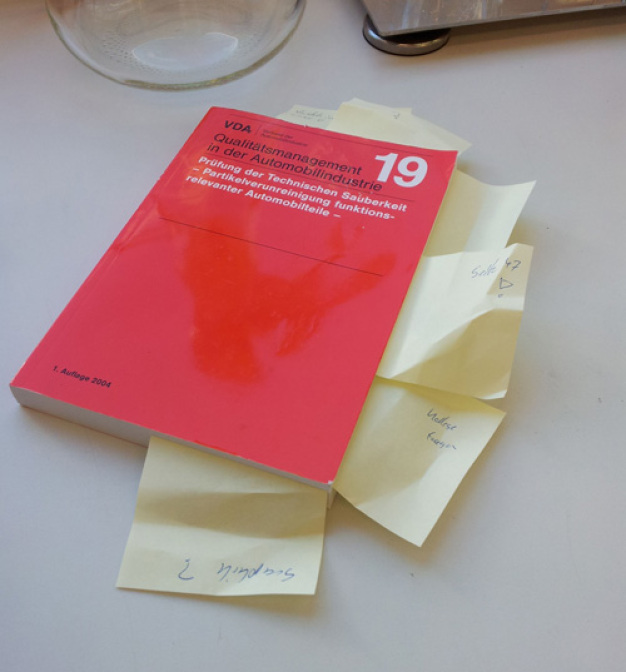
Figure 1: VDA 19 leaves questions unanswered.
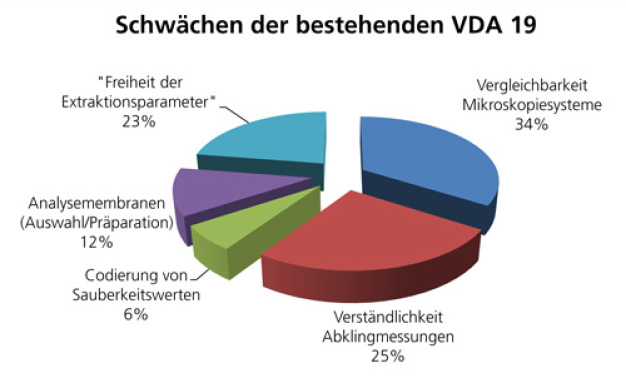
Figure 2: Example result for the weighting of industrial demand in the revision of VDA 19 (in the topic "Weaknesses of the existing VDA 19").
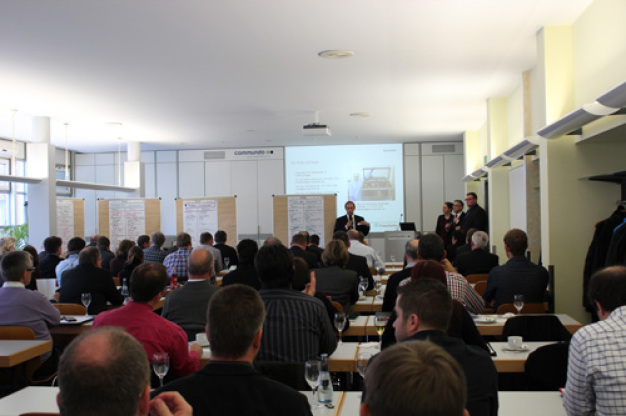
Figure 3: Kickoff event with 85 participants for the TecSa 2.0 industrial network.
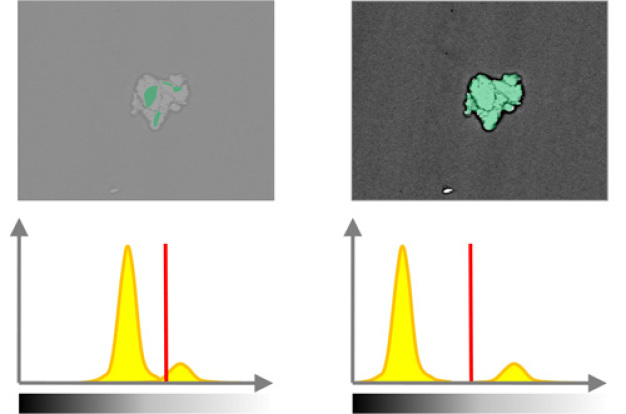
Figure 4: The significant influence of contrast and gray value threshold (red line) in automated microscopy leads to sometimes inconsistent comparability of the analysis results: incomplete detection of a particle on the left, complete detection on the right.
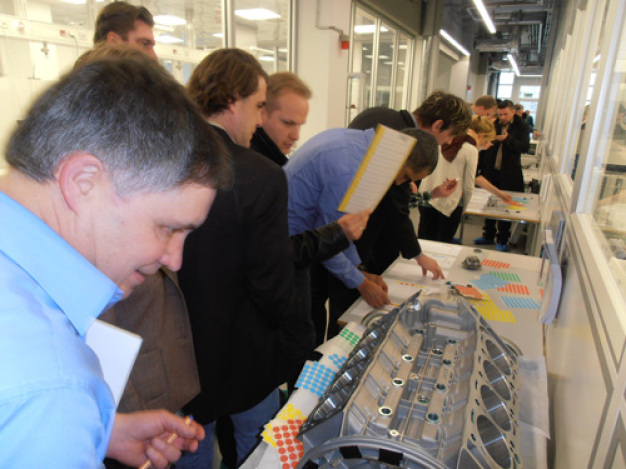
Figure 5: Project work in the TecSa 2.0 industrial network for the formation of component classes for clear assignment to extraction procedures.
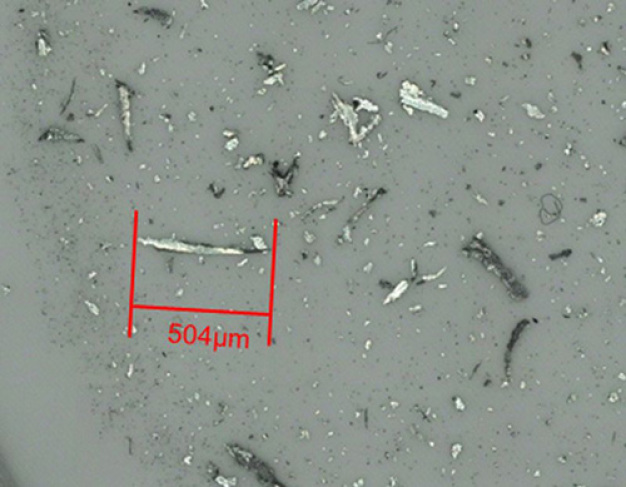
Figure 6: Killer particles or not, outliers or trend, a rethink is beginning when assessing cleanliness results.
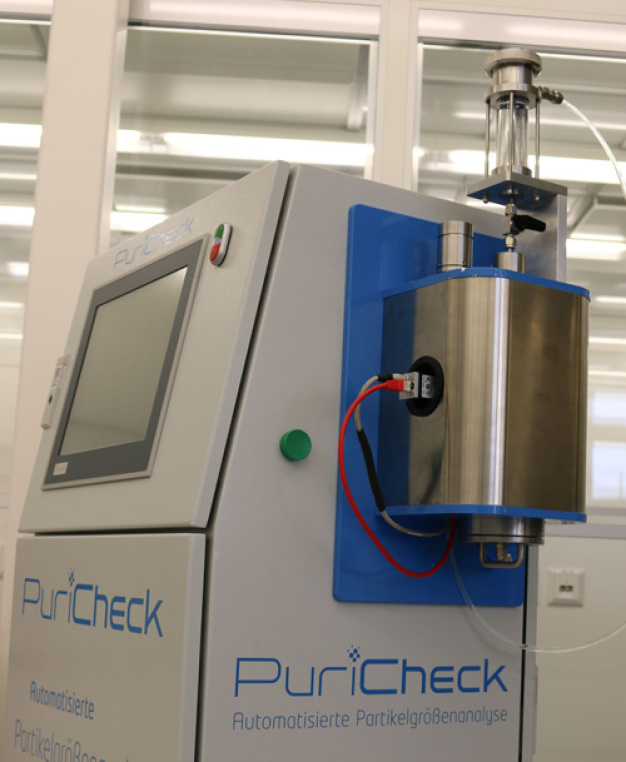
Figure 7: PuriCheck - production-line measurement system for monitoring particles in components and manufacturing processes.
The automotive and supplier industry has been "at the gates of cleanroom technology" for many years when it comes to the assembly of particle-sensitive components. With today's cleanliness limit values of usually a few hundred micrometers, it occupies, from the perspective of cleanliness technology, the gap between cleanroom manufacturing and conventional, uncontrolled production environments. The cleanroom or clean zone are environment concepts that have gained widespread acceptance here. Besides manufacturing sufficiently technically clean parts or assemblies, another central aspect of cleanliness technology in today's extensive global supply networks is: the testing of cleanliness quality, i.e., the measurement-based assessment of technical cleanliness. The VDA 19 framework has established itself as the standard here for years, extending well beyond the borders of Germany. Today, it is estimated that over a thousand laboratories worldwide test technical cleanliness for quality assurance in automotive manufacturing.
A broad base of experience has been established
It has now been nine years since the world's first comprehensive framework for testing the technical cleanliness of automotive components was published (Fig. 1). Back then, it was an important but also a bold step, as the measurement of particles is a significantly more complex procedure than, for example, testing geometric features of components, and the factors influencing the "contamination" value are very diverse and span the entire component or product development process. The basic idea of assessing cleanliness through an extraction process, which first separates particles from the test part and is tuned to the respective component via so-called cooldown measurements, has proven very effective. Among the various analysis methods available and permitted, automated microscopy has become widespread, significantly overshadowing the previously more common gravimetric methods. However, there are also a number of problems that could not be solved with the current form of VDA 19 or topics that have not yet been included. At the same time, the knowledge within the affected industry has developed into a broad but inconsistent pool of experience: the time for a revision of VDA 19 had come.
The specific need
To specify this need for revision and to align it precisely with the requirements of the companies involved, an industry workshop was held at the Fraunhofer IPA as early as 2012. This open workshop for all interested parties was attended by 80 participants from 56 company locations and reflected the needs of automakers, suppliers, and service providers regarding technical cleanliness. The focus of the event, besides numerous presentations from different companies, was an extensive group work in ten small groups, aiming to detail and prioritize the revision needs of VDA 19 across five predefined topics:
• Weaknesses of the existing VDA 19
• New techniques
• Occupational safety
• Cleanliness limit values
• Quality management
An exemplary result for the topic "Weaknesses of the existing VDA 19" is highlighted in Figure 2:
In this example, it is shown that the sub-item "Comparability of microscopy systems" was weighted highest at 34%. This workshop result aligns very well with the findings of numerous ring tests and laboratory comparisons conducted in recent years, which uncovered exactly this deficiency in the comparability of microscopic analysis results.
Based on this and all other results from the workshop, the Fraunhofer IPA developed a project proposal on how to structure the upcoming revision topics within an industry consortium.
The TecSa 2.0 Industry Consortium
This industry consortium, titled "Technical Cleanliness (TecSa) 2.0," commenced work with the kickoff meeting on December 13, 2012 (Fig. 3). To address the upcoming topics, a total of seven OEMs, 19 suppliers, 15 service providers or manufacturers of cleanliness analysis equipment, and three associations came together for one year under the leadership of Fraunhofer IPA. The technical work on discussing weaknesses of the current VDA 19 and integrating new topics and technologies is carried out in four sub-committees, called core teams. The topics of these four core teams—"Extraction," "Analysis," "Limit Values," and "Escalation"—as well as the content of individual meetings are based on the results of the needs assessment from the open workshop. Additionally, there are topic meetings independent of working groups on issues of safety and health, especially concerning extraction with solvents; a topic that has gained prominence through the new professional role of "Technical Cleanliness Inspector."
The common goal
Despite the wide range of topics to be addressed, discussed, and standardized, the goal is to complete the revision work within 18 months to lay the foundation for a consensus-based document, which is to be submitted to VDA QMC and serve as the basis for a revised and expanded edition of VDA Part 19.
The motivation for this work and the high commitment of the participating industry partners are:
• Achieving higher comparability of analysis results
• Ensuring better health protection for testing personnel
• Incorporating additional measurement sizes or analysis methods if a consensus-driven need exists
• Demonstrating unified approaches to establishing limit values, an aspect not previously included in VDA 19
• Describing procedures for handling cleanliness values in quality management, such as when limit values are exceeded and subsequent measures, which go beyond the scope of the current framework.
The aim of this revision is to further develop VDA 19 as a "user-friendly" framework—both technically competent and up-to-date with current technology, and practical, meaning that implementability and costs, especially from the perspective of smaller suppliers, are always a focus of discussion. The coordination of the consortium by a neutral institute, Fraunhofer IPA in Stuttgart, continues to ensure independent, stakeholder- and manufacturer-neutral solutions.
Comparability is indispensable
An example of the ongoing technical work is an illustrative look into the core team "Analysis": Due to the high prioritization of "Comparability of Microscopy Systems" (see Fig. 2), this topic was the focus of the first core team meeting. Here, two approaches developed in recent years within a working group on oil cleanliness, led by BMW and Volkswagen, were discussed intensively: The first is to prevent excessive filter loading and thus the risk of particles touching or overlapping, which would prevent image processing from distinguishing them in the microscope. A maximum permissible filter area coverage, checked automatically by microscopes, could be a promising approach. The second involves a standardized algorithm for illuminating the analysis filter and setting the gray value threshold, both of which significantly influence the count and size measurement of particles on the analysis filter (see Fig. 4). The intensive discussion revealed that both approaches have very high potential for application in the field of technical cleanliness, and a proposal based on this will be incorporated into the relevant chapter of VDA 19.
Another issue affecting the comparability of component cleanliness results is the "freedom of extraction parameters." Not only parameters like flow rate or ultrasonic power density but also the choice of extraction method itself (syringe, ultrasound, rinsing, shaking) remains entirely at the discretion of the user. To create a decision matrix for the revised VDA 19 that enables users to select the appropriate extraction method for their testing task, an extensive evaluation was conducted within the "Extraction" subcommittee. The 40 participants of the working meeting were tasked with evaluating 50 different components regarding suitable extraction methods within one hour. The selection was made by sticking different colored dots on the components (see Fig. 5). What might seem like a group activity on a cruise ship at first glance actually demonstrates one of the outstanding advantages of the revision work within an industry consortium. Through the collaborative effort of 40 cleanliness experts, an overview was generated in just one hour that would otherwise take several months based on considerations, questionnaires, and technical discussions. The result of this analysis is the classification of automotive parts into eight groups (based on size, complexity, and location of cleanliness-relevant surfaces), which can be assigned to specific extraction methods or combinations of methods.
The "Killer Particle" is being questioned
Among many important points on the revision list, one topic stands out particularly because it was not included in the current VDA 19: the creation of limit values and measures in case of exceedances. Over ten years ago, when discussions on technical cleanliness began and the foundations for today's VDA 19 were laid, the term "Killer Particle"—a terminology from the semiconductor industry—was adopted into the automotive quality world (see Fig. 6). The idea behind it was simple and intuitive: a dirt particle exceeding a critical size and located at a sensitive point in a fluid system in the vehicle inevitably leads to malfunction and "kills" the system, e.g., by blocking a valve or clogging an injector. The consequence was cleanliness limit values that were very strict both in formulation and in response to exceedances. For example, if a cleanliness limit specified a maximum particle size of 200 µm, any larger particle was considered a killer particle, leading to a non-conformance report for the tested component—either the component batch was blocked or an industrial parts cleaning system was not approved.
Today, with experience from thousands of cleanliness analyses, a rethink has taken place among leading automakers such as Audi, BMW, Daimler, Porsche, and Volkswagen, actively involved in TecSa 2.0. The reasons are two points that have come to the forefront in recent years for developers and quality managers:
• Unlike other quality-relevant sizes, such as the diameter of a bore or other dimensional measurements, dirt particles are not intentionally manufactured to a specific length but occur with a wide distribution, e.g., during machining processes. For example, machining in large-series production cannot be controlled precisely enough to produce chips only up to exactly 200 µm in length. Also, cleaning and filtration in cleaning systems are never so precise and sharp in separation.
• On the other hand, it has been shown that systems in vehicles do not always fail immediately and necessarily when a single particle that does not meet cleanliness specifications is present, even if the probability of failure increases. In a hydraulic system with opening and closing valves, the size, location, and timing of the particle must all align to cause jamming.
Within TecSa 2.0, two core teams are discussing intensively how these points can be appropriately considered in cleanliness specifications and reaction plans. It is already certain that the revised VDA 19 will include new chapters or passages on this topic.
Understanding is required
However, this does not mean that mastering technical cleanliness becomes less important; quite the opposite. More and more systems and components are being assigned cleanliness requirements, but the perspective on the topic is shifting somewhat. In the past, discussions between customers and suppliers often focused on the "last micron" with little constructive outcome. In the future, understanding and control over the cleanliness state of processes and process chains will be more in focus. The previously very precise but also lengthy, expensive, and time-consuming laboratory analyses according to VDA 19 can only partially help here. New, fast, and cost-effective particle monitoring systems, which may not need to have the same high precision but can be used directly in manufacturing or near-production, will become necessary.
An approach developed at Fraunhofer IPA in Stuttgart under the name "PuriCheck" is gaining high industrial relevance with this new trend (Fig. 7). The idea of capturing particles in the media flow via an analysis sieve and measuring them with an integrated camera and image processing has already proven successful in several pilot applications. Further potential exists in retrofitting extraction chambers for component cleanliness determination, as presented at this year's parts2clean. This allows extraction and microscopic analysis to be performed in one step, significantly increasing the sample size for cleanliness analysis. The system is currently being developed to final market maturity by Nägele Mechanik, a Swabian medium-sized company that has been handling projects related to particle issues in the automotive industry for many years. For company CEO Ulf Nägele, the focus is on: "I see a very good opportunity with this product to measure cleanliness—a key quality parameter—not only in the laboratory but also to control it directly in production. The main focus of current development steps is on the robustness of the design. Only a reliable and easy-to-use sensor system will be accepted in industry."
Close to completion
The technical work within TecSa 2.0 is nearing completion. An initial draft of the new framework will be presented to the industry consortium participants at the end of June 2014. After the so-called "Yellow Print Phase," which is scheduled to begin in September 2014, and following the processing of any comments, the "Red Print" will be produced, with the official release of the new VDA 19 expected in early 2015. On October 28, 2014, Fraunhofer IPA will present the detailed contents of the revised standard at an open event for all interested parties outside the industry consortium.

Fraunhofer-Institut für Produktionstechnik und Automatisierung IPA
Nobelstraße 12
70569 Stuttgart
Germany
Phone: +49 711 970 1667
email: joerg-dieter.walz@ipa.fraunhofer.de
Internet: http://www.ipa.fraunhofer.de