

- R+D & Community of Interest
- Translated with AI
The high-tech plastics of today
Material performance and green technology
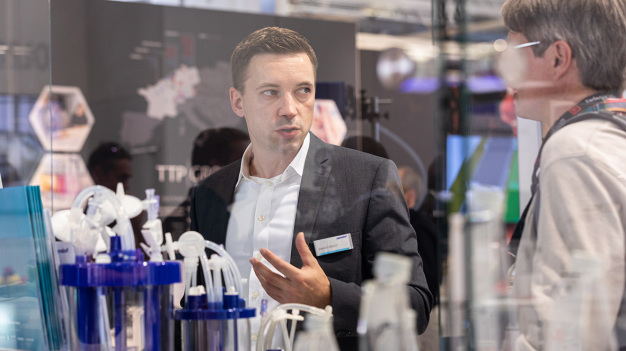
They are a matter of course: Tubes and connectors made of plastic for the laboratory. (Image: MCH Messe Schweiz (Basel) AG)
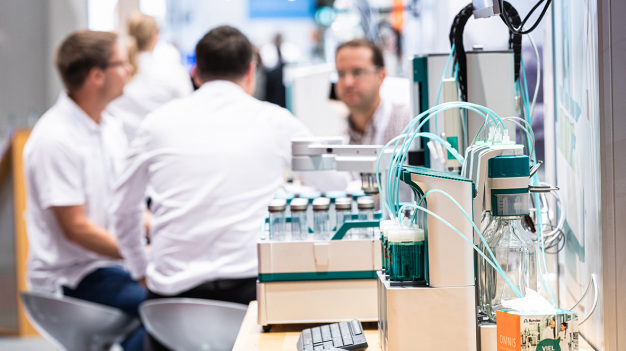
They are a matter of course: Tubes and connectors made of plastic for the laboratory. (Image: MCH Messe Schweiz (Basel) AG)
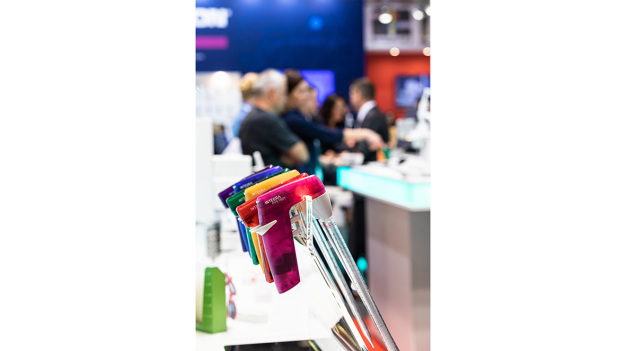
Even for classic glass pipettes – here with a practical pipetting aid – there are alternatives: they are not commonly found, but in the laboratory, sometimes a robust, inert, and less fragile option: plastic volumetric and measuring pipettes. (Image: MCH Messe Schweiz (Basel) AG)
It's complicated: Numerous images of cluttered streets have elevated plastics to a dangerous enemy for a significant portion of the population. However, this is just one perspective. Because plastics not only offer a wide range of properties and applications but can also be largely recycled – and this is reflected in real operational practice.
The vision points towards "green" materials: Current high-tech plastics incorporate CO2 into environmentally friendly textiles or enhance the performance of wind turbines. Medical applications are currently especially prominent: for example, hygiene masks made of polypropylene (FFP masks), protective clothing coated with plastic cellulose, or syringes, hoses, and ventilator components.
However, it will be crucial to utilize as much of the plastic waste as possible as secondary raw material. Not without reason did BASF invest a year and a half ago in the Norwegian pyrolysis and raw material purification specialists Quantafuel to recycle mixed plastic waste.
Reused material – almost as good as the original
A promising future idea involves using steam crackers for plastic recycling. In these well-known facilities, collected and sorted plastic waste could serve as feedstock instead of oil and gas, along with bio-based old materials (e.g., paper, wood, and clothing). In laboratories, materials for 3D printing are already being produced from recycled paper and orange peels.
In large-scale use of recycling steam crackers, skillful temperature control leads to success (e.g., 850 °C, substrate-specific heating rate). The recovered plastics can then have the same quality as the original collected plastics.
Skillful tempering also enables more flexible manufacturing of plastic packaging. Small heating elements are precisely controlled based on ceramic thick-film technology to locally heat plastic films in a defined manner.
Precise tempering and saving plastic
Specifically, on the surface of a roughly 1-millimeter-thick ceramic substrate, heating conductor loops in the form of pixels or ring elements are embedded. They transfer their heat to a plastic mold when in physical contact. In a modern standard version, 40x40 mm heating modules have 64 pixels, each measuring 5x5 mm, arranged in an 8x8 grid ("cera2heat", Watttron, Freital).
The serial production of this energy-efficient and highly dynamically controllable matrix system is planned for 2021. The advantage: The wall thickness distribution of a molded part (e.g., yogurt cup) becomes more homogeneous, and a thinner plastic film can be used for the same end product (10 to 30 percent material and cost savings).
In a second version ("cera2seal"), packaging for thermally sensitive products can be sealed without affecting the product (e.g., chocolate). This process is currently of particular interest for spouted pouches. Among other things, such "pouches with spouts" can now be made from monomaterials for the first time (e.g., for blood donations and pharmaceutical applications).
The matrix process ("cera2heat") can produce blister packs for the pharmaceutical industry more simply and quickly than traditional stamping methods with high material usage. It could also produce highly irregularly shaped packaging in a single step. In electronics, the tempering process is used to transform two-dimensionally printed circuits on foil into stable three-dimensional geometries.
Smart cleanroom technology: Focus on airflow
The coating of plastic films with functional layers plays a crucial role, especially in photovoltaics.
For example, this works as follows: The functional substances are dissolved, and the resulting liquid mixture is prepared as a bath. The films then pass through this, where the functional substances quickly crosslink and adhere to the carrier material. At the same time, the solvent evaporates. These substances may contain (and in real-world applications, often do) extremely harmful and unpleasant substances when inhaled. Therefore, the solvent must be extracted.
Such a process requires suitable cleanroom technology, here employing a mini-environment. In the example presented, a horizontal (instead of vertical) airflow was chosen according to the film geometry, contrary to the original functional specification. Additionally, a pressure-controlled airflow was implemented; this, combined with extraction in the critical process area of the film coating within the mini-environment, ensures a defined pressure difference of ± 0 Pa relative to the surroundings.
Biological ocean cleanup
Thus, plastics are already effective today and are becoming even better with each material and process innovation.
When it comes to removing residual plastic, ideally, small organisms could help us. For example, it is known that a moth species can digest polyethylene with the help of plastic-eating bacteria.
Even the removal of plastic already entering the oceans now seems possible. In the future, plastic treatment plants could use genetically modified diatoms, such as Phaeodactylum tricornutum. The blueprint for the well-known plastic-degrading enzyme PTEase would be inserted into these marine organisms. It originates from another microorganism: Ideonella sakaiensis. However, since Ideonella does not thrive in saltwater, the approach involves using diatoms instead. This method is particularly suitable for micro-particles (keyword: nanoplastics).
The full range of the trends presented here regarding innovative plastics and their production and processing will be showcased at this year's Ilmac in Basel.

ILMAC
MCH Messe Schweiz (Basel) AG
Messe Basel
4005 Basel
Switzerland
Phone: +41 58 206 3106
email: anne.klipfel@ilmac.ch
Internet: http://www.ilmac.ch