


- Buildings & Rooms
- Translated with AI
Gerhard Koblenzer
The crucial "more" of possibilities
Fine cleaning in chamber systems
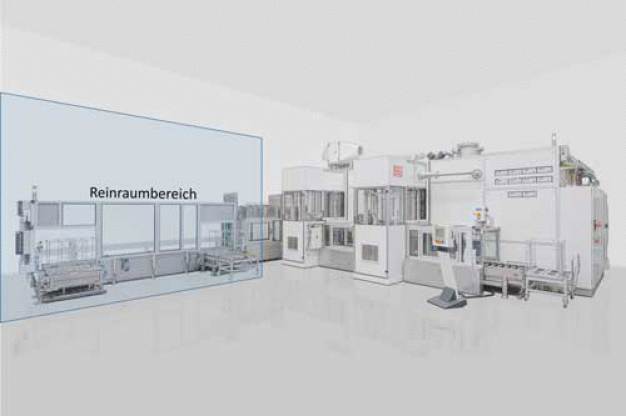
CNP-/US double-chamber system for fine cleaning with direct connection to a cleanroom. (Photos/diagrams: LPW Reinigungssysteme GmbH)
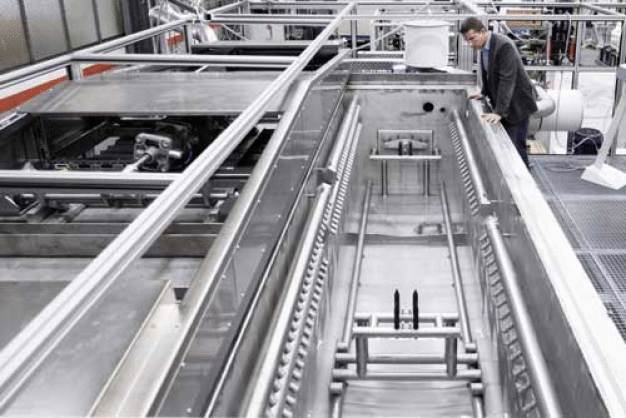
The chamber technology is also suitable for fine cleaning. (Photos/diagrams: LPW Reinigungssysteme GmbH)
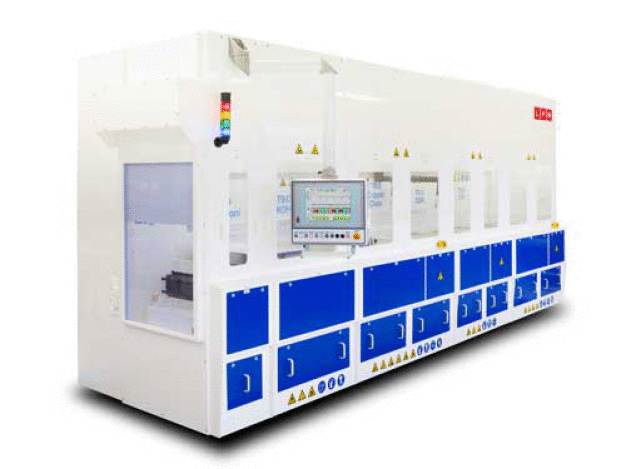
The chamber technology can also be integrated into a classic conveyor system with top loaders. (Photos/diagrams: LPW Reinigungssysteme GmbH)
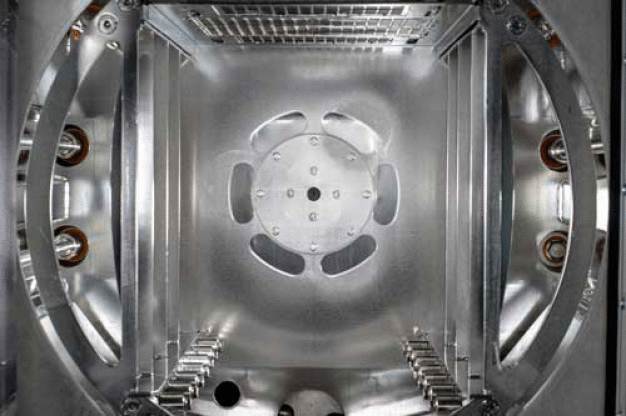
Specifically surface-treated and subsequently electropolished treatment chambers and fittings support the cleaning process. (Photos/diagrams: LPW Reinigungssysteme GmbH)
Fine cleaning tasks have traditionally been primarily found in the fields of optics, semiconductors, or medical technology over the past decades. And it has proven/continues to prove effective to clean here with high-quality ultrasonic multi-bath systems. However, with increasing demands in the aforementioned industries as well as new challenges in the automotive sector or in general industry, new processes are now in play. For example, single- or multi-chamber systems with hermetically sealed treatment chambers offer significantly more possibilities.
Labeling of fine cleaning tasks
Characteristics of fine cleaning include, among other things, the risk of cross-contamination with upstream/downstream processes, handling, or environmental influences. The dilemma arises when fine cleaning requirements are combined with complex component geometries. Because, of course, on the one hand, it is necessary to avoid contamination through process-technical and mechanical components (particulate/film through valves, rotational movements, dead zones, etc.). On the other hand, due to these critical component geometries, a high emphasis must also be placed on the mechanical and process-technical execution. Additionally, this type of cleaning goods undergo pre-processes that are often associated with high dirt loads (e.g., machining, grinding, etc.). This results in the use of
- high volume flows with defined media
- higher spray and flood pressures
- relative movements (swinging, rotating, interval rotation)
- use of vacuum-based cleaning methods, with and without ultrasound
This cannot be implemented in open multi-bath systems or only with significant limitations. Also, the usual media circulation systems need to be critically examined regarding their filtration rate.
Previous system technology
In the past and still proven today are classic high-quality ultrasonic batch cleaning systems. The focus is on the mechanical cleaning capabilities of ultrasound and, for some requirements, megasonics in combination with suitable cleaning chemistry and the number and quality of rinsing brushes. The circulation filtration systems are designed so that floating contaminants are washed off the surface, filtered out, and the cleaned medium can be recirculated. In some cases, media extraction also occurs below tank level. The material movements are adapted to the ultrasonic frequency in the form of a stroke-lowering movement or, in some cases, as a rotational movement.
New and/or previously unresolved tasks
In all industrial sectors, there is an increasing need for fine cleaning solutions for more complex challenges. Whether in medical technology products (e.g., endoscopes, cannulas, porous implants, guide wires) or in the semiconductor industry (e.g., valves, cooling elements/pipes). Due to new manufacturing processes, such as additive manufacturing (3D printing), special coating and bonding procedures, and the rising demand for high-quality sensors (in the automotive industry), new tasks arise to eliminate fine particulate and filmic contaminants. Classical ultrasonic systems reach their physical limits with complex geometries/capillaries from the aforementioned areas. With high contamination levels caused by pre-processes, higher demands are also placed on filtration rates and thus on the recirculation volume. Finally, there is a risk of damage to coated surfaces from ultrasound during cleaning.
Chamber technology
The chamber technology has proven itself since then mainly in automotive supplier and general industry. For fine cleaning tasks, it has long been preferred over batch ultrasonic systems in many areas. Reasons for this are the extended capabilities provided by hermetically sealed treatment chambers. They enable the use of pressures/vacuums, the utilization of nearly unlimited volume flows, higher filtration rates, and thus a significantly faster removal of contaminants. The vacuum systems even allow for pressure-free and thus gentle filling of the treatment chamber under vacuum. Overall, the points mentioned lead to improved media quality in cleaning and rinsing stages. With the possibility of intermediate blow-off and optimized media distributors, media carry-over can be minimized, and the total number of cleaning and rinsing processes required for a task can be significantly reduced compared to traditional batch ultrasonic systems.
With two or more treatment chambers, cleaning and rinsing stages can also be separated without carry-over, and as a side effect, throughput can be significantly increased. Media preloads and treatment chambers are process-technically separated in this type of system, allowing for spatial separation if needed. The systems can, for example, be integrated into a cleanroom environment or as inline chambers in the cleanroom transition (Quality Gate). The preload tanks with filtration/media preparation modules can be located outside or on a different level. In practice, these systems are suitable for all sizes.
Additional advantages:
- Re-/cross-contaminations are almost non-existent because the entire media-contact environment is continuously cleaned
- The media preload is usually 1.5 to 2 times larger than the treatment chamber
- The hermetically sealed chamber can be directly connected to suitable media streams (air or liquids)
By integrating vacuum-based cleaning methods (cyclic nucleation), tasks such as internal pipe cleaning or the treatment of densely packed complex components can be easily solved (packing density advantages). Furthermore, chamber technology is suitable for both batch and single-part cleaning, steam cleaning, and steam rinsing applications, as well as all known drying methods.
Application example
In the semiconductor industry, open multi-bath/batch ultrasonic systems are indispensable for wafer cleaning. For use in, for example, valve assemblies, mechanical units, heat exchangers, and cooling lines, this technology is only limited or not suitable at all.
LPW Cleaning Systems GmbH has developed a front-loader double-chamber system with a three-stage media preload for these applications and has implemented it multiple times. The processed aluminum assemblies (max. batch size 800 x 500 x 650 mm) are cleaned after processing and before final assembly in a cleanroom.
The purity requirements associated with the task are divided into several criteria (excerpt):
- Organic, filmic contamination: 10 - 100 ng/cm² larger C7
- Particulate contamination: approx. 30 µm < 4 particles/dm² under UV light, 0.3 µm ≤ 10,000 particles/cm², 0.2 µm ≤ 20,000 particles/cm²
Further requirements were set for metals, inorganic contamination as limit values for about 40 metals and anions.
Process sequence:
Automatic transport under laminar floor into the first treatment chamber
Chamber 1
- 1 cleaning preload
- 1 rinsing preload with distillation treatment, 18 bar pressure floods with high volume flow during cleaning
- Ultrasound cleaning/rinsing (Cleaning/Rinsing 1)
- CNp pre-cleaning (cyclic nucleation for both baths)
Chamber 2
- Fine rinsing with ultrasound + CNp (cyclic nucleation)
- Fine spray rinsing with ultrapure water
- Hot air CNp-/vacuum drying
- Automatic transport to connected cleanroom
Conclusion
The chamber technology offers the possibility, especially for complex and challenging geometries, to use the well-known and proven wet-chemical cleaning and all drying processes. Additionally, new technologies such as cyclic nucleation or hybrid processes can be utilized with all their advantages. The hermetically sealed chambers, optionally designed as front-, top-loader, or inline versions, can be integrated with high flexibility into cleanroom environments. The ability to spatially separate media preloads from the cleaning location makes the chamber variant ideally suited to meet current and future requirements.

LPW Reinigungssysteme GmbH
Industriestraße 19
72585 Riederich
Germany
Phone: +49 7123 38040
email: info@lpw-cleaning.de
Internet: http://www.lpw-cleaning.de