



- Translated with AI
Vera Klopprogge, Referentin externe Kommunikation bei der Siemens-Division Building Technologies
Technical fire protection in life science environments
No experiments!
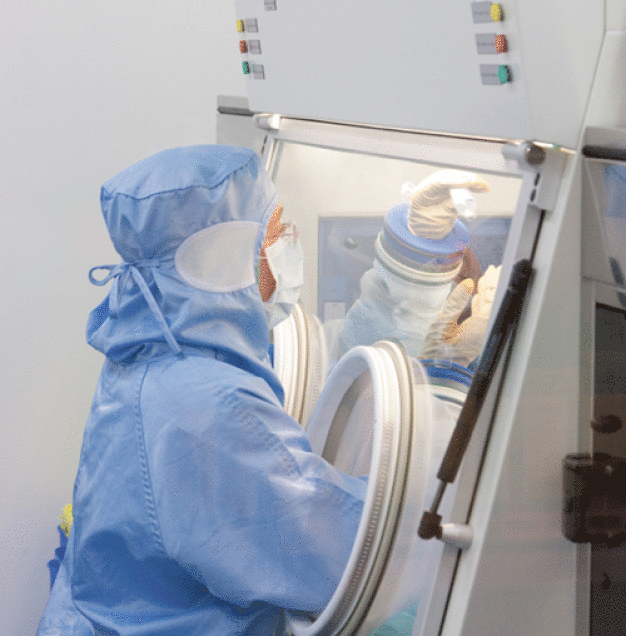
Sensible substances and elaborate processes characterize life science environments such as cleanrooms and laboratories. This also means: special requirements for technical fire protection. (Source: Siemens AG)
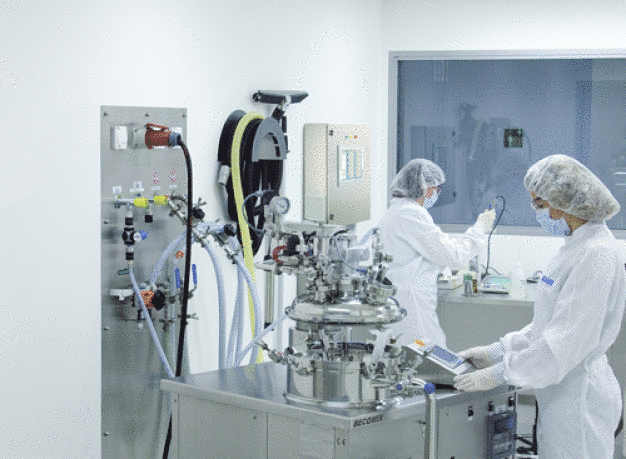
Sensitive substances and elaborate processes characterize life science environments such as cleanrooms and laboratories. This also means: special requirements for technical fire protection. (Source: Siemens AG)
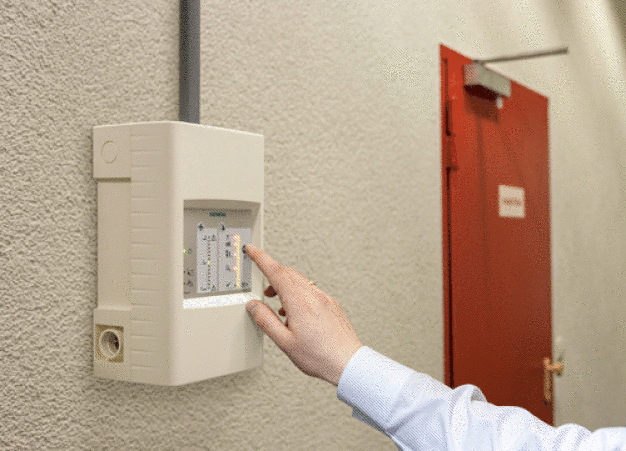
The new VdS-certified intake smoke detector models FDA221 and FDA241 from Siemens feature a patented measuring chamber. (Source: Siemens AG)
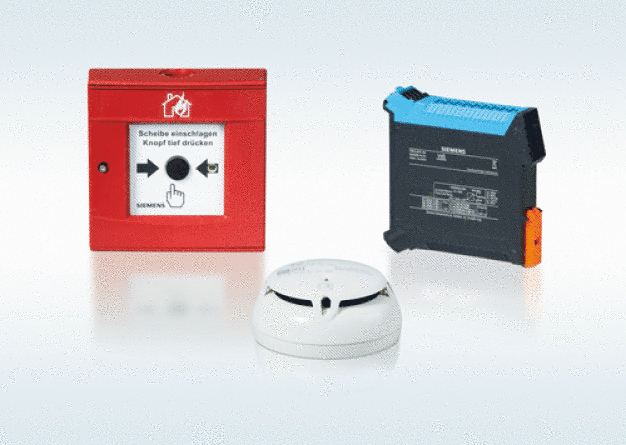
Notification portfolio for explosion hazard areas. (Source: Siemens AG)
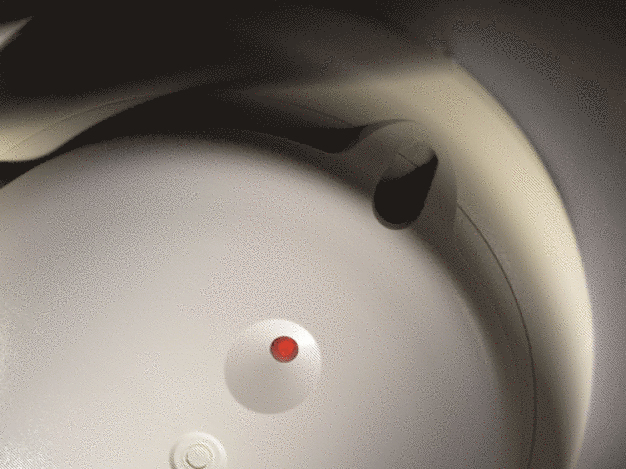
Fire detectors must reliably perform a dual function: First, they must be able to detect early signs of a potential fire. And second, they must also be able to interpret the recorded values correctly. (Source: Siemens AG)

Author Vera Klopprogge, External Communications Officer at Siemens Division Building Technologies. (Source: Siemens AG)
Sensitive substances and elaborate processes characterize life science environments such as cleanrooms and laboratories. This also means: special requirements for technical fire protection. In these special environments, tamper-proof fire detectors are used, which can be intelligently linked with fire alarm and building technology for optimal hazard management.
Life science environments are resource-intensive workplaces, both in terms of personnel and assets. An operational interruption results in significant losses of time and money. At the same time, laboratories and cleanrooms pose potential hazards due to the processed, sometimes risky substances.
Typical causes of fire in such environments include smoldering fires due to electrical risks, spontaneous combustion of deposits in ventilation ducts, or the leakage of flammable liquids and gases. Fire and smoke damage can lead to the loss of products, equipment, and assets, causing high financial losses within minutes. Simultaneously, due to massive airflow, sensitive systems can become so contaminated that they must subsequently be replaced.
Parameter-based Detection
For reliable early detection of emerging fires, the full spectrum of fire, heat, and flame detectors is used in life science environments, often also in explosion-proof versions (Ex zones). Detection methods that work well in standard environments such as offices or hotels are often overwhelmed in laboratories. For example, even a modern multisensor detector might interpret a controlled chemical reaction as a fire. The resulting false alarm can trigger the following responses: automatic alerting of the fire brigade, an automatically activated voice alarm system informing all persons in the building about evacuation, fire control systems interrupting production, shutting down machines, and stopping elevators at designated points.
Fire detectors in this context must reliably perform a dual function: first, they must be able to detect early signs of a potential fire. Second, they must correctly interpret the measured values.
A parameter-based fire detection system fulfills this dual requirement. For example, Siemens' Sinteso S-Line fire detectors analyze signals from sensors using algorithms that break them down into mathematical components and compare them independently with programmed parameters. As a result of these comparisons, the detector outputs the appropriate hazard signal. This is enabled by Siemens' patented ASAtechnology (Advanced Signal Analysis), ensuring detection and tamper-proof fire recognition even under the most challenging conditions.
Intake Smoke Detectors
However, there is a general limitation: even the most powerful point detectors on the ceiling depend on particles reaching the sensors in sufficient quantities. This is not reliably possible, for example, in laboratory fume hoods. Additionally, regular maintenance of detectors in such environments is no longer feasible. In this context, intake smoke detectors (Aspirating Smoke Detectors, ASD) play a crucial role.
Intake smoke detectors continuously draw air samples from monitored areas and check them for particles. The air samples are sucked through a network of pipes with defined openings and delivered to the measurement chamber. This allows even the smallest particles from emerging fires to be detected. The new VdS-certified models FDA221 and FDA241 from Siemens offer further advantages: the aerodynamic design within the patented measurement chamber largely eliminates the need for additional filters, as the particles introduced into the chamber remain in the airflow and are carried out again.
Inside the measurement chamber, the new intake smoke detectors recognize the size and concentration of particles. They use optical dual-wavelength detection, meaning they utilize two wavelengths of light—blue and infrared—for detection. Unlike conventional intake smoke detectors, this allows them to distinguish precisely between smoke and false alarm sources. As a result, fires are detected early and reliably, even during their initial formation.
In addition to intake smoke detectors, linear heat detectors can also perform special fire protection tasks in laboratories. Often, open flames are used as heat sources, increasing the risk of fire in the fume hood where technicians work. Systems developed specifically to protect fume hoods are usually based on linear fire detection technology. They detect the first signs of a fire within seconds and often also provide automatic fire suppression.
Intelligent Building Management
The integration of the fire detection system into a higher-level building management system makes sense to control the system centrally and link it with other trades. The fire alarm system can thus also utilize data and functions from other systems, such as video and access control systems or heating, ventilation, and air conditioning (HVAC). Unified management for various trades makes building processes transparent and helps achieve maximum performance of fire detection technology—dependent, for example, on HVAC systems. Since there is only one user interface for the entire building infrastructure, operation is simplified. In case of an alarm, a building management system intuitively guides the user step-by-step to the cause of the problem, enabling quick troubleshooting. This provides a better basis for decision-making during an emergency and results in shorter reaction times.
Automatically executed processes and measures can also be defined within an integrated building management system. This is invaluable in emergencies. For example, if an increasing concentration of toxic gases is detected, the exhaust rate of the ventilation system can be automatically increased to accelerate the removal of harmful fumes. When a fire is detected, blinds can be automatically raised to improve visibility of the fire event and facilitate access for rescue services. Evacuation systems can also be integrated into a comprehensive building management solution. In the event of a fire, voice announcements are triggered to quickly and efficiently guide those affected out of the danger zone.
Conclusion
Laboratories and other life science environments place special demands on technical fire protection. Parameter-based detection methods and specialized detectors such as intake smoke detectors and linear heat detectors ensure early and targeted fire detection even in the presence of specific interference sources. Additionally, integrating fire detection technology into intelligent building management offers significant advantages, such as automatically executed processes and measures during an alarm.



