


- Furnishing & equipment
- Translated with AI
Tablets in the cleanroom
Just a trend or truly useful?
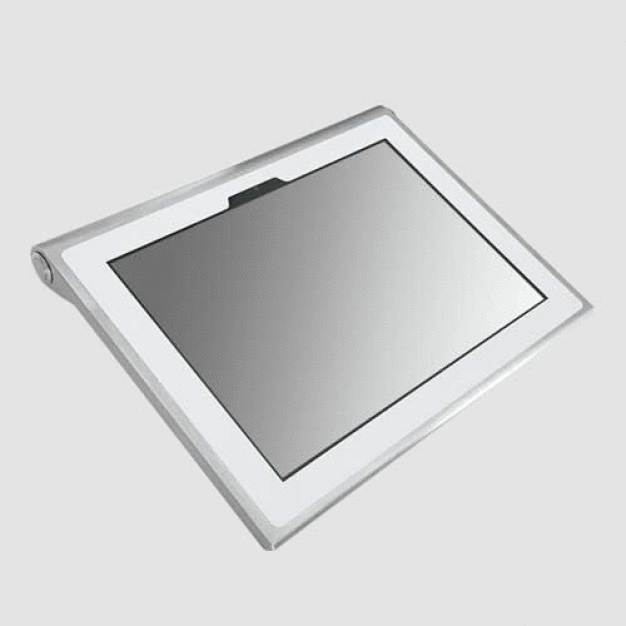
Stainless steel tablet (Image rights: Systec & Solutions GmbH)
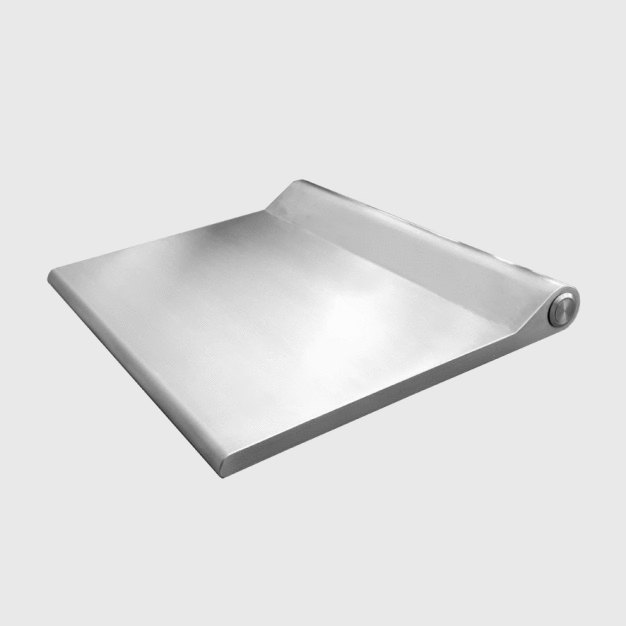
Stainless Steel Tablet Rear View (Image rights: Systec & Solutions GmbH)
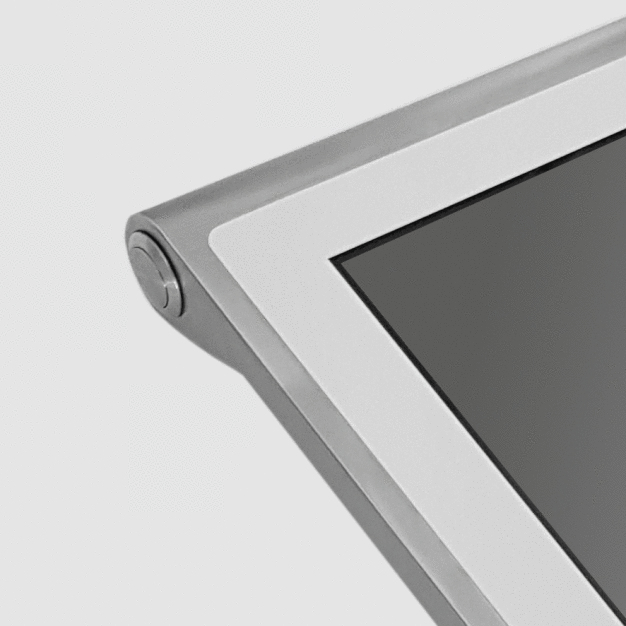
Stainless Steel Tablet IP65 Switch (Image rights: Systec & Solutions GmbH)
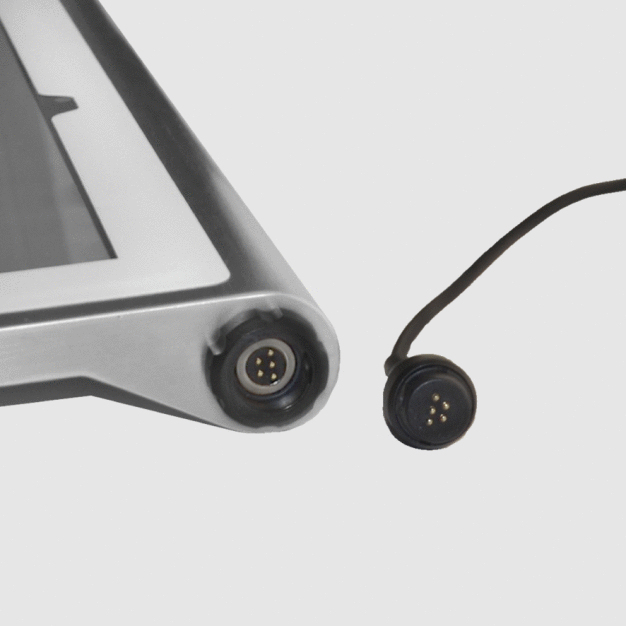
Stainless steel tablet IP65 magnetic load contact (Image rights: Systec & Solutions GmbH)
At home and in business, tablets have long arrived. But does a tablet make sense in a cleanroom or hygienic environment? When would a permanently installed or mobile HMI system be better? The answer cannot be given in general, as it depends on processes and conditions.
Questions to consider before deciding for or against a tablet are outlined by Systec & Solutions GmbH.
How often do my employees need to use the tablet and how do they use it?
Whether using a tablet makes sense mainly depends on how frequently and intensively your employees need to use it.
The more your employees need to type daily or the more information it must display simultaneously, the less suitable a tablet is, as its display is usually only about 10 inches in size. Keep in mind that the keyboard of a tablet is always displayed within the display, which makes it smaller. A tablet might still be useful if it is extended with an external keyboard.
How is the tablet integrated into my users' workflow?
The mobility of a tablet is both an advantage and a disadvantage. It can and must be carried between different workstations.
If your employee, for example, uses a scanner simultaneously, there are no free hands for input. Generally, one-handed operation is difficult and requires tablet mounts at the locations where input is needed. Additionally, the employee can be distracted while walking by using the tablet.
However, your employee can move freely with a tablet and bring it to where it is needed. This way, one device can replace several fixed installations. This reduces your investment costs.
Which applications/software should be displayed on the tablet?
Tablets are less suitable for visualizing DCS, MES, or ERP systems because the display size is insufficient. For these, we recommend using HMI systems with larger displays. The trend now is towards HMI systems with 24-inch screens. For example, tablets are well suited for paperless documentation or quality checks within the framework of Track & Trace.
What about ergonomics for my users?
Encased in a fully sealed stainless steel housing, a tablet is well suited for the cleanroom. However, this housing also adds extra weight. Wearing it continuously and performing continuous one-handed data entry while standing are not ergonomic in the long term. We recommend considering mounting options or table/wall brackets to reduce poor postures among your employees.
The optimal ergonomic workplace can only be achieved with height-adjustable, mobile HMI systems equipped with a movable keyboard and anti-glare displays. These can be ideally adjusted to the employee.
How easy is it to clean the tablet?
When choosing a tablet for the cleanroom, the question of cleanability cannot be ignored. Commercially available tablets have a plastic housing with numerous recesses and open areas for connections, speakers, or fans, allowing dirt to penetrate into the tablet. Complete wiping or spray disinfection is not possible. Moreover, the surface of the housing is not suitable for regular cleaning with aggressive agents and may crack.
Please also consider the time your employees need to spend cleaning to ensure no risks from the tablet. The less suitable the chosen tablet is for the cleanroom, the more time-consuming thorough cleaning becomes in daily operations. The IP65 protection class makes the tablet usable in the cleanroom but says nothing about ease of cleaning. Complete and highly efficient cleaning can only be achieved with cleanroom-compliant tablets designed for this purpose.
How is the tablet charged?
Often, the focus during selection is only on the cleanroom suitability of the tablets. The power connection or charging station is often overlooked. However, this is usually the weakest point for hygiene. While you can purchase tablets with IP65 or higher protection class, the associated charging stations sometimes do not meet any protection class at all. Charging within the cleanroom is thus not possible or only with risks. Be sure to inquire about the charging technology when purchasing.
For continuous use without charging options, a tablet's battery is not sufficient for a full shift. Additionally, a tablet needs time to recharge between shifts. Plan sufficient charging stations at your workstations. For minimal use per shift, a single charge may suffice.
Do I gain a cost advantage by choosing a cleanroom tablet?
A major advantage of tablets is the significantly lower initial investment compared to a fixed HMI system. However, in the long term, tablets tend to have shorter product and lifecycle cycles, which should not be neglected. They are not designed for continuous industrial use. Replacing a tablet may also involve a new qualification process, as models are constantly evolving.
Does a tablet make sense for my cleanroom now?
In summary, a tablet makes the most sense in the cleanroom if an operator occasionally needs to confirm or make a few inputs at various stations. The more inputs are required and the longer the deployment is planned, the more advantageous larger displays from fixed or mobile HMI systems with keyboards become. We recommend weighing the investment and operating costs of tablets against fixed or mobile HMI systems before making your decision.
If you decide to use a tablet, do not neglect ergonomics. Since tablets need to be placed for input, consider appropriate mounts or storage options. Depending on usage time and shift count, sufficient devices and charging options should be planned. To ensure safe operation under high hygienic requirements, only devices specifically designed for the cleanroom in stainless steel housings should be used. These are designed for use in cleanrooms of classes D, C, and B and are easy to clean.
To facilitate your comparison, the following overview shows the advantages and disadvantages of the various options:
Applications
• Tablet
- DCS - Not suitable
- MES - Conditionally
- ERP - Not suitable
- Paperless documentation - Suitable
- Track & Trace - Suitable
• Mobile HMI system
- DCS - Suitable
- MES - Suitable
- ERP - Suitable
- Paperless documentation - Suitable
- Track & Trace - Suitable
• Fixed installed HMI system
- DCS - Suitable
- MES - Suitable
- ERP - Suitable
- Paperless documentation - Suitable
- Track & Trace - Suitable
Mobility
• Tablet - Full mobility possible
• Mobile HMI system - Full mobility possible
• Fixed HMI system - Not mobile
Investment costs
• Tablet - Low, due to lower price and ability to use at various stations. No installation costs needed.
• Mobile HMI system - Medium, as one device can replace several fixed devices. No installation costs needed.
• Fixed HMI system - High, as each station requires its own HMI system and installation costs are necessary.
Operating costs
• Tablet - Medium, due to shorter product and lifecycle cycles
• Mobile HMI system - Low, as long-term use is possible
• Fixed HMI system - Low, as long-term use is possible
Ergonomics
• Tablet - Low to medium, depending on mounting options or appropriate table/wall brackets
• Mobile HMI system - Good, due to large display and keyboard adjustable ergonomically for the user
• Fixed HMI system - Good, as large display and keyboard are mostly adjustable ergonomically for the user
Cleaning
• Tablet - Depends on the model; cleanroom-compatible models are guaranteed. Commercial models are critical.
• Mobile HMI system - Good, specially developed for the cleanroom
• Fixed HMI system - Good, specially developed for the cleanroom
Are you planning to use tablets or HMI systems in your cleanroom?
Systec & Solutions is happy to show you the advantages and disadvantages of the various options based on your specific requirements. This way, you will find the ideal solution for your users.
Systec & Solutions offers a specially designed stainless steel tablet housing for cleanroom requirements. For example, it contains a Microsoft Surface tablet. Upon request, the company also offers other housings for different models. The housing is completely sealed and features a magnetic charging port and an on/off switch, both meeting IP65 standards. This ensures efficient and easy cleaning.
The proven HMI systems WAVE and PILOT are available under the name TROLLEY as mobile solutions, as well as fixed installations on various support arms.

Systec & Solutions GmbH
Wilhelm-Schickard-Str. 9
76131 Karlsruhe
Germany
Phone: +49 721 663510
email: talk@systec-solutions.com
Internet: http://www.systec-solutions.com