- Translated with AI
Dr. Steffen Orben
Suitable water quality for component cleaning

Dr. Steffen Orben - Managing Partner
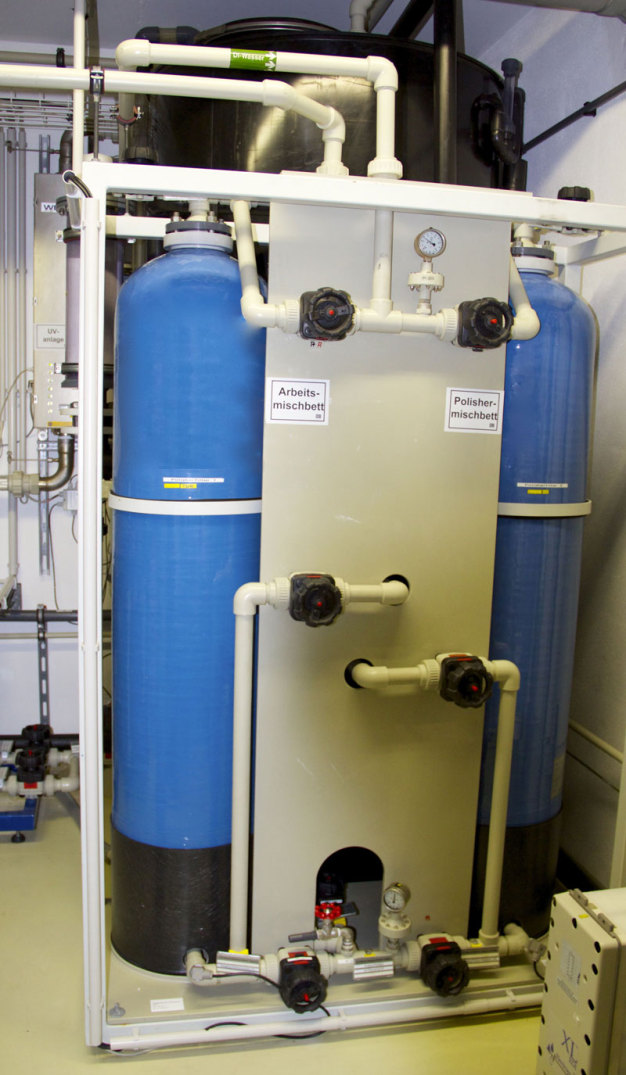
Ion exchange system for cleanroom water supply at FH Kaiserslautern / Zweibrücken campus (Photo: W. Pfeifer)

Ion exchange resins (Photo: Orben)
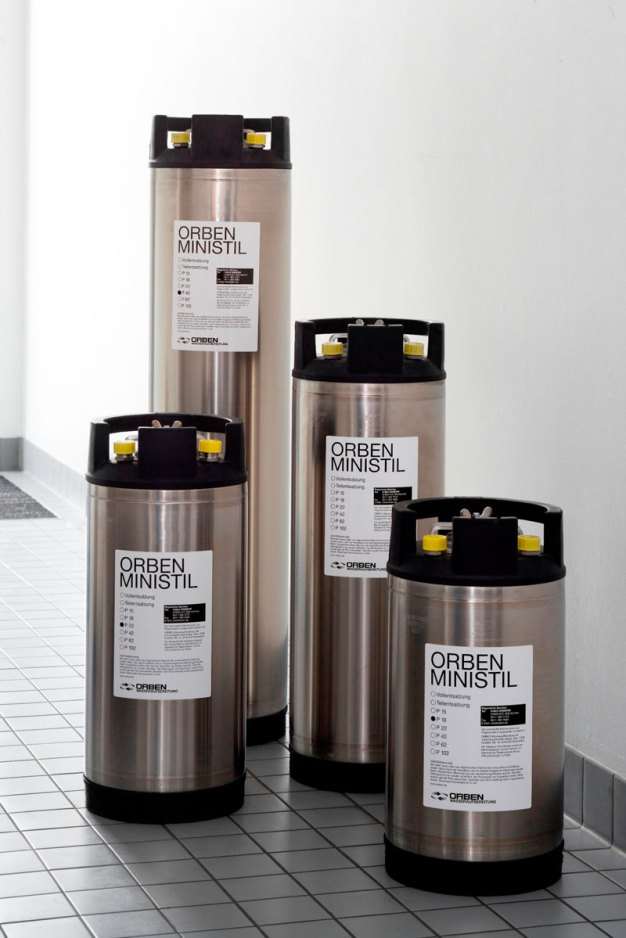
Ion exchange resin cartridges (Photo: Orben)
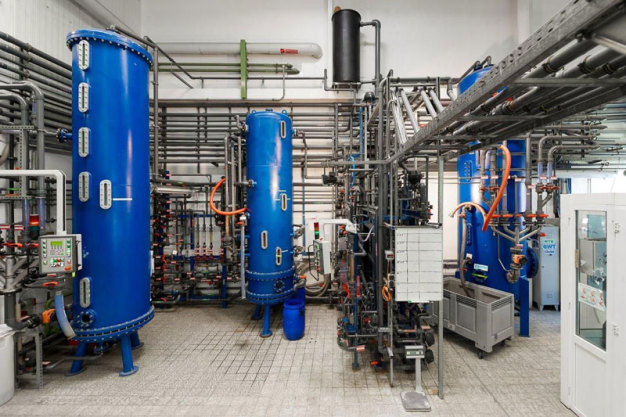
Harz regeneration (Photo: Orben)
The preparation of components for subsequent processing steps and the cleanliness of the products are of interest to all manufacturing companies. Thorough cleaning means for one product manufacturer a grease-free surface. Another wants no traces of minerals on the component after cleaning, because even the smallest deposits could render the products unusable. For all applications, the rule is: the cleaning result can only be as good as the last rinse.
Clean water is not the same as pure water
Tap water is often not sufficient for cleaning components. Instead, demineralized water is required. It removes dirt better than tap water, which contains dissolved salts and other substances. The salt concentration is determined by measuring the electrical conductivity of the water. It is given in microsiemens per centimeter [μS/cm]. Average tap water has about 700 μS/cm. Water treatment systems can remove salts from the water and reduce its conductivity. Users can choose between different methods that provide different water qualities.
Different paths to a goal
Reverse osmosis desalts water through fine filtration. Tap water is pushed under pressure through a semi-permeable membrane that retains the salts. Pure water passes through it. The resulting water has a conductivity of about 30 μS/cm, which is only a fraction of the initial water's conductivity, but still does not meet many requirements for technical cleanliness. Therefore, reverse osmosis is mostly used as a pre-treatment for ion exchange when there is a high demand for fully demineralized water and the service life of the ion exchange cartridge should be extended.
Full demineralization (deionization) using ion exchange cartridges removes the ions of dissolved salts. Cation and anion exchange resins are flushed with water and bind the dissolved electrically charged water constituents. The result is water with a conductivity of about 0.1 μS/cm, which is significantly salt-free compared to reverse osmosis. A 40-liter cartridge typically produces 5,000 liters of fully demineralized water from tap water. The resins can be regenerated repeatedly. The investment costs and handling requirements are relatively low. A service provider with on-site service and reliable batch documentation is a prerequisite. Operating costs are only incurred through the replacement service of the cartridges.
Quality has its price. This is especially true for the purchase and operating costs of cleaning systems. Those who save on full demineralization may later face quality losses and higher follow-up costs.
Who needs fully demineralized water?
The required water qualities vary depending on the product requirements of different manufacturing companies. The batch sizes of produced products also significantly influence the daily amount of process water needed.
In a university cleanroom, prototypes of microsystems are manufactured. Very fine structures and electronic circuits are created at the micrometer scale. The purity requirements for manufacturing and final cleaning are high. Fully demineralized water is required for micro-mechanical or micro-electronic components, for analyses, and experiments. Even the smallest mineral deposits between the conductors of the products could lead to malfunctions and destruction of the components. Ion exchange cartridges provide process water with a conductivity below 0.1 μS/cm. The demineralization capacity of the ion exchange cartridges decreases over time. However, in series production, reproducible results are needed. This is achieved by using two identical cartridges that ensure consistent water quality. More and more ions bind to the resins of the first cartridge. When a defined threshold conductivity is exceeded, the system switches to the second cartridge. The used cartridge can be replaced promptly. The water consumption in the prototype cleanroom is relatively low. Additional water treatment measures would not be cost-effective here.
For laboratories with high water demand, a combined water treatment system is recommended. Reverse osmosis initially significantly improves the conductivity of tap water. The downstream ion exchanger brings the water to process quality and thus has a considerably longer service life.
In cleanroom laboratories that must meet special hygiene requirements, the step of water disinfection with UV-C radiation is often added. Pathogens such as bacteria, viruses, or algae transmitted through water pose a major problem for many processes. UV technology eliminates these contaminants, which may still be present in ultrapure water, without adding chemicals.
Highest cleanliness, even in series production
In semiconductor manufacturing, a cleanroom environment is required to protect highly complex components from contamination and to maintain their functionality. Despite the cleanroom environment, there are still numerous sources of contamination. The main causes are personnel on the production line, ambient air, and chemicals generated during the process. Often, these are microscopic contaminants such as particles, molecular contamination from hydrocarbons from pumps, or ionic impurities, e.g., from handling with gloves. These accumulate on the surface of silicon wafers and can subsequently cause numerous negative effects on the products. For example, shadowing effects during photoresist exposure on silicon wafers can occur. Accelerated ions from implantation processes can be kept away from the wafer surface. Trapped particles can cause layers to crack at these points. Molecular contaminants diffuse into the layers. The adhesion of subsequent layers can deteriorate, as can their electrical properties.
A typical cleaning sequence might look like this: The wafers are first cleaned in an ultrasonic bath with a solution of water and ultrasonic cleaning agents and surfactants to remove particles from the surface. Metals and molecular contaminants are partially bound by the cleaning agent. Then, acetone or ethanol removes organic contaminants such as grease or oil, leaving carbon residues on the surface. Finally, fully demineralized water rinses away ionic impurities, and the wafers are dried in a nitrogen atmosphere using a drying oven. After each process step, the wafers are rinsed with ultrapure water. Therefore, semiconductor manufacturing requires a very large amount of ultrapure water, which must contain almost no impurities. Fully demineralized water, and depending on the product and application also UV-disinfected water, are indispensable in these processes.
More is better!?
The cleaning qualities and the required amounts of water vary greatly depending on the product and industry. Nevertheless, it is advisable for all users with cleaning water needs to consider investing in water treatment. Maintenance intervals for cleaning baths can be extended, cleaning additives can be saved. Better cleaning results lead to higher product quality. Prevention saves rework.
ORBEN Wasseraufbereitung GmbH & Co. KG
65203 Wiesbaden
Germany