




- Service
- Translated with AI
Marco Cau
Strong trio in continuous operation
Cleanroom climate - a case for humidity, temperature, and pressure sensors
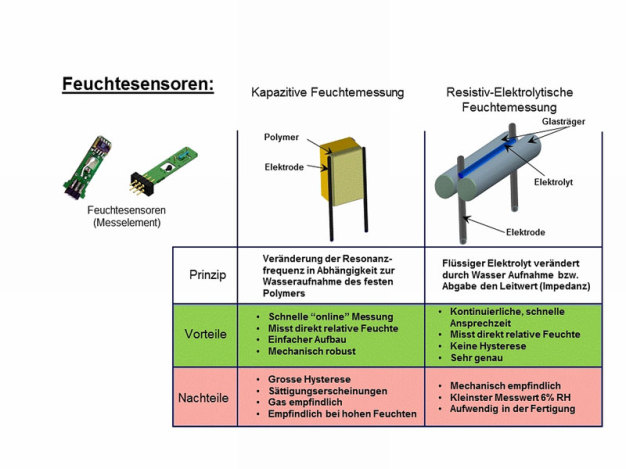
Fig. 1: Measurement Technologies - Humidity Sensors
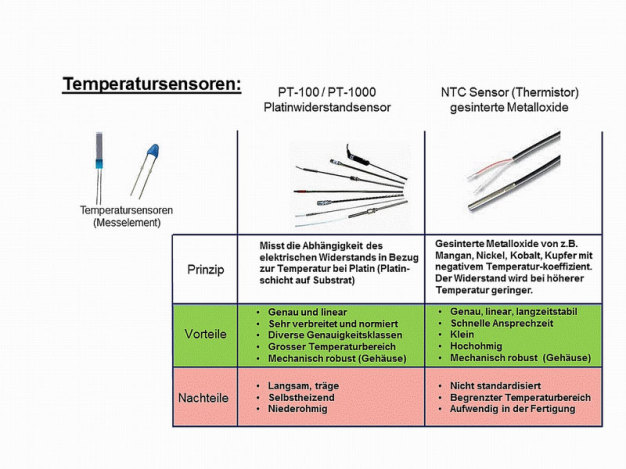
Fig. 2: Measurement Technologies - Temperature Sensors
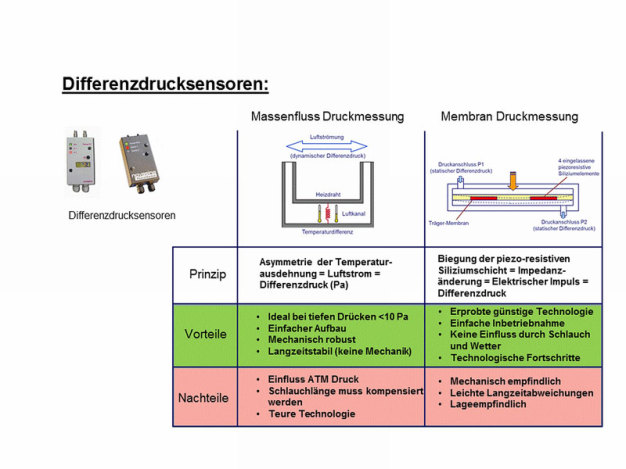
Fig. 3: Measurement Technologies - Differential Pressure Sensors
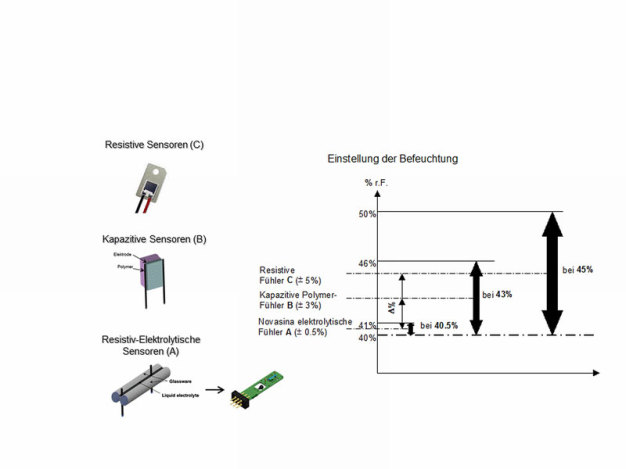
Fig. 4: Humidity measurement technologies - Measurement accuracy
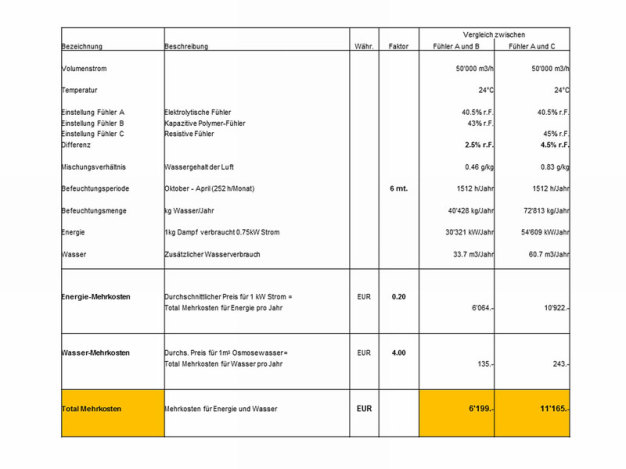
Table 1: Operating Cost Comparison - Various Humidity Measurement Technologies

Portrait Marco Cau
For products from the pharmaceutical, semiconductor, and solar industries, a controlled cleanroom environment is the most important prerequisite for high quality and low rejection rates. Humans hardly notice a difference of a few % relative humidity, but for a product, this can be very critical. To ensure compliance with the required climate conditions, it is essential to use high-quality climate measurement devices, as they are at the top of the measurement/control/regulation chain and thus directly influence subsequent elements such as fans, humidifiers, etc. Therefore, great attention should be paid to sensor technology during cleanroom design.
In modern cleanrooms, climate sensors play an increasingly important role, as they are ultimately responsible for stable and compliant indoor air quality. Typically, almost exclusively humidity, temperature, and differential pressure sensors are used in cleanrooms, whose task is to continuously determine the current actual value and output it as a standardized control signal. Ideally, this signal should be accurate, reproducible, and stable. The required setpoints and the accuracy of climate parameters primarily depend on the application area. A cleanroom in pharmaceutical production is defined differently than cleanrooms in microsystem technology, medical technology, or hospitals. To meet these sometimes high requirements, it is important to select sensors based on certain criteria. There are significant differences in accuracy, reproducibility, and stability among climate measurement devices, and the measurement technology used plays an important role.
Humidity sensors
Here, a distinction is made between capacitive and resistive-electrolytic measurement technology. The capacitive method is based on a dielectric that absorbs water from the air humidity. This changes the system's capacitance and thus produces a specific signal. Resistive-electrolytic sensors, on the other hand, measure the conductivity of a liquid electrolyte, which changes with the absorption and release of water. In both technologies, an electronic processing of the raw value takes place to ultimately obtain the effective humidity value.
Temperature sensors
There is a wide range of technologies available for temperature sensors, but only the most common measurement methods are discussed here. These are PT100/PT1000 and the so-called NTC sensors. Both measure ambient temperature based on the electrical resistance of the element. In PT100/1000, this is platinum; in NTC sensors, it is metal oxides. When the temperature rises or falls, the resistance increases or decreases accordingly, and a signal is output accordingly.
Differential pressure sensors
The third type is differential pressure sensors. These measure the difference in room pressure between the gray area and the cleanroom, between different cleanroom classes, or in pressure cascades. Essentially, there are dynamic and static pressure measurements. The former is performed using a mass flow sensor, which measures the air mass flowing from the higher to the lower pressure area and converts it into a differential pressure. On the other hand, static systems measure the impedance change that occurs when a piezoresistive silicon layer embedded in a membrane is deformed.
Sensor selection
Unfortunately, climate measurement devices are often selected solely based on acquisition costs. Relying solely on costs as the selection criterion often proves to be insufficient. Instead, technical aspects such as measurement accuracy, stability, response time, hysteresis, etc., should also be considered. It must not be forgotten that at the beginning of every measurement/control/regulation chain, there is always a sensor or climate measurement device that records the actual value and forwards it to the actuators. Sensors thus play a central role in the overall concept of an air conditioning system. However, by considering the following aspects, a smooth and cost-efficient operation can be ensured.
As a rule of thumb: The measurement should be about 5-8 times more accurate than the "POINT OF ACTION," i.e., the process-required accuracy. This factor results from the sum of tolerances throughout the measurement/control/regulation chain, which includes not only sensors and actuators but also fans, filter systems, humidifiers, ventilation dampers, etc.
Example of humidity measurement:
A measurement accuracy of +/- 2% RH results in a control accuracy in the process of +/- 10 to +/- 16% RH with a factor of 5-8, which is usually not sufficient in a cleanroom. With a measurement accuracy of +/- 0.5% RH, the process accuracy is +/- 2.5 to +/- 4% RH. This accuracy is sufficient in most cases.
Investing in precise sensors is definitely worthwhile. Any additional costs for measurement instruments are insignificant compared to the improved process and the resulting reduced operating and energy costs. Optimized processes enable the following cost-reducing additional benefits: less energy required for water treatment for air humidification; longer filter system service life; extended lifespan of humidifiers; longer calibration and adjustment cycles; reduced control cycles; generally minimized system adjustments.
To utilize these savings potentials, selecting the right technology is crucial, as illustrated by the following example.
Sensor placement
Sensor selection is only half the battle. Besides sensor quality, placement also plays an important role. The sensor can only perform optimally if it is positioned correctly. Proximity to the process is a key criterion; the sensor should measure as close to the process as possible, and the measured values should be immediately converted into a control signal and transmitted. Other criteria include easy accessibility for calibration and replacement, optimal protection against disinfectants (e.g., H2O2), placement in the supply air duct through which fresh air is supplied to the cleanroom, and finally, installation in areas where the manufacturer's specified operating conditions (e.g., temperature, condensation, vibrations, etc.) are maintained. When these criteria are considered, the measurement accuracy, reproducibility, long-term stability, and sensor lifespan can be significantly improved.
Cost-saving programs are no longer optional but a necessity. The efficiency of entire systems must be carefully examined and included in cost calculations, not just individual components. It is of no use if an efficient high-end humidifier is controlled by an inaccurate and hysteresis-prone sensor.
In the overall calculation, any additional costs for acquiring first-class measurement technology are amortized very quickly, the quality of the optimal cleanroom air for the process is guaranteed, and energy consumption is reduced. And last but not least, energy savings also make an important contribution to the environment. In short: a true WIN-WIN situation!
Novasina AG
8853 Lachen
Switzerland



