- Buildings & Rooms
- Translated with AI
Sterile atmosphere during injection molding: special wall profile and sophisticated ventilation system enable a room height of 6.3 m
Manufacturing of plastic and medical products in a cleanroom
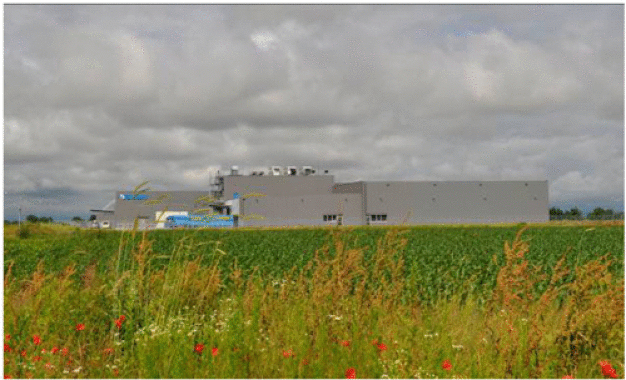
Since the production buildings at the headquarters in Bahlingen had become too small, Braunform GmbH built a new location in the neighboring town of Endingen with two cleanrooms for plastic and pharmaceutical production. (Source: Braunform GmbH)
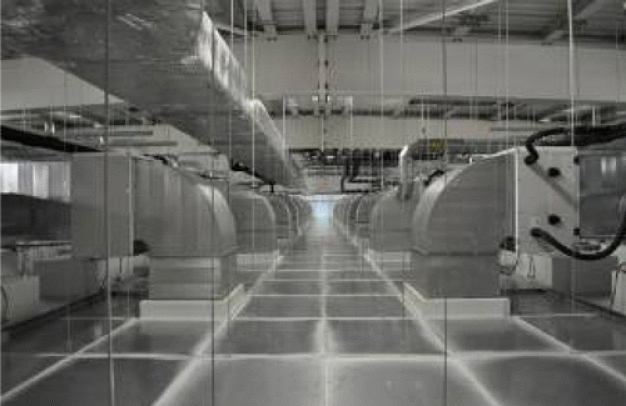
In the cleanrooms, special ceiling and wall constructions were used. Additionally, an elaborate ventilation system with downward airflow through filter fan units was designed, which operates very energy efficiently. (Source: Braunform GmbH)
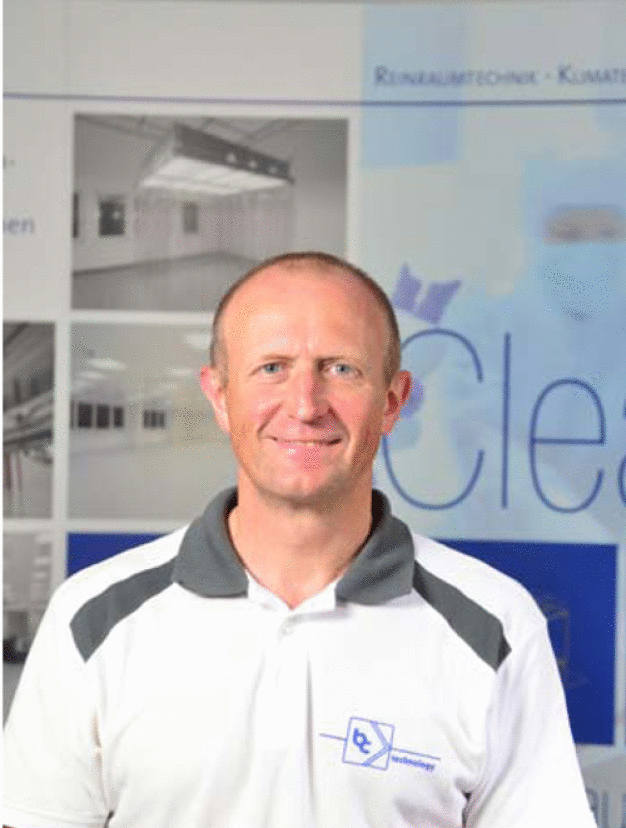
"To develop the optimal ventilation concept, we conducted numerous series of tests," explains Jürgen Wolf, project manager at bc-technology. "Based on these results, we then developed an efficient energy system." (Source: bc-technology GmbH)
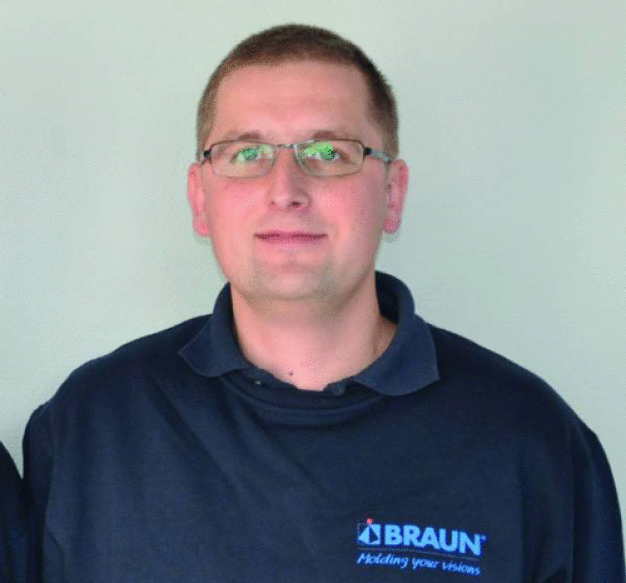
"bc-technology has a very competent team that quickly found solutions even in case of disagreements with other trades. The company has once again proven to be a reliable partner," states Thomas Geier, Head of Industrial Engineering at Braunform GmbH. (Source: Braunform GmbH)
In recent years, Braunform GmbH, based in Bahlingen, has been steadily growing, so much so that the production buildings have become too small over time. For this reason, the company built a new plant just a few kilometers from the main location in Bahlingen, in the city of Endingen, for the manufacturing of plastic and pharmaceutical products via injection molding. To ensure all quality requirements, production takes place in two cleanrooms of classes GMP C and GMP D, which were specially adapted: Due to the dimensions of the injection molding machines and cranes, a minimum ceiling height of 6.3 meters was necessary. The planning and implementation of the production rooms were carried out by bc-technology GmbH, which offers a flexible modular system for cleanrooms. Particular emphasis was placed on high energy efficiency, achieved through the use of filter fan units.
Numerous medical products such as safety closures for syringes or closures for infusion bags, manufactured from plastic via injection molding, are subject to strict requirements. For this reason, their production increasingly takes place under controlled conditions in cleanrooms. Among the users of this process is also Braunform GmbH: The core business of the family-owned company is mold making based in Bahlingen. Since 1997, as an addition to the product portfolio, plastic products with demanding manufacturing processes have been produced in the cleanroom for the pharmaceutical industry according to GMP C and D standards. "Orders across the company have become more extensive in recent years, so our production buildings eventually became bursting at the seams and no longer met current technological standards," recalls Thomas Geier, Head of Industrial Engineering at Braunform GmbH. For this reason, the company decided to establish a new plant at a second location near the headquarters. The cleanroom production at the Bahlingen plant was to move to Endingen to give more space to the mold-making area in Bahlingen. Additionally, this provided an opportunity in Endingen to implement everything with the latest technical standards, considering logistical requirements. This meant high demands on the planners, as the machines required a minimum room height of 6.3 meters.
Modular system with high energy efficiency
Therefore, Braunform had concepts presented by several providers. Among them was also bc-technology GmbH, which had already participated in expanding the existing cleanrooms at the Bahlingen main site in 2012. Due to this good cooperation and the development of a particularly energy-saving concept for the new plant, the company also received this order. In just nine months of construction, the two cleanrooms were realized—one with GMP class C and the other with GMP class D. Additionally, personnel and material lock systems were included in the planning. Special attention was paid to the fact that, due to the size of the cleanrooms, a lot of personnel would be present in the lock areas especially during shift changes. The room size and the lock control were to be optimized to ensure as short waiting times as possible.
The unusual ceiling height also posed a special challenge for bc-technology: It required a sophisticated ventilation concept on one hand, and the walls had to meet high structural requirements—such as regarding static strength—on the other. "Typically, cleanrooms have an average height of about 3 to 3.5 meters," explains Jürgen Wolf, Project Manager at bc-technology. "Since we had to accommodate the injection molding machines and three cranes in this particular case, it was necessary to nearly double the room height."
Optimal solution through extensive testing series
Because the injection molding machines emit a high heat load of 8 kW, they had to be incorporated into the energy and ventilation concept. bc-technology proposed an downward airflow via filter fan units (FFU) with swirl outlets and recirculation coolers. Compared to other systems, these have the advantage of reconditioning a large part of the existing air, thus requiring less fresh air; making them highly energy-efficient. Furthermore, they can be combined with components of the developed CleanoFlex system by bc-technology. This flexible and modular cleanroom system allows for modifications and expansions at any time and is suitable for customized solutions. Even rooms of higher cleanliness classes can be realized without much effort.
The company left nothing to chance in the planning: To test the efficiency of the downward airflow, test series were commissioned in a testing laboratory. "Since we didn't have an injection molding machine available for testing, we simulated the heat load using a heater. It emits the same heat load as the machines in the cleanroom. Additionally, the test series were conducted in a similarly high working environment," describes Wolf the detailed pre-planning. "Using optical flow simulation, the airflow was then documented, allowing us to develop a very energy-efficient solution for Braunform based on these insights," Wolf further explains.
Low energy consumption through heat recovery
The ventilation concept is also well thought out: On one hand, the new cleanrooms feature a decentralized ventilation system with FFU and H14 filters, ensuring turbulent airflow through the halls. This is also an important factor for achieving the required cleanliness class. On the other hand, the rooms are supplied by a central ventilation system with fresh air. To prevent the machines from releasing particles into the hall, local particle extraction was installed at the injection units of the injection molding machines. This air is then replaced by outside air from the central system. Here, the proven method of heat recovery via a rotary heat exchanger is used, significantly reducing heating and cooling costs. Additionally, the central ventilation system humidifies and dehumidifies the air according to the required cleanroom conditions. An intelligent, self-regulating system based on a cascade principle is employed: while the filter fan units operate continuously and regulate the room temperature, the main ventilation system only activates in cooling or heating mode when sensors detect that the set temperature has been exceeded or fallen below. As a result, the temperature remains constant at 22±3 °C with a humidity of 50±10 percent rF.
Special wall and ceiling profiles for above-average heights
In addition, the extraordinary height played a major role in the construction of the walls and ceiling. Here, too, high flexibility was prioritized to allow easy modifications later. The ceiling system consists of several easily interchangeable modules supported by aluminum profiles. The height can be flexibly adjusted via threaded rods. The ceiling can bear an additional load of up to 110 kg/m².
bc-technology also developed special wall panels with a flexible design that are self-supporting; thus, load transfer to the ceiling can be avoided. The panels are 60 mm thick and feature coated surfaces. The walls are additionally reinforced with a construction of aluminum profiles. "For the wall elements, it is important to ensure that the intermediate spaces are airtight. Therefore, they are filled with phenolic resin-bound, non-shrinking stone wool mats," explains Wolf. The material is non-combustible according to DIN 4102/A1. Notably, the excellent thermal and sound insulation values further reinforce the well-thought-out energy concept.
Timely completion despite tight schedule
Despite the high complexity of the project, bc-technology was able to plan and realize the cleanrooms on schedule. "At the start of construction, not all detailed plans had been finalized. Additionally, the project required numerous regular coordination meetings with other trades and external planners for HVAC and control systems due to the tight schedule. Compliance with GMP and ISO 14644 regulations had to be constantly monitored," explains Wolf about the challenges. Not least because bc-technology could also handle the qualification of the cleanrooms themselves, eliminating the need to hire an external company, Braunform was very satisfied with the collaboration. "bc-technology has a very competent team that quickly found solutions even when disagreements arose with other trades. The company proved to be a reliable partner once again," says Geier. For future joint projects, the Head of Industrial Engineering sees good prospects.
bc-technology GmbH
72666 Neckartailfingen
Germany