



- Air
- Translated with AI
Uwe Michael Martin
Solve the Gordian Knot
Flammable refrigerants and the ECblue ventilation technology from Ziehl-Abegg
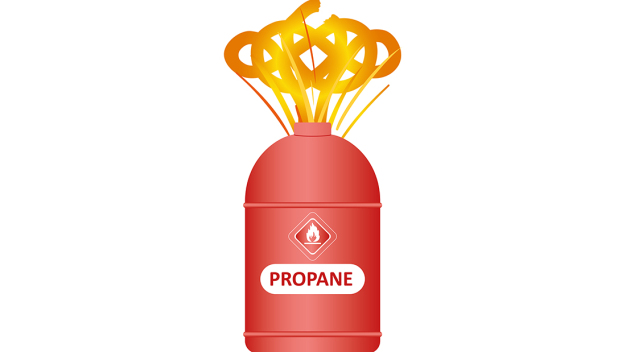
Untangle the knot – with the right technique, there is no explosion risk even with flammable coolants. (Image: ZIEHL-ABEGG)
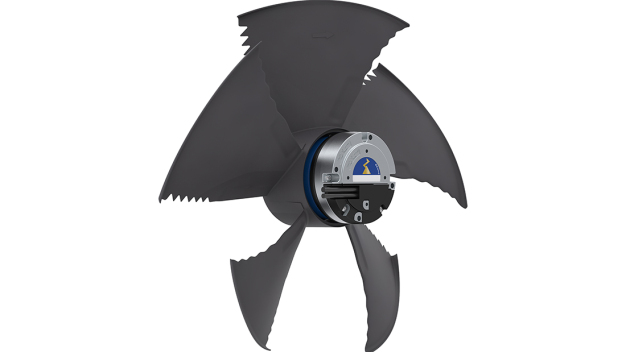
Part of the solution to an intractable knot – the ECblue fan technology from Ziehl-Abegg. (Image: ZIEHL-ABEGG)

Uwe Michael Martin, Department Head of Axial Fans ZIEHL-ABEGG SE
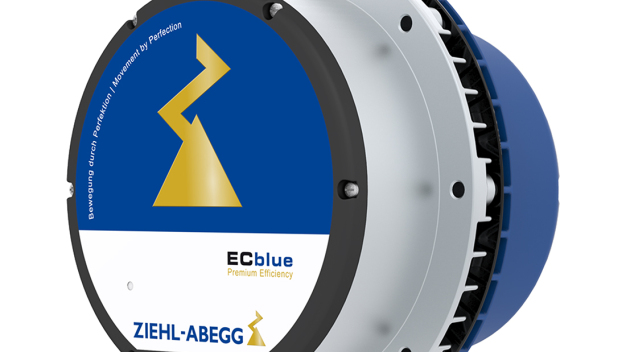
Part of the solution to an intractable knot – the ECblue fan technology from Ziehl-Abegg. (Image: ZIEHL-ABEGG)
Already in early history, efforts were made to find ways to climate places for personal comfort or for storing items such as food. Modern refrigeration technology is indispensable both in domestic and commercial environments; the private refrigerator is just as significant as industrial cooling systems. For centuries, ice and snow were popular aids for temperature regulation, but during the industrialization period, with the discovery of the vapor compression cycle in the 19th century, the first cooling machines utilizing technical-chemical processes emerged. The use of refrigerants at that time was groundbreaking, but the individual cooling gases themselves remain problematic today as they were yesterday. It is therefore necessary to focus on optimizing devices that come into contact with or work with refrigerants. This is where Ziehl-Abegg has succeeded with its ECblue fans.
Flammable, toxic, environmentally harmful – Refrigerants as a challenge
There are two types of refrigerants: natural and synthetic. The former are substances that occur in nature, such as hydrocarbons, carbon dioxide, or ammonia. Synthetic refrigerants are artificially produced; these include (partially) halogenated chlorofluorocarbons (CFCs or H-CFCs) and (partially) halogenated fluorocarbons (HFCs or H-FKW). Despite their respective advantages, both types also have disadvantages. In the early compression refrigeration systems, natural refrigerants were used. However, due to their flammability and toxicity, they pose significant risks, especially in case of leaks. When synthetic refrigerants based on halogenated hydrocarbons were introduced to the market in the 1930s, which are neither directly flammable nor toxic, these substances, celebrated as safety refrigerants, seemed to solve the problem for a long time. However, in the 1970s, it became clear that this was a false sense of security, as CFC refrigerants were responsible for the depletion of the ozone layer. Consequently, the 1987 Montreal Protocol, a legally binding international environmental agreement, committed countries to seek alternatives. As a result, chlorinated hydrocarbons were replaced by fluorinated hydrocarbons, in which the chlorine atoms are partially or completely replaced by fluorine or hydrogen atoms. History repeats itself, and it has become apparent that FKW gases are also highly environmentally damaging, due to their high GWP (global warming potential), making them greenhouse gases and, paradoxically, significant contributors to global warming in their role as refrigerants. The consequence was, among others, the European Regulation 517/2014, known as the F-Gas Regulation (effective from 2015), which provides for a gradual reduction (phase-down) of the market availability of fluorinated refrigerants until 2030. The urgency of action is underscored by the fact that even a quick ban on one of the most widely used refrigerants, R134a, is not being avoided. It is clear that synthetic refrigerants will no longer play a major role in Europe. The solution lies in gases that do not harm the ozone layer or damage the environment in other ways, bringing natural refrigerants back into consideration. This again raises issues that were once thought to be solved. Although work is ongoing to develop new gases that meet the requirements while possessing suitable thermodynamic properties, natural, flammable refrigerants cannot be replaced in the medium term due to the lack of Very-Low-GWP alternatives, which means that their safe use must be ensured as much as possible.
Handling natural refrigerants – Flammability versus explosion risk
There is consensus that the safe use of flammable refrigerants requires special knowledge, which is conveyed through guidelines (developed, for example, by the State Guild of Refrigeration and Climate Technology Hessen/Thuringia/Baden-Württemberg or the Association of European Manufacturers of Components for Refrigeration and Air Conditioning, ASERCOM) and training. The choice of refrigerant can generally influence the design of the system, its thermal properties, and energy consumption; the fact that almost all natural refrigerants are flammable to highly flammable (classified according to DIN EN 378 into classes 1, 2, 2L, and 3) affects the entire operation. For example, a larger fill volume required in industrial applications due to higher capacities than in private environments involves increased safety measures. To minimize risk in case of a leak of flammable refrigerant, the installation site should have sufficient free volume to ensure proper dilution. There may be restrictions on installation and filling quantities for individual rooms or entire buildings. For safety and emergency preparedness, optical and acoustic warning signals or ventilation systems may be necessary. Ignition sources must not be located near the units or cooling cells. Handling natural refrigerants sometimes requires modifications to entire systems and components, including certifications. Observing the necessary precautions related to the overall system or individual parts can ensure smooth operation. However, the connection between natural refrigerants and potentially explosive areas is less critical than sometimes assumed. Since hydrocarbons can form explosive mixtures with air, the plant operator must determine the explosion risk according to Directive 1999/92/EC (ATEX 137), which involves classifying the environment into zones based on the likelihood and duration of an explosive atmosphere, explosion groups (a substance-specific characteristic and a measure of the gas's ignition capability), and ignition temperature (which indicates the maximum surface temperature allowed in the explosive zone to prevent ignition). Since explosive environments normally only occur in case of leaks, such as due to a fault in a pipeline, refrigerants are assigned to low-risk zones. They are also usually classified in the lowest explosion group and temperature class (which allows higher surface temperatures). From an explosion protection perspective, natural refrigerants are largely uncritical, especially when appropriate equipment is used that minimizes disturbances and provides the right conditions for using flammable refrigerants.
The right device – Ziehl-Abegg's ECblue fan
Key components in refrigeration technology are fans, especially axial fans. When designing refrigeration machines, safety aspects must also be considered. Fans and motors must be approved for use in systems with flammable refrigerants and meet the requirements of DIN EN 60335-2-40 (including for heat pumps and chillers) and 2-89 (including for commercial refrigerated counters). For example, even if there is no contact point during normal operation, when using flammable refrigerant gases, a temperature difference must be maintained between the hottest electrical component that could come into contact with the refrigerant and the auto-ignition temperature of the refrigerant. The requirements are even higher in explosion-prone areas. Since, as noted, the explosive zone plays a minimal role, compliance with the mentioned standards is usually sufficient. These standards are met by Ziehl-Abegg's ECblue axial fans. They can therefore be used without issues with flammable refrigerants according to the standards, considering the specific requirements during installation and use. Ziehl-Abegg's ECblue technology helps to break the cycle caused by refrigerant gases and ensures that the refrigeration cycle continues to operate even with challenging, but currently unavoidable, refrigerants.
Ziehl-Abegg SE
74653 Künzelsau
Germany