

- Translated with AI
SMC showcases scalable automation technology for motion, media and process data
The solutions showcased at SPS range from electric drive systems with STO and IO-Link-enabled sensors to localized pressure boosting and industrial cooling with CO₂.
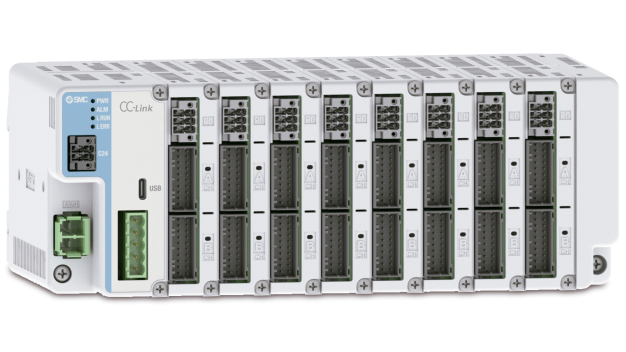
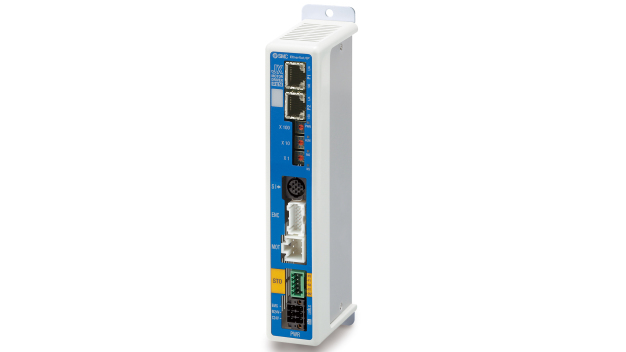
EA-Manifold Controller: More axes in less control cabinet space: The fanless EA-Manifold Controller JXD1M combines the control of electrical axes in a compact assembly and operates at ambient temperatures of up to 55 degrees Celsius. Connections and mounting hardware are accessible from the front, allowing machine builders to install, wire, and maintain the unit even in tight installation spaces.
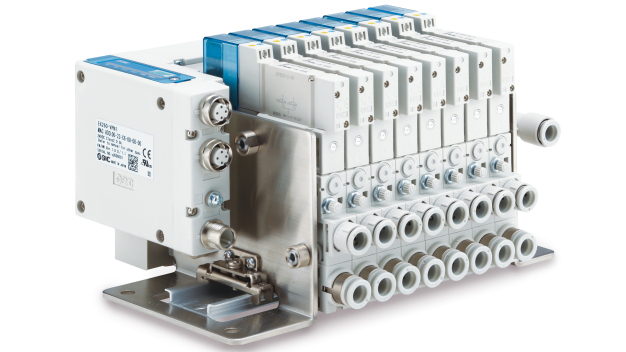
ZKJ Vacuum Unit: The vacuum unit for fieldbus systems combines vacuum generation, overpressure units and fieldbus communication in a compact solution. This reduces wiring effort and space requirements while simplifying machine design. The integrated energy-saving function reduces compressed air consumption, while the robust IP65 design ensures reliable operation even in demanding industrial environments.
Safe movements, reliable process data and the efficient use of energy and compressed air were the focus of SMC Germany’s presence at SPS – Smart Production Solutions 2026 in Nuremberg. The company demonstrated how electric actuators, intelligent sensors, pneumatic systems, vacuum technology and industrial temperature control can be integrated more easily from a technical perspective and operated more efficiently.
The trade fair took place from 24 to 26 November 2026. Its key topics included Industrial AI, sensors, drive technology, industrial communication and software. The focus was increasingly on the question of how new technologies can create measurable benefits in machines and systems.
SMC Germany is addressing this development with solutions that provide machine manufacturers and operators with a better data foundation, lower integration effort and more efficient use of energy and media.
“Automation does not have to be as complex as possible; it must be manageable in everyday industrial operations. What matters is that components can be integrated safely, processes monitored reliably and energy consumption reduced in a targeted manner. At SPS, we are demonstrating how these requirements come together in specific machine applications,” says Mohamed Boudouhi, Product Manager for electric actuators and multi-axis controllers at SMC Germany.
Fieldbus-capable drive controllers simplify integration and machine safety
With the JXC#F stepper motor controller in combination with electric actuators from the LEY series, SMC Germany is presenting a solution for safety-related and networked motion tasks. The integrated STO safety function enables the torque to be safely switched off and supports safety concepts up to SIL 3 and Performance Level e.
Direct communication via PROFINET, EtherCAT, EtherNet/IP or IO-Link simplifies connection to the machine control system. Speed, position and alarm codes can be monitored via the control system. This reduces the need for additional interfaces and separate control components.
Integrated controllers reduce space requirements and commissioning effort
The electric actuators of the EQ series are designed for applications that combine simple control with the benefits of electric positioning. Their operating logic is based on that of a pneumatic cylinder. The controller is integrated directly into the actuator.
This reduces the space required in the control cabinet as well as the effort involved in wiring and configuration. A batteryless absolute encoder retains the position information even after an interruption in the power supply. In this case, a new homing run is not required. Depending on the application, the energy-optimized motor control can significantly reduce energy consumption and the associated CO₂ emissions.
For applications with multiple motion axes, SMC Germany also presented the EA-Manifold Controller, a combination of the JXD1M controller and actuators from the LE2 series. Up to 16 electric axes can be controlled within a single system. This creates additional flexibility for modular machine concepts and reduces the space required for separate controllers.
Dynamic linear axes increase the performance of vertical handling processes
The LET X11 series with a belt drive enables precise and dynamic lifting and lowering movements in demanding automated systems. Its rigid design and precise guidance are geared toward vertical and horizontal applications with high speeds and accelerations.
This makes the series suitable, for example, for lifting tools, components or handling units. Greater dynamics can shorten cycle times and increase throughput. At the same time, the mechanical rigidity supports precise positioning under changing loads.
Targeted pressure boosting reduces the required system pressure
Pneumatic systems do not have to be operated at the same high pressure everywhere. The pressure boosters of the VBAE series increase pressure selectively at individual consumers. This allows the system’s central operating pressure to remain at a lower level.
In addition, the KNH nozzle and the ZHV flow booster increase the usable airflow by converting pressure into flow. Both approaches focus on the points where the respective process actually requires more force or a higher flow rate. This avoids a blanket increase in the system’s operating pressure and opens up potential savings in compressed-air consumption and the associated CO₂ emissions. “When it comes to compressed-air supply, a significant efficiency lever is often not found in a single component, but in the design of the overall system. If we lower the central operating pressure and generate higher pressure levels or flow rates only at the respective consumer, energy use can be reduced in a targeted manner. At SPS, we are demonstrating how such measures can be implemented technically and continuously verified using suitable sensors,” says Stephan Fillinger, Product Manager for compressed-air preparation, communication modules and valves at SMC Germany.
Multivariable sensors create a reliable data foundation for energy management
Compressed air and liquid flows can only be optimized systematically if their consumption and operating conditions are known. With the PFUW and PF3A8 sensor solutions, SMC Germany is presenting two different approaches to precise process monitoring.
The PFUW ultrasonic flow sensor is mounted externally on an existing pipe. It measures the liquid flow through the pipe wall without coming into contact with the medium. No modifications to the pipe are required. This means there are no additional potential leakage points, pressure losses or contamination risks. IO-Link provides the measured values for diagnostics and higher-level evaluation. The sensor is particularly suitable for the rapid retrofitting of existing systems.
The PF3A8 measures the flow, pressure and temperature of compressed air in a single device. Measuring ranges of up to 8,000 liters per minute enable use in supply lines and applications with high air demand. Combining the three measured variables reduces the number of components required as well as the effort involved in installation and wiring. The values are available via IO-Link for diagnostics, consumption analysis and energy management.
Wireless communication facilitates the digitalization of existing systems
With AMS, EXW1 and IO-Link-capable sensors, SMC Germany demonstrated how additional process data can be obtained from machines and systems.
Wireless communication enables process data to be transmitted from moving, difficult-to-access or frequently reconfigured parts of systems. The need for cabling and mechanical interfaces can be reduced. This facilitates both the design of new machines and the functional expansion of existing systems.
The data obtained provides a basis for condition monitoring, more efficient maintenance and the analysis of energy consumption. It can also be used for data-based optimization and industrial artificial intelligence applications. “Many machines already have powerful mechanics, but still provide too little data about their actual condition and consumption. With IO-Link, wireless communication and retrofit-capable sensors, operators can close this information gap without fundamentally modifying their systems. This creates a reliable data foundation for maintenance, energy management and the gradual optimization of existing processes,” says Stephan Fillinger, Product Manager for compressed-air preparation, communication modules and valves at SMC Germany. Industrial AI is one of the key topics at SPS – Smart Production Solutions 2026.
Decentralized vacuum diagnostics increase process reliability and system availability
For automated handling processes, SMC Germany presented a ready-to-connect area gripper with integrated vacuum generation. Flexible bellows suction cups enable cartons and uneven workpieces to be gripped. Vacuum retention valves maintain the vacuum even when not all suction cups are occupied.
The ZKJ vacuum platform enables individual pressure monitoring and diagnostics for each station. Up to 16 vacuum and overpressure stations can be combined on a single platform. An integrated fieldbus module provides a direct connection via PROFINET, EtherNet/IP, EtherCAT or IO-Link. The IP65 degree of protection enables use in demanding industrial environments. A blow-off lock supports the rapid release of workpieces and can thereby shorten cycle times.
The bidirectional ZFD filter cleans the airflow both during suction and when releasing the workpiece. This prevents captured particles from being returned to the workpiece. Two filters and two check valves are combined in a compact unit. The filter can be replaced without tools.
Natural refrigerants are transforming industrial temperature control
With cooling and temperature control units based on the natural refrigerant CO₂ (R744), SMC presented selected products from a portfolio at SPS whose exceptional range covers a wide variety of industrial temperature control requirements. This provides the company with long-term, predictable solutions that address increasing demands for sustainability and future regulatory compliance. The natural refrigerant R744 has a global warming potential of 1, is non-flammable and is not subject to the quantity restrictions applicable to fluorinated refrigerants.
The HRSC series was designed as a successor solution for industrial temperature control units in the HRS series. Depending on the version, the temperature range is between 5 and 40 degrees Celsius, with temperature stability of up to plus or minus 0.1 degrees Celsius.
For demanding applications, including in the semiconductor industry, the HRZC series offers cooling capacities from 2 to 10 kilowatts and an extended temperature range. Here too, inverters for the compressor and pump improve energy efficiency.
In addition, SMC Germany presented compact and particularly quiet cooling and temperature control units for the targeted temperature control of individual processes. They can be integrated directly into machines and provide cooling capacity where it is needed.
Technical benefits are determined at the interface
SMC Germany’s exhibits combined different areas of machine automation: electric motion, compressed air, vacuum, liquid monitoring, communication and temperature control. What they have in common is an approach that does not view components in isolation.
Safety functions, fieldbus connectivity, IO-Link diagnostics and integrated controllers are intended to reduce the effort required at the interfaces. At the same time, sensor and consumption data enable a more precise assessment of system condition and energy requirements.
This made the company’s presence at the trade fair particularly relevant to machine builders, system integrators and operators seeking to improve productivity and energy efficiency without unnecessarily complicating machine architectures.
SMC Deutschland GmbH
63329 Egelsbach
Germany