
- Universities
- Translated with AI
Research Laboratories Microelectronics Germany - Young Talent for Integrated Electronics
Research projects, research / knowledge transfer
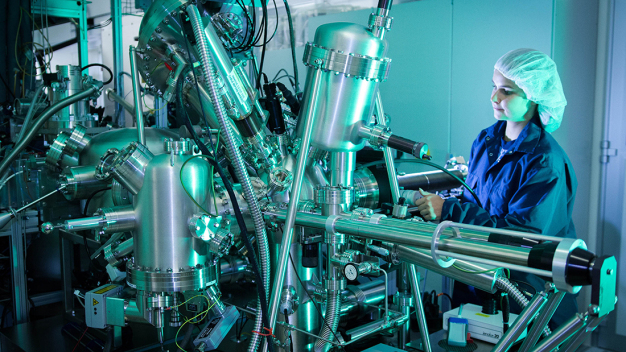
The ForLab consortium promotes scientific exchange, accelerates technology transfer, and strengthens young talent development. Copyright: © TU Dresden/IHM
ForLab Follow-up Project Launched with Kick-off Event
In the research-intensive microelectronics sector, universities play a central role in the rapid race for innovation. They uncover new knowledge, are important research partners for industry — and train the next generation of scientists. The BMBF-funded project "Research Laboratories Microelectronics Germany (ForLab)" initially brought together 14 German universities active in microelectronics research, enabling them to invest in new facilities for exploring new research areas through the ForLab project.
This network is now being expanded and developed into a nationwide and international university network for semiconductor technology and microelectronics. The follow-up project "ForLab NataliE" (Talents for Integrated Electronics) started in August with a kick-off event.
The headlines in the media serve as a seismograph for emerging developments: increasingly, keywords such as "shortage of skilled workers," "succession concerns," or "unfilled positions" are appearing in reports. For the microelectronics industry in Germany, the issue of recruiting skilled personnel is becoming an increasingly central factor that demands the highest attention. For Germany's future as a research and technology location, it is essential that all partners along the education chains pool, coordinate, and strengthen their efforts to secure the next generation. A key aspect is that the importance of microelectronics for future topics such as digitalization, energy transition, or e-mobility is becoming more prominent in public awareness: microelectronics is a core prerequisite for sustainability and is happening in Germany!
The project ForLab NataliE, based at the Center for Advancing Electronics Dresden (cfaed), aims to increase the visibility of microelectronics research at universities, accelerate technology transfer into applications, and promote talent development across university boundaries. The initiative is coordinated by Technische Universität Dresden (Prof. Thomas Mikolajick), with project partners including Ruhr-Universität Bochum (Prof. Martin Hoffmann) and Technische Universität Ilmenau (Prof. Jens Müller).
More Cooperation, Easier Access
"The goal of our project is to establish sustainable cooperation structures for research laboratories and expand them by including additional university sites," describes coordinator Prof. Thomas Mikolajick the approach of "NataliE." Cross-location cooperation is a fundamental pillar of the project: "By creating uniform approaches for collaboration and the mutual use of high-tech facilities in cleanrooms, the cooperation among researchers and access for SMEs and startups are simplified," explains project partner Prof. Martin Hoffmann of Ruhr-Universität Bochum.
The "Competence Atlas" makes available facilities, research and teaching profiles, as well as industrial collaborations of the universities visible. Project partner Prof. Jens Müller of Technische Universität Ilmenau confirms: "By creating a high-quality information offering about the competencies of the ForLab partners, Germany's microelectronics landscape, and eventually Europe's, will be further networked and a basis for synergies laid."
With the possibility to initiate several pilot projects for talent promotion within NataliE, incentives are to be created for sustainable ideas to attract young talent to the industry: "We will initiate cross-university formats for student training and talent acquisition as nationwide best practices and network them with national and European training initiatives such as the Microelectronics Academy of the Research Factory Microelectronics Germany (FMD)," says Mikolajick.
NataliE is coordinated by Technische Universität Dresden at cfaed and benefits from existing network and organizational structures.
The NataliE project was launched in August 2023 with a kick-off event for all consortium members. During its two-and-a-half-year duration, it will include an annual open technical conference for interaction and visibility. The first edition of the conference "Microelectronics Research in Germany: From Fundamentals to Application" will take place in Dresden in spring 2024.
Technische Universität Dresden
01062 Dresden
Germany