



- Buildings & Rooms
- Translated with AI
Reliable ESD protection – with long-term warranty
Why Seitec Elektronik GmbH chose rubber floors as an alternative to epoxy resin and PVC for the first time
© Dirk Wilhelmy
© Dirk Wilhelmy
© Dirk Wilhelmy
© Dirk Wilhelmy
© Dirk Wilhelmy
© Dirk Wilhelmy
© Dirk Wilhelmy
© Dirk Wilhelmy
© Dirk Wilhelmy
© Dirk Wilhelmy
© Dirk Wilhelmy
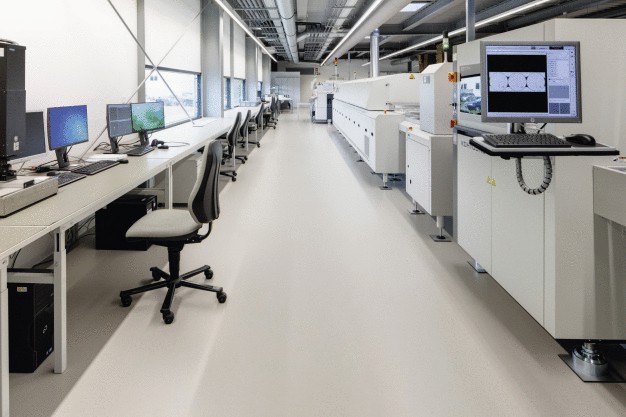
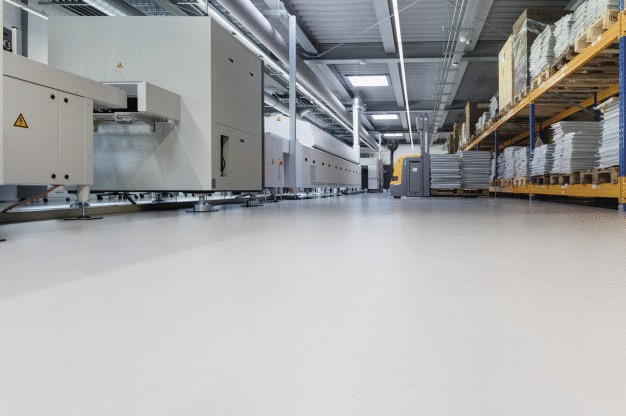
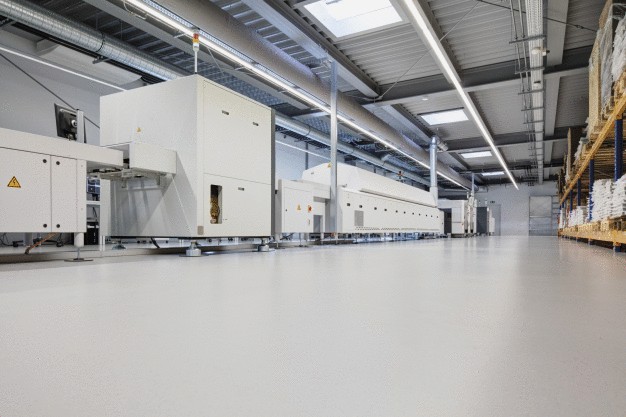
Electrostatically dissipative, resistant, easy to maintain – in electronic manufacturing, the requirements for flooring are extremely high. To ensure the quality and reliability of electronic devices, the components contained within must be protected from electrostatic discharges (ESD = electrostatic discharge) during production and installation. Discharges of just 100 V, which are imperceptible to humans, can damage sensitive electronic components so severely that the final product no longer functions properly. After Seitec Elektronik GmbH had always equipped its production facilities with electrostatically dissipative PVC and epoxy resin floors, the company chose rubber for the first time for its new production hall – and is very satisfied with this decision.
Floor sought for new production hall
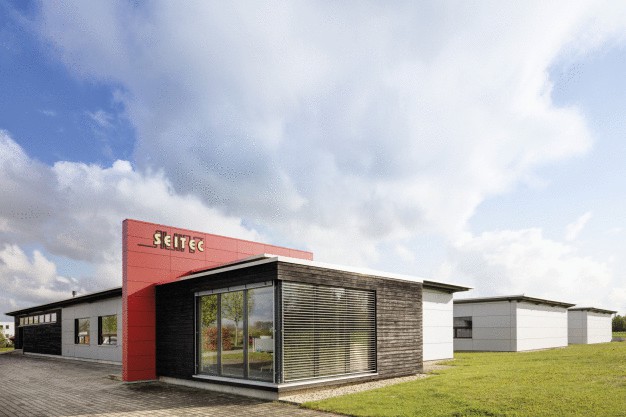
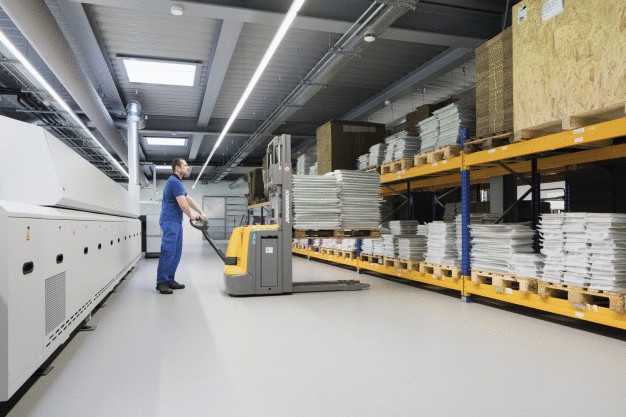
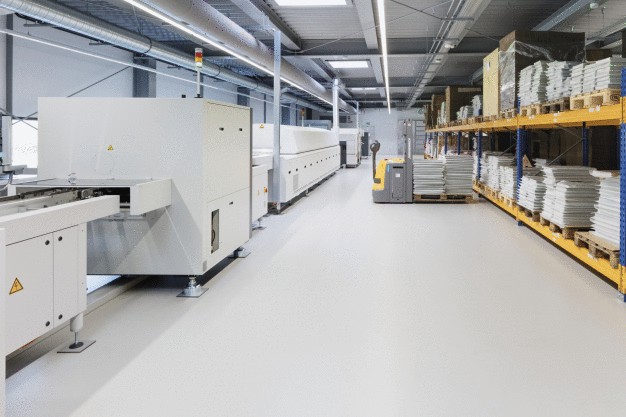
The company Seitec, founded in 1995, offers comprehensive solutions and integrated services in the field of modern electronics, from product development to building automation to lighting or infrared technology. In the state-of-the-art manufacturing facilities in Elsteraue/Saxony-Anhalt, prototypes are produced for customers worldwide, as well as large series. The good business development has required several expansion buildings over the years. The latest new production hall, which houses a PCB assembly line, quality control, and packaging, was opened at the end of 2016. "Initially, we didn't even consider rubber as a flooring option for a production hall," reports Managing Director Lutz Fichtler. Based on a recommendation from a fellow student who has been using rubber floors from nora systems in his electronics company for many years, the engineer decided to try the flooring systems from the Weinheim manufacturer as well. Because he was not entirely satisfied with the floors installed so far. "With PVC floors, we face the difficulty that the abrasion from the forklift wheels and stains from the printing paste, which is applied to the raw circuit boards before soldering, cannot be fully removed during cleaning. And heavy pallets have left unsightly scratches on the coated epoxy resin floors in the warehouse."
Ten-year warranty on consistent ESD values
When it comes to the most suitable flooring for EPA's (Electrostatic Protected Areas), those responsible often do not know that there is an alternative to coated floors. Rubber floor systems inherently have a low tendency to accumulate static charges due to their material properties and do not need to be coated with a dissipative sealant. The advantage: the dissipative properties remain permanently. This is a significant benefit compared to other floors like PVC, whose coatings not only affect the reliability of the conductivity but also need to be renewed regularly. Thanks to the high and permanent elasticity of nora floors, the grounding points—where electrostatic charges are discharged into the ground—are optimally reached. On hard, heterogeneous floors, the dissipative capacity is often not sufficient. The same applies to PVC flooring, as the plasticizers contained therein can volatilize over time, causing the floor to harden and become inflexible. "With PVC floors, the required dissipative values are sometimes no longer met due to the coating," Fichtler continues. To renew the coating, production must be completely shut down during renovation. "This is very labor-intensive and can only be done during the Christmas holidays." Nora systems' ten-year warranty on the electrostatic properties of its floors additionally convinced Seitec.
Extreme durability
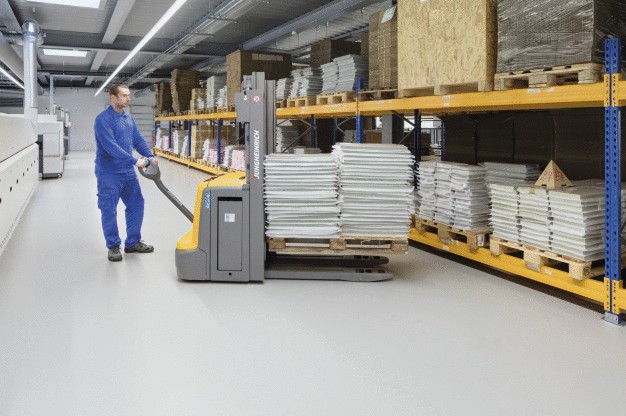
Due to their extremely dense surface, rubber floor systems are also highly resistant to wear and tear and can be used in areas with high pressure loads (up to 6 N/mm²), such as those caused by forklifts or the rolling of heavy equipment and machinery. "Our pallets, which we transport with hand trucks, weigh up to 700 kilograms. Therefore, the floors must be very resistant," explains Fichtler. Thanks to the elasticity of the homogeneous rubber material, nora floors also withstand impacts, such as from falling tools, hose couplings, clamps, or other metal parts. Likewise, falling objects cause less or no damage compared to impacts on hard floors.
High ergonomics and good acoustics
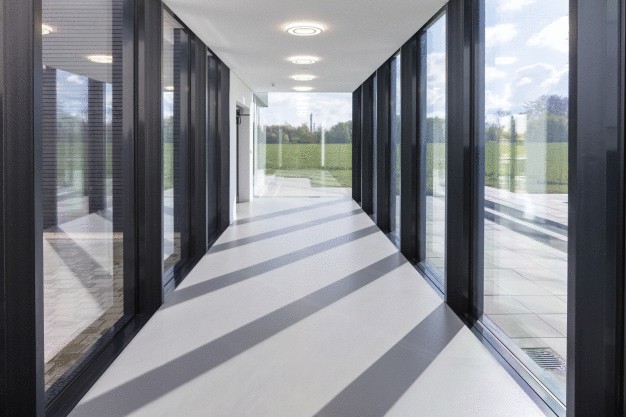
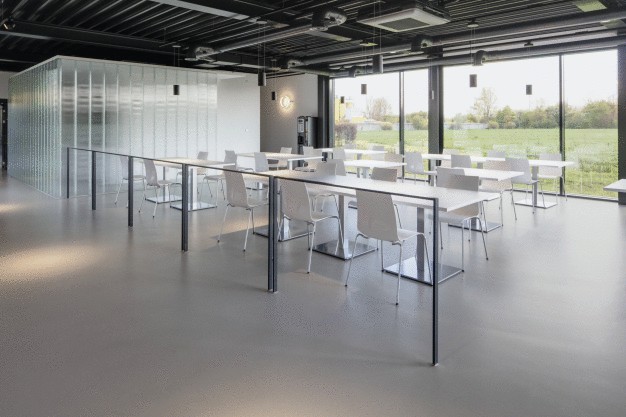
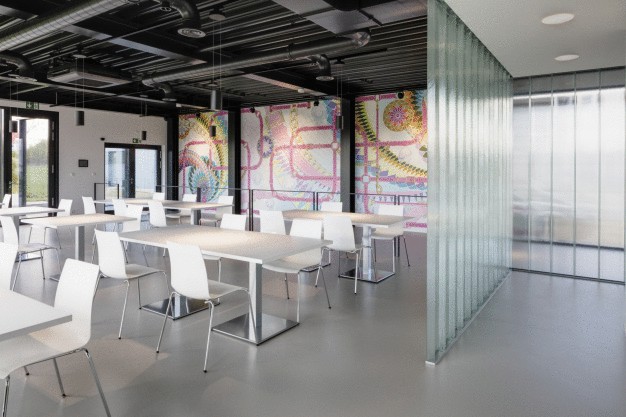
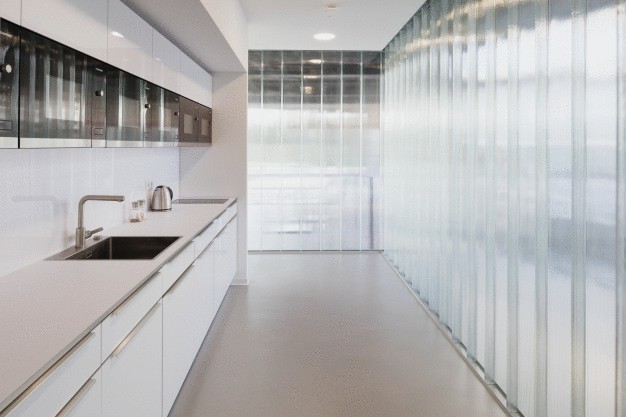
Thanks to their high and permanent elasticity, rubber floors also contribute to an ergonomic working environment for employees. Especially at standing workstations, common in manufacturing, the nature of the substrate plays a significant role in enabling longer, fatigue-free work. Rubber floor systems facilitate walking and standing through their continuous elasticity, protecting backs and joints. Additionally, the cushioning effect reduces noise generated at the floor, contributing to a quiet and pleasant working environment. Because the light gray noraplan sentica ed, with its subtle tone-in-tone granules, not only matches the new machines in the production hall but also harmonizes with the modern furniture in the canteen, the floor fits perfectly there as well, emphasizing the contemporary atmosphere of the new building.

nora systems GmbH
Höhnerweg 2-4
69469 Weinheim
Germany
Phone: +49 6201 2743934
Mobile radio: +49 172 6330484
email: frank.baehr@nora.com
Internet: http://www.nora.com