



- Ultrapure media (water, ...)
- Translated with AI
Christopher Lenz, Business Development Manager, EnviroFALK
Reinstwasser, the pioneer for a sustainable and climate-friendly energy supply
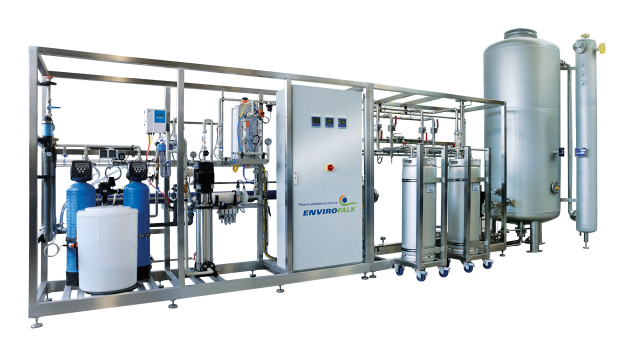
Figure 3: EnviroFALK Purified Water Treatment System
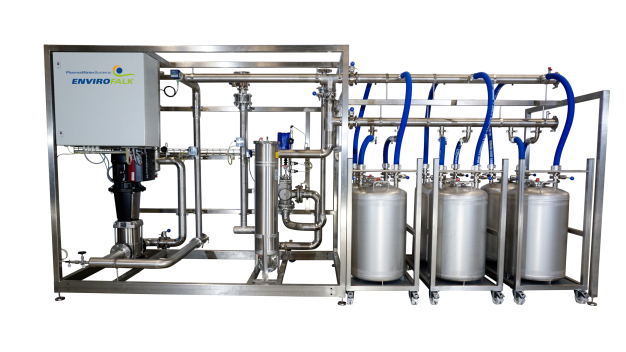
Figure 4: EnviroFALK Circulatory Cleaning
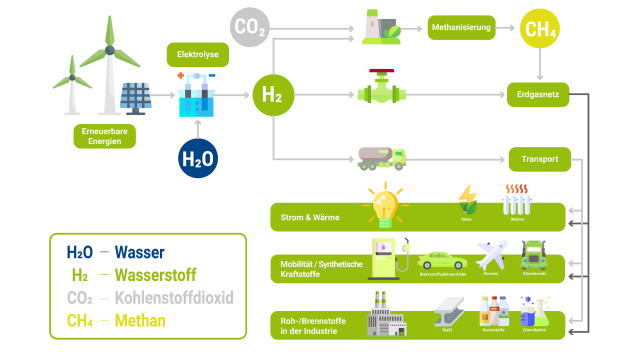
Figure 1: Power-to-X (PtX)
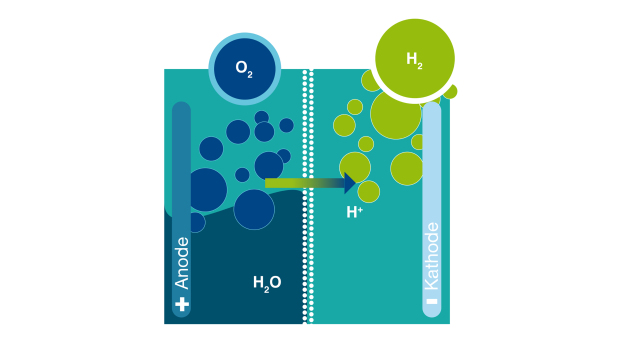
Figure 2: Polymer Electrolyte Membrane Electrolysis

Christopher Lenz, Business Development Manager, EnviroFALK
Renewable Energies: Challenges and Opportunities
The ongoing climate warming requires a shift from finite fossil fuels to clean, renewable energies from water, solar, wind, and biogas plants.
Wind and solar energy are the most important energy carriers for renewable electricity generation. A major problem for the future energy industry caused by fluctuating renewable energies is storage. The power grid is unable to store energy during periods of low demand, which leads to the need to curtail the plants and thus operate inefficiently. For short-term electricity storage of so-called "surplus electricity," pumped storage plants and batteries are currently used, but these are not sufficient to ensure long-term energy supply.
Power-to-X (PtX): The Key Technology for a Better CO2 Balance
"Power-to-X" is an umbrella term for technologies that enable excess electricity from renewable energies to be further processed and stored, thereby replacing fossil energy carriers (Figure 1).
– Energy carrier gas - Power-to-Gas (PtG)
– Liquid fuels - Power-to-Liquid (PtL)
– Chemical basic substances - Power-to-Chemicals (PtC)
Power to Gas (PtG)
In the PtG process, excess surplus electricity is used to produce so-called "green hydrogen," which, as the energy carrier of the future, leaves only water as a combustion residue.
Various types of electrolysis systems, called "electrolyzers," are used here to split water into its chemical components, hydrogen (H2) and oxygen (O2), using electrical current. The "Polymer Electrolyte Membrane Electrolysis (PEM)" (Figure 2) plays a significant role due to its resistance to load changes caused by fluctuating renewable energies, as well as its high efficiency and fast response times.
After electrolysis, H2 is compressed for storage and transportation. Green hydrogen is used as an environmentally friendly fuel in fuel cell vehicles and industrial plants, as well as in processed form as a raw material in the chemical and pharmaceutical industries.
For transportation and further use, hydrogen can, under certain conditions, be fed into existing natural gas networks. However, due to its lower energy density, this is only possible in limited quantities. For larger quantities, H2 is first converted into the combustible gas methane (CH4) through methanation and then fed into the natural gas grid, where it can be used for heating and/or electricity generation.
Furthermore, gas-powered cars and trucks can be refueled with green hydrogen and operated nearly climate-neutral.
Power-to-Liquid (PtL)
Green hydrogen is also used in the production of synthetic liquid fuels. In the PtL technology, excess electricity is used to produce synthesis gas from hydrogen and carbon monoxide, which is then used to produce liquid synthetic fuels (E-Fuels). This technology allows for a gradual replacement of gasoline and diesel from crude oil. Synthetic fuels for aviation and shipping can also be produced. A major advantage of this technology is the use of existing infrastructure, such as gas stations and transport systems.
Since the synthetic production of E-Fuels from surplus electricity binds the same amount of CO2 as is released during combustion, these fuels are considered climate-neutral.
Power-to-Chemicals (PtC)
Building on the PtG process, the PtC technology produces chemical basic substances from surplus electricity and the synthesis of hydrogen with CO2 and nitrogen, which are intended to replace fossil raw materials such as crude oil and natural gas. Examples include plastics, detergents, and additives, which are important in many industries.
Pure Water: The Indispensable Raw Material for PtX Technologies
Pure water plays a central role in all PtX technologies, especially in the production of green hydrogen via electrolysis. This highly pure water is almost free of contaminants such as organic substances, bacteria, particles, and dissolved gases, and has a very low conductivity of typically 0.055 µS/cm, making it ideal for use in sensitive processes like PEM electrolysis. Pure water is obtained from various source waters, which can vary greatly in quality depending on their origin. This diversity requires an individually tailored pure water treatment to remove all unwanted minerals and gases that could otherwise disrupt the electrolysis processes.
The importance of pure water for PtX processes cannot be overstated: Without the proper water quality, salt deposits can form on the membranes and electrodes of the electrolyzers, significantly impairing their efficiency and lifespan. Therefore, process-oriented pure water treatment (Figure 3) is not only a key criterion but a critical success factor for the sustainable production of synthetic fuels.
From Raw Water to Pure Water
When planning a water treatment plant, seamless integration into the PtX system is crucial. This includes, for example, site-specific planning within the overall system, control-technical linking via specified communication interfaces, standardized plant components, and consistent documentation. It is also necessary to consider the Levelized Cost Of Electricity (LCOE) in planning, including both investment costs and ongoing operating costs. These include energy and media consumption, wastewater quantities, operating supplies, and service costs.
The treatment of raw water for hydrogen production via electrolysis occurs in several process stages in a specific sequence, each adapted to the local water quality in detailed engineering. Various process stages are used, such as:
– Pre-filtration using backwash filters, gravel filters, or ultrafiltration
– Removal of hardness-forming calcium and magnesium via ion exchange demineralization systems (alternatively, antiscalant dosing for hardness stabilization)
– CO2 removal/-binding via membrane degassing or sodium hydroxide
– Desalination >98% via reverse osmosis (RO)
– Full desalination via second reverse osmosis stage or electrodeionization (EDI)
– Process water recycling systems for continuous desalination to < 0.1 µS/cm and particle filtration below 1 µm
– Degassing systems for residual removal of H2 and O2
– Process water pre-treatment system with storage tank and pressure boosting systems
– Process water cooling system (optional)
Pure Water Quality Parameters, which vary depending on the process:
|
Quality Parameters |
Limit Value |
|
Conductivity Silica Total Iron Sodium and Potassium Particle Concentration |
< 0.1 µS/cm < 100 µg/l < 100 µg/l < 20 µg/l Particle-free |
– The main feature of EnviroFALK pure water treatment systems, especially for high-pressure and high-temperature applications such as PEM electrolysis, is the circulation cleaning (Figure 4), which enables "contaminated" process water to be recycled. A technology that actively contributes to environmental protection and optimizes cost efficiency in industrial processes. The circulation systems are specifically designed to treat process water under high operating pressure of up to 50 bar and temperatures over 65°C. Through the use of state-of-the-art technologies designed for continuous operation, reliable and economical water treatment is ensured.
High-Performance Pure Water Solutions for Maximum Process Safety and Flexibility
At EnviroFALK, everything revolves around solution concepts for water treatment in hospitals, laboratories, and selected industries. The experts also develop pure water systems that supply electrolyzers with ultra-pure water. This enables the company to ensure reliable and efficient hydrogen production.
The quality and availability of pure water are critical for the PtX process. High system availability and short repair times (Mean Time To Recover - MTTR), as well as high system reliability (Service Level Agreement - SLA), are essential for water treatment plants. To minimize operational failures, measures such as redundancy of critical components, optimized spare parts inventory, the use of proven components, and precise monitoring of process parameters are necessary. These strategies enable system availability of over 99%. EnviroFALK offers a wide range of high-quality components to ensure maximum process safety.
The EnviroFALK pure water process systems are characterized by their modular design, allowing flexible integration into existing plant concepts. This modularity offers the advantage that the various process stages can be individually arranged according to spatial and process requirements. Whether side-by-side, stacked, or in separate rooms – the systems can be optimally adapted to the respective conditions.
Advanced Pure Water Systems for Green Energy
In recent years, EnviroFALK has developed and supplied numerous application-oriented pure water process systems for PtX projects through close collaboration with renowned manufacturers of electrolysis systems.
From the early beginnings in 2012 to today, more than 100 pure water process systems have been implemented in different concepts and performance levels for various PtX projects. These significantly contribute to establishing hydrogen as a sustainable energy carrier and thus support environmentally friendly and modern energy generation.
The construction of one of the world's largest, regulation-flexible hydrogen plants with an electrical capacity of 6 MW was completed in 2015 in the Mainz-Hechtsheim economic park. Today, up to 1,000 Nm³ of green hydrogen are produced hourly using PEM electrolyzers from Siemens from surplus wind energy. The produced hydrogen is stored locally and subsequently supplied to various applications such as transportation, industry, and the natural gas grid. The raw material "water" is supplied by a 1,000 l/h pure water system and freed from fine particles and dissolved salts using a 4,200 l/h process water circulation cleaning system.
In 2023, Air Liquide, together with Siemens Energy, established the "Trailblazer" project at the Oberhausen site – a 20 MW PEM electrolyzer for producing green hydrogen. The Trailblazer supplies key industries such as steel, chemicals, refineries, and transportation with 2,900 tons of green hydrogen per year, as well as oxygen, via an existing hydrogen pipeline. EnviroFALK supplied a circulation system with a throughput capacity of 30,000 l/h. The modular system was pre-assembled at the manufacturer’s plant in Leverkusen and was ready for connection, allowing quick installation and commissioning on site.
Further Convincing Success Examples:
– Windgas Hesse GmbH (PtG project)
Electrical capacity 1.25 MW from wind energy, hydrogen production approx. 200 Nm³/h, pure water system 300 l/h, circulation cleaning 600 l/h
– Salzgitter Flat Steel (PtG project)
Electrical capacity 2.2 MW from wind energy, hydrogen production approx. 400 Nm³/h, pure water system 900 l/h, circulation cleaning 4,200 l/h
– Ludwigshafen (PtC project)
Electrical capacity 54 MW, hydrogen production 8,000 t/a, pure water system 10,500 l/h, circulation cleaning 150,000 l/h
PtX Projects for a Climate-Neutral Europe
The planning of innovative PtX projects is a crucial step toward a climate-neutral Europe by 2050. These projects help reduce dependence on fossil fuels and diversify energy supply. The first global PtX atlas, created by the Fraunhofer Institute for Energy Economics and Energy System Technology, shows the enormous potential, especially in regions rich in renewable energy sources. Such projects can not only transform Europe but also reshape the global energy infrastructure, creating a win-win situation for the environment and the economy.
EnviroFALK has prepared to support PtX projects with state-of-the-art pure water systems, further advancing climate neutrality.
Vita Christopher Lenz:
Christopher Lenz, born in 1994 in Limburg an der Lahn, showed a pronounced interest in sustainability and energy efficiency from an early age. He earned his Bachelor's degree in Energy Technology in 2019, specializing in hydrogen technology for a large-scale production plant in collaboration with Trianel GmbH. He completed his Master’s in Renewable Energies in 2021 with a thesis on a multi-criteria analysis for the hydrogen economy, examining economic, ecological, and technical aspects. Both theses reflect his deep interest in hydrogen technology. As a project manager at Trianel GmbH, he contributed significantly to hydrogen projects. Since 2023, Christopher Lenz has been responsible for the Pure Water Systems division for PtX projects as Business Development Manager at EnviroFALK.

EnviroFALK PharmaWaterSystems GmbH
Maybachstraße 29
51381 Leverkusen
Germany
Phone: +49 2171 7675 0
email: info@envirofalk-pharma.com
Internet: http://www.envirofalk-pharma.com



