

- Service
- Translated with AI
Dr. Gernod Dittel, Dr. Berthold Vogt
Pure space travel
![[2] Hubble Telescope (Copyright Pixabay)](/uploads/images/_scale/2hubbletelescopecopyrightpixabay_169_626x352.jpg "[2] Hubble Telescope (Copyright Pixabay)")
[2] Hubble Telescope (Copyright Pixabay)
![[1] The Milky Way (Copyright Stefan Dittel)](/uploads/images/_scale/1diemilchstrassecopyrightstefandittel_169_626x352.jpg "[1] The Milky Way (Copyright Stefan Dittel)")
[1] The Milky Way (Copyright Stefan Dittel)
![[3] ITC – Airbus Defence and Space (Copyright Airbus D&S)](/uploads/images/_scale/3itcairbusdefenceandspacecopyrightairbusds_169_626x352.jpg "[3] ITC – Airbus Defence and Space (Copyright Airbus D&S)")
[3] ITC – Airbus Defence and Space (Copyright Airbus D&S)
![[4] ITC – Airbus Defence and Space (Copyright Airbus D&S)](/uploads/images/_scale/4itcairbusdefenceandspacecopyrightairbusds_169_626x352.jpg "[4] ITC – Airbus Defence and Space (Copyright Airbus D&S)")
[4] ITC – Airbus Defence and Space (Copyright Airbus D&S)
![[5] Qualification Measurement – DITTEL Engineering (Copyright DITTEL Engineering)](/uploads/images/_scale/5qualifizierungsmessungendittelengineeringcopyrightdittelengineering_169_626x352.jpg "[5] Qualification Measurement – DITTEL Engineering (Copyright DITTEL Engineering)")
[5] Qualification Measurement – DITTEL Engineering (Copyright DITTEL Engineering)
![[6] Particles on the solar sail (Copyright Airbus D&S)](/uploads/images/_scale/6partikelaufdemsonnensegelcopyrightairbusds_169_626x351.jpg "[6] Particles on the solar sail (Copyright Airbus D&S)")
[6] Particles on the solar sail (Copyright Airbus D&S)
![[7] The universe (Copyright Pixabay - Image by Pexels from Pixabay)](/uploads/images/_scale/7dasuniversumcopyrightpixabayimagebypexelsfrompixabay_169_626x352.jpg "[7] The universe (Copyright Pixabay - Image by Pexels from Pixabay)")
[7] The universe (Copyright Pixabay - Image by Pexels from Pixabay)
![[8] Mirror module ATHENA (Copyright Airbus D&S)](/uploads/images/_scale/8spiegelmodulathenaesacopyrightairbusds_169_626x352.jpg "[8] Mirror module ATHENA (Copyright Airbus D&S)")
[8] Mirror module ATHENA (Copyright Airbus D&S)
![[9] Transport container (Copyright Airbus D&S)](/uploads/images/_scale/9transportcontainercopyrightairbusds_169_626x352.jpg "[9] Transport container (Copyright Airbus D&S)")
[9] Transport container (Copyright Airbus D&S)
![[10] Launch – Kourou / French Guiana (Copyright Airbus D&S)](/uploads/images/_scale/10launchkouroufranzsischguyanacopyrightairbusds_169_626x352.jpg "[10] Launch – Kourou / French Guiana (Copyright Airbus D&S)")
[10] Launch – Kourou / French Guiana (Copyright Airbus D&S)
(Copyright Shutterstock)
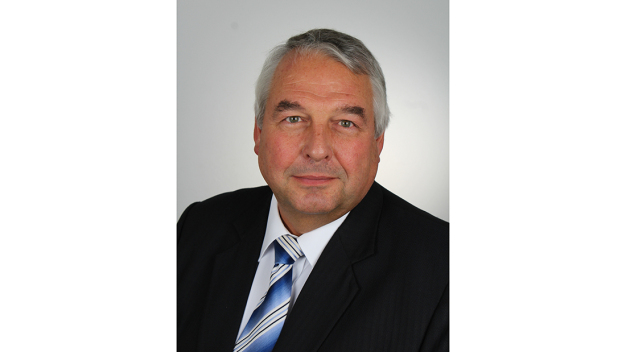
Prof. Dr. Gernod Dittel
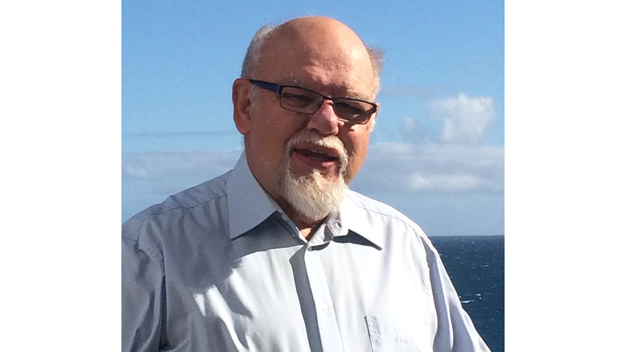
Dr. Berthold Vogt
The cleanroom is the birthplace of all satellites. Before they venture into space, all artificial celestial bodies see the light of a world here, which they will leave forever shortly thereafter. Because errors later cannot be corrected, all sources of error must be eliminated during assembly and transport, no matter how tiny they are.
The successes of newcomer companies like SpaceX show one thing above all: there is a spirit of innovation in commercial spaceflight. Not only companies but also government space agencies from many countries have set ambitious goals.
Setting aside Markus Söder's announcement of an independent space program for Bavaria ("Bavaria One"), Germany appears rather modest. To avoid falling behind, the Federal Association of German Industry (BDI) calls for a massive increase in the German space budget.
In its policy paper "Future Market Space," the BDI cites forecasts from management consultancies. According to these, the global market for space technology will increase tenfold over the next 20 years. Revenues are expected to rise from 260 billion euros (2019) to 2,700 billion euros in 2040. The market share of German companies is currently estimated at 3 billion euros.
The media coverage of the industry association's advance focused on the exotically sounding proposal to establish a rocket launch site in Germany. Less emphasized was that only a "Micro Space Port" was desired, from which only smaller rockets with small satellites could take off. Impressive images of rocket launches in distant countries overshadow the fact that the German space industry is often involved. German scientists, engineers, and service providers have played significant roles in their technical niches. The 190-page industry overview "German Space Actors" from the German Aerospace Center (DLR) lists dozens of companies and institutions in each federal state contributing to modern spaceflight. Almost all of them share one common feature: a cleanroom. Because without a cleanroom, there is no spaceflight.
Germany invests in cleanrooms instead of rockets
In spaceflight, it is small things that cause major projects to fail. During the launch of an Ariane 4 in 1990, a cleaning cloth in a pipe caused a crash and the loss of two satellites. It is still debated whether it was sabotage or negligence. In 1994, two failed launches occurred because contamination had disabled a turbopump for liquid oxygen. Such incidents are not exclusive to Europeans, i.e., the European Space Agency (ESA). For example, NASA needed five repair missions to fix a manufacturing defect in the Hubble Space Telescope.
The large primary mirror, meticulously polished over months, was flatter by a few micrometers than it should have been for a sharp focus. This was discovered only late, namely from above.
The examples illustrate the special technical requirements in spaceflight: assemblies and satellites must be 100 percent functional upon arrival at their deployment site—be it near-Earth space, another planet, or a journey beyond the solar system. Once in space, repairs are usually impossible. Exceptions are extremely costly.
In orbit, satellite parts can no longer be cleaned. Even the tiniest particles brought along can jeopardize mission success. Smudged optics, dirty joints, unclean storage are vulnerabilities that must be prevented. Engineers have learned this through painful and costly experiences over the course of space history.
Failure analysis after accidents leads to specific measures depending on the system—for example, since the incident with the cleaning cloth, narrow lines are endoscopically inspected before launch. Above all, the learning curve has led to satellites being manufactured much more shielded and protected in controlled atmospheres than before.
The most important measure to prevent such costly small errors is the continuously evolving cleanroom. Its development is closely linked to spaceflight in the 20th century. To further develop the German V2 rocket after the war, Americans built one of the first technical cleanrooms, where they assembled gyroscopic devices for rocket guidance. This room was still clad in stainless steel—in the assumption that dust particles would not settle on it but would quickly fall to the ground. However, this was not the case. As the guidance and control functions of aircraft and rockets became more precise, the need for manufacturing accuracy increased. Thus, the development of cleanroom technology supported spaceflight, just as spaceflight set trends for cleanroom standards with its requirements and budgets.
The primary contribution of modern cleanrooms to commercial and scientific spaceflight is to maximize the reliability of space systems. They reduce the error rate of carriers and payloads. Satellites are assembled along a long cleanroom chain—from component manufacturing to integration (called "integration" in satellite technology), transport to the launch site, and ultimately into space. Even the search for potential weaknesses in large testing facilities, which often takes several months, takes place in a cleanroom environment. During integration, a high standard of quality is maintained. All work steps are controlled and documented. In addition to the direct system requirements for cleanroom quality, employee discipline is a critical factor.
At a clean and tidy workplace, the sense of responsibility of the employee is also significant. The main source of contamination in the cleanroom is humans, who shed between 1 million and over 10 million particles ≥0.3 µm per minute. To reduce this entry, cleanroom workers wear protective suits. These mainly protect the product, not the personnel—unlike space suits.
Recently, Germany has added two enormous halls with workplaces for satellite assembly. With the Integrated Technology Centre (ITC), Airbus claims to have opened "Europe's most modern satellite integration and space technology center" in Friedrichshafen in 2019. The cleanroom area at the site was tripled. A total of 4,000 square meters now allow multiple satellites, probes, and their instruments to be manufactured simultaneously, depending on requirements, in various ISO classes.
One year later, competitor OHB completed its new integration hall in Bremen. The "PLATO Hall," an ISO-8 cleanroom of the space company, is about 11 meters high and approximately 1,400 square meters, making it the largest cleanroom in the OHB Group. 15 million euros were invested in the building, which will house the construction of satellites such as weather and communication satellites and the space observatory PLATO.
Purity requirements between visual inspection and biohazard
The highest purity requirements are for research satellites that are to land on other planets or comets. They must not only be free of disturbing particles but also contain no microbes. If spores or bacteria were to be transported along, they would spoil measurements when searching for extraterrestrial life. Additionally, they would violate international treaties, specifically a part of the "Treaty on Principles Governing the Activities of States in the Exploration and Use of Outer Space, including the Moon and Other Celestial Bodies," known as the Outer Space Treaty. Before the Viking missions to Mars, the USA and the Soviet Union agreed in 1967 to exercise caution beyond Earth. No foreign planet should be influenced by the introduction of Earth's flora and fauna. This principle has since been adopted by 110 spacefaring nations, including Germany in 1971. Since then, landing units are among the most strictly sterilized space assemblies. Complete germ-free integration is not possible.
Therefore, comprehensive sterilization between work steps or before departure is unavoidable—and urgently necessary. As spacefaring humanity has now shown, earthly microbes are capable of developing a life of their own in space. Experiments on the ISS have shown that even vacuum does not eliminate some bacteria. Another chapter of cleanroom research, not pursued further here, deals with microbes that are (hardly) controllable on manned spacecraft. Fungal cultures, for example, are said to have thrived behind panels on the Mir space station.
Hygiene alone can achieve little if humans are forced to live and work in a confined system for long periods.
Satellite missions to other planets or comets occur very rarely. Therefore, existing cleanrooms are often converted for their integration, usually to ISO Class 5. During breaks, UV lamps are turned on to kill airborne microbes. Individual components or assemblies can be sterilized by radiation, chlorination, or heating above 140°C. The Fraunhofer Institute for Production Technology and Automation (IPA) in Stuttgart has been working on innovative sterilization methods since 1999 under ESA contract. Unlike traditional sterilization, one of the new cleaning methods kills microorganisms instead of leaving them behind. This is achieved by a beam of extremely cold yet soft carbon dioxide crystals, which are vacuumed away after work. Sterilization measures are continued until a lower limit for microbial count is reached.
Special spaceflight class "Visible Clean"
At the other end of the cleanliness spectrum in spaceflight is the category "Visible Clean." Interestingly, this lowest cleanroom class does not exist in any other industry’s cleanroom standards, only in the European space standard ECSS-Q-ST-70-01C (European Cooperation for Space Standardization). Visible Clean is a cleanroom standard for research and development laboratories, not for the integration of spacecraft. Staff move constantly between laboratories and offices. There is no airlock. There is also no pressure regulation, and the room's airflow is not defined. Employees simply put on cleanroom suits and new shoes upon entering to avoid direct contamination from street clothing.
Instead of continuously measuring cleanroom quality, inspections are performed with white light as needed. They check for particles larger than 10 µm, which are visible to the naked eye. Rooms of this lowest permissible level can also be classified as ISO Class 9.
All higher-class cleanrooms are equipped with climate control. Their temperature is maintained at 22°C (+/-3°C), and relative humidity at 55% (+/-10%). Controlled humidity is relevant for the operation of electronic components: dry air can cause electrical discharges. Some electronic boxes have already been destroyed during integration because employees were electrostatically charged. To prevent such short circuits, more and more rooms are equipped with ESD (Electro Static Discharge) flooring. These are electrically conductive coatings with a resistance below 1 MΩ. ESD equipment includes conductive clothing, shoes, and gloves, all designed to prevent the buildup of voltages over 100 volts.
ISO Class 7 and 8: sufficient for most satellites?
The cleanroom classes ISO 7 and 8 according to DIN EN ISO 14644 are used for the integration of most satellites. They are suitable for satellites that primarily contain electronic components such as radar or communication systems.
Particularly sensitive are optical components. These satellites are also equipped with star sensors that autonomously determine the spacecraft's position in orbit. They also have attitude control systems or propulsion units that operate with liquid or gaseous components. Valves must be absolutely tight, i.e., particle-free. Any leak shortens the lifespan.
All these contamination-sensitive components are usually sealed or covered during integration and are only activated shortly before launch.
In cleanrooms of this class, there is a continuous exchange of air with conditioned and filtered air, with a turnover rate of up to 40 times per hour. The air is supplied from the ceiling via swirl diffusers and distributes throughout the room due to turbulent flow.
The air is extracted at the floor, reconditioned, supplied with fresh air, and then re-filtered and reintroduced. There is a positive pressure of 20 to 30 Pascals compared to adjacent rooms. The pressure cascade begins in the outer area, passes through personnel and material airlocks, and ends in the cleanroom. Conditions are constantly monitored and recorded with calibrated sensors.
Particle concentration is usually measured with laser particle sensors connected to a low-pressure system that passes a partial airflow through the cleanroom.
No more than 100,000 particles of size 0.5 µm to 5 µm per minute and per cubic foot are permitted. An alternative measurement is the PFO (particle fallout) test on a prepared small metal plate. For a cleanroom of ISO Class 8, measurement values typically stay below 275 ppm/24h. The cleanroom must be calibrated once a year, with laser sensors measuring particle concentration at various points. The number of measurement points was previously calculated from the square root of the room's floor area. The new regulation for the number of measurement points is based on the room's floor area according to the table in DIN EN ISO 14644-1.
A particle-tight cleanroom suit, cleanroom shoes, and head covering or overall are as mandatory as a beard net for bearded personnel. Anyone handling spacecraft wears gloves. Components also only enter or exit through airlocks. Although it is a cleanroom, the room is not dust-free and must be regularly and systematically cleaned. Contaminations introduced by people and materials are deposited in calm zones on the floor or surfaces.
Typically, a damp mop is used once a day, with distilled water or distilled water mixed with 5-15% isopropanol. All installations and furnishings should be easy to clean and not shed particles themselves. For example, valves in the cleanroom are sealed, and support cables are replaced with coated bands. Because wheels generate abrasion, while lubricated support cables emit gases.
Higher standards met by ISO Class 5
In a cleanroom of this class, satellites with extremely sensitive systems are assembled. These are mainly optical assemblies, such as reconnaissance satellites. Particulate contamination on optical surfaces leads to increased scattered light, reducing performance, while molecular contamination causes spectral impairments. Images are distorted, as are infrared temperature measurements. Cleaning—often with a soft brush or feather using cleanroom vacuums—is very labor-intensive and not always successful. The optical surface and soft coatings can be scratched during cleaning.
Washing processes aim to remove molecular contamination but may leave streaks. Therefore, the priority during integration is to avoid all contamination. Planning cleanrooms of this class should therefore aim to eliminate molecular contamination sources as much as possible. Silicone and its derivatives must not be used.
Silicone outgasses for 50 years, releasing molecules. Removing these from optical surfaces is only possible with chloroform and is rarely successful. Outgassing during operation must be eliminated via ventilation systems. In the molecular range, only nonspecific activated carbon filters (Airborne Molecular Contamination – AMC) that filter all recirculated air are effective.
To measure molecular contamination, so-called witness plates are used. The deposition of molecules can be analyzed with an IR spectrophotometer. The maximum acceptable measurement value for such rooms should not exceed 7.1 x 10⁻¹ g/cm² per day. Since the detection limit of the analysis devices is 5 x 10⁻¹ g/cm², the sample must be exposed for a longer period, typically four to six weeks. The ventilation system is designed to produce low-turbulence (near-laminar), directed displacement flow. An ideal configuration is vertical flow from ceiling to floor, which immediately directs contaminants downward. Another option is horizontal flow from one wall to the opposite or from the wall to the floor via so-called "riding flows." In this case, personnel must be careful to orient themselves during critical activities so that exhaust air does not flow over the object. The exhaust area usually consists of many FFUs (Filter Fan Units) with fans and final filters. They are behind large grilles that allow surface-level air extraction. Ideally, the surfaces of cleanroom furniture are perforated or have a grille surface, allowing unimpeded airflow without turbulence.
The dress code is designed so that employees contaminate objects as little as possible. Employees usually enter ISO 5 cleanrooms via airlocks connected to ISO 8 or ISO 7 cleanrooms. In the personnel airlock between ISO 8/7 and ISO 5, clothing must meet higher requirements, of course, in ESD quality. First, the employee puts on a head cover with a mask. A coverall completely covers the body and is tucked into tight-fitting cleanroom boots. Gloves are pulled over the cuffs of the coverall.
Future trends in satellite integration
Looking into the future of cleanrooms for spaceflight, two points stand out: changing requirements and managing high costs. Costs are significant. Integrating a satellite about 5 meters long and 2 to 3 meters in diameter requires an area of around 300 m². The price per square meter is several thousand euros per day. Since facilities operate around the clock, each day is charged. Even non-commercial, government-funded projects are increasingly paying attention to costs, as budgets are limited. When managing these costs, it is at least noticeable in commercial projects that tenants tend to choose a cheaper, i.e., lower, cleanroom class. Others try to reduce costs by shortening the usage period. Understandably, the motivation is that integrating a larger satellite can cost millions solely in cleanroom expenses. Automation of processes does not offer a solution; satellite integration remains tailored manual work.
The use of cleanrooms will increasingly be product-oriented—similar to other technical fields like microelectronics or automotive manufacturing. Most satellite requirements are fixed and will not change significantly. The exception is satellites with high-resolution optical systems onboard, which are expected to look deeper into space or capture more detailed images of Earth. Currently, humans see about 45 billion light-years into the universe, only a fraction of the estimated 10 billion trillion stars. A deeper look requires more precise technologies.
An example is ESA's future project ATHENA (Advanced Telescope for High Energy Astrophysics). This next-generation X-ray telescope (more successful than XMM-Newton) is equipped with a Wide-Field Imager and an X-ray Integral Field Unit. ATHENA has a launch mass of 7,000 kg, a focal length of 12 meters, and a total height of 15 meters, and could be launched in 2028 with Ariane 6.4.
The prerequisite for this is the complete manufacturing of the satellite in an ISO Class ≤ 5 cleanroom. Its innovative mirror construction, with a diameter of 3 meters, consists of 700 mirror modules with 1.5 million pores on micrometer-sized silicon wafers.
Miniature satellites like the "Würzburg Cube"—small satellites from the UWE series ("University of Würzburg Experimental Satellites")—also demand increasingly higher cleanroom standards.
Their edge length is only 10 centimeters. Accordingly miniaturized and thus dust-sensitive are their measurement, control, and communication systems.
For such satellites, a cleanroom of ISO Class 5 will soon no longer suffice; integration must be performed in ISO Class 4 or higher. This can be achieved cost-effectively—based on examples from other industries—by establishing a higher cleanroom class only for a limited, smaller area. In work areas called flow benches, air is cleaned with HEPA (High Efficiency Particulate Air) or ULPA (Ultra Low Penetration Air) filters, with the latter achieving a minimum efficiency of 99.9995% at a particle size of 0.1-0.3 µm.
Even this may no longer be sufficient for satellites with demanding optical systems. Their cleanrooms must now also address molecules, not just particles. This mainly targets organic components in the air.
These can only be removed with AMC filters. Sources of molecular contamination include the construction materials of the cleanroom, equipment, and the satellite assemblies themselves. The primary source of all contamination, including molecular, is of course humans. Even a single breath on a solar panel can cause a measurable performance reduction.
This reduction is permanent; frequent cleaning cannot change it. Therefore, all ISO Class 5 cleanrooms in the future will be equipped with AMC filters for supply and recirculation air. 100 percent of the recirculated air volume must pass through the AMC filters to filter out room-inherent contaminants.
Measurement technology must also be capable of detecting such sources early. Until now, only post-analysis after several days of sampler exposure is possible. With an improved measurement method—currently not available—it should be possible to measure online. Only then can sources be eliminated immediately.
Transport in a mobile, shockproof cleanroom
The integration tasks in ESA projects are usually spread across Europe. For example, one nation supplies the structure for the satellite, another installs the attitude control systems, and yet another is responsible for system integration. This requires numerous transports between facilities. The conditions inside the transport containers must match those during integration. This also applies to subsystems and components. The weakest link in the chain ultimately determines quality.
The transport container is essentially a robust, mobile cleanroom of ISO Class 8/7. To maintain temperature and air conditions, the container is equipped with a module that ensures these requirements. Often, the container is also flooded with dry nitrogen and pressurized slightly.
Since a transport container is never completely airtight, onboard gas cylinders ensure a pressure of about 20 Pascals above atmospheric pressure despite leaks.
The satellite must be easily accessible inside the container. To do this, the container is either designed so that the top can be removed and the satellite lifted in from above with a crane, attaching to the ring structure that interfaces with the rocket.
Another option is horizontal insertion. The satellite is placed on a movable structure and pushed through a door into the container. Before this, roughly pre-cleaned transport containers are fine-cleaned in a pre-chamber. The container only contacts the satellite in the main chamber.
Since bulky appendages like solar collectors and antennas usually travel separately, the container transports the satellite's main body. The size and shape of the container are limited by the transport vehicle and routes. Within Europe, transport is usually carried out with a multi-axle low-loader.
The trailer's height is adjustable to compensate for unevenness in the transport route. Shocks are recorded with recorders during transit and may only be transmitted to the satellite with damping.
The container structure is decoupled from the satellite’s support structure via shock absorbers. For large containers, clearance heights under bridges and traffic obstacles must be checked. Transport is accompanied by additional vehicles and permitted only at specific day or night times. A transport container for air transport must meet IATA (International Air Transport Association) requirements, including the installation of a burst disc in the container shell. It ensures rapid pressure equalization in case of sudden cabin pressure drops.
After the system integration, the satellite undergoes rigorous testing. Such large test facilities are not available at every integration site. The most important test facilities in Europe are Interspace in Toulouse/France, the ESTEC Test Centre in Noordwijk/Netherlands, and the IABG in Ottobrunn/Bavaria.
All facilities are equipped with ISO Class 8 cleanrooms and appropriate airlocks. Access to test chambers, where space conditions such as vacuum, temperature scenarios, and vibrations are simulated, is from a central cleanroom. The satellite is then shaken on the "shaker," similar to a rocket launch. If antennas fall off during testing, their attachment can be reinforced in time. To avoid unnecessarily increasing the cleanroom's cleanliness requirements, all sensitive subsystems are covered and only opened in a secure environment. After successful testing, satellites are usually transported directly to the launch site in the same containers.
The most frequently used launch sites by ESA are the Baikonur Cosmodrome in Kazakhstan, the Guiana Space Centre in Kourou, French Guiana (Centre Spatial Guyanais), and Kennedy Space Center in Florida, USA. The satellite is usually flown there by cargo aircraft.
Even at the launch site, cleanroom quality must be maintained. One option is to mount the satellite in a separate, sealed payload fairing within a cleanroom. This has the advantage that the integration area and the rocket are spatially separated.
This option is paid for with an additional adapter to the carrier. Another possibility is to mount the satellite directly on the carrier. The interface plane of the carrier extends into a cleanroom. The satellite is placed on the rocket adapter and connected with a clamp ring. After completing the integration, the outer shell (fairing) is closed.
Beforehand, it is checked whether any stowaways have sneaked in during transport. Technicians report geckos and spider webs in online forums, which could be removed just in time before launch, either by flooding the space shuttle's cargo bay with nitrogen or simply with a vacuum cleaner.
When the outer shell is jettisoned at 100 km altitude, the atmosphere is so thin that contamination is no longer a concern. Also, heating of the satellite's outer structure due to air friction is no longer to be feared.
The space is not a perfect cleanroom
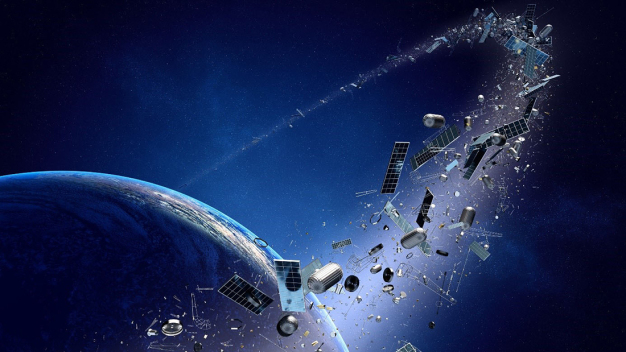
As much as humanity strives to send its celestial messengers in a clean state, it is incredibly negligent at the other end of the lifecycle with its satellites. As of March 2020, 2,700 functional satellites orbited Earth, of which 1,300 were from the USA alone. However, they are accompanied by around 17,000 satellites that are broken or no longer in use. The ESA Space Debris Telescope at the Teide Observatory on Tenerife has detected about 6,500 to 8,000 tons of space debris, totaling 16,700 objects and 9,464 fragments with a maximum edge length of 100 millimeters.
The ESA model MASTER-2005 (Meteoroid and Space Debris Terrestrial Environment Reference) estimates over 600,000 objects larger than 10 millimeters orbiting Earth.
Other simulations predict 150 million objects in the millimeter size range. The US Space Surveillance System continuously monitors objects larger than 50 millimeters. When approaching active satellites, evasive maneuvers become necessary. Even the International Space Station (ISS) is periodically forced to perform course corrections.
The collision risk is increasing. Although space itself is not particle-free, phenomena like the northern lights demonstrate the presence of many particles. On average, the universe has only about 2 atoms per cubic meter—beyond the capabilities of human-made cleanroom technology.
A possible cleanup crew sparks the imagination of the space industry. Ideas range from the Swiss space vacuum cleaner Clear Space One to the destruction of space debris.
Much of this has not yet been implemented, but that is what matters. Whatever cleaning method is used: a lot of work awaits spacefaring nations if they want to clear space in Earth's orbit. If they succeed in simply cleaning up their own doorstep, it would be a stronger human-made signal to the universe than broadcasting radio waves or interstellar satellites. It would show that humanity is capable of adapting to the solar system in the long term—and perhaps later venturing into new worlds.

DITTEL Engineering GmbH
An der Breiten 1
82444 Schlehdorf
Germany
Phone: +49 8851 615900
Fax: +49 8851 6159069
email: info@dittel-ce.de
Internet: http://www.dittel-engineering.de