

- Personnel
- Translated with AI
Proper behavior in the lock and cleanroom
(Image: CWS Cleanrooms Deutschland GmbH & Co.KG)
(Image: CWS Cleanrooms Deutschland GmbH & Co.KG)
(Image: CWS Cleanrooms Deutschland GmbH & Co.KG)
(Image: CWS Cleanrooms Deutschland GmbH & Co.KG)
(Image: CWS Cleanrooms Deutschland GmbH & Co.KG)
A cleanroom creates special conditions for highly demanding processes and products. Employees are the decisive factor for the hygiene status of cleanrooms – and the most common cause of contamination errors. Therefore, proper behavior in and around the cleanroom is particularly important, and strict behavioral rules must be observed during work. When the reasons for this are known, understanding increases, and so does the willingness to comply with these rules. Practical examples help with this.
The behavioral rules described below represent a selection of frequently observed or controversial behavioral mistakes in practice, without claiming to be comprehensive.
Personal Hygiene
All persons entering a cleanroom are subject to strict hygiene rules to reduce the risk of contamination as much as possible. This importance of personal hygiene should therefore be clearly communicated and practiced. Every individual's contribution counts because, ultimately, a cumulative effect occurs in the cleanroom. Thus, working in the cleanroom is always a team effort.
In personal hygiene, the focus is on the body, especially hand hygiene. Before working in the cleanroom, no personal care products, cosmetics, etc., should be applied. This applies to both hair and skin. The clear guiding principle here is: less is more! After all, working in the cleanroom is not about looking good. Consequently, for hands and the face: natural purity. Resistance must be given to trends like nail design and eyelash extensions.
Jewelry in the Cleanroom
Consistency pays off when it comes to the ban on visible jewelry, as particles and microorganisms can adhere to it. Additionally, movement causes friction, leading to material and skin abrasion. This also applies to jewelry worn under gloves. This raises the question of when to put on the first pair of gloves. Isn't that already at the personnel check-in? Furthermore, there is the question of whether a ring on the finger might damage the glove. Another aspect involves work safety considerations. All these points clearly argue against wearing jewelry in the cleanroom.
Cleanroom Clothing
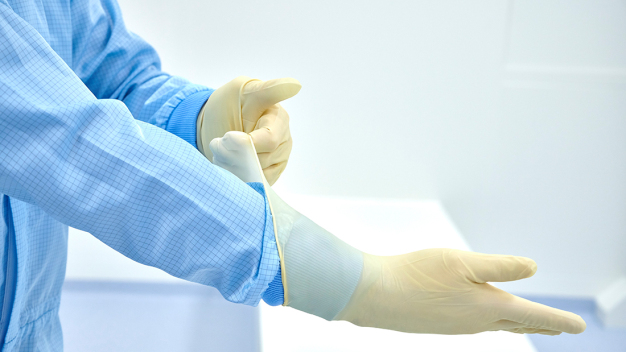
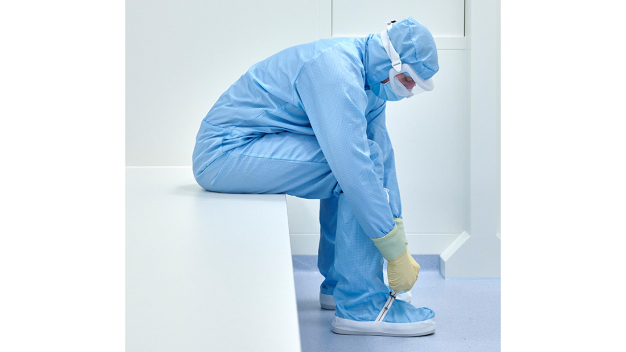
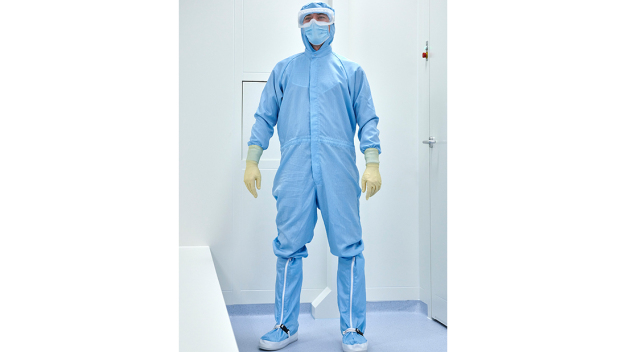
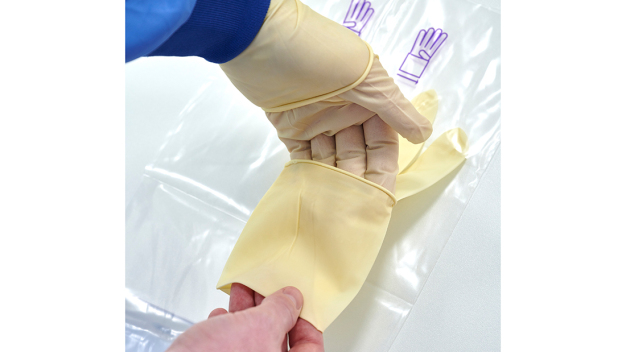
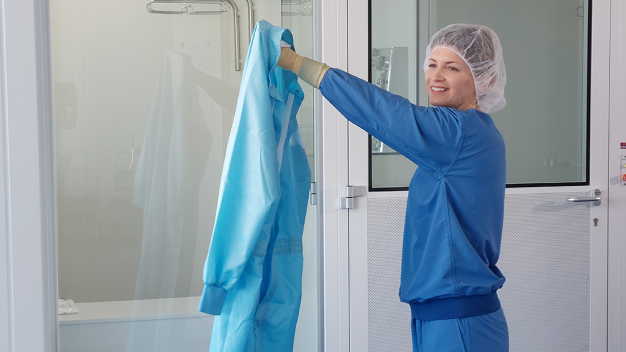
For the cleanliness requirements in the cleanroom, cleanroom clothing, including proper handling and the associated dressing procedure, plays an important role. After all, the cleanroom clothing is the only barrier between the human, a source of particles and germs, and the cleanroom. Proper dressing in practice, especially for the coverall and sterile gloves, is often challenging. Intensive training and practice are required. Because even if just one leg of the coverall falls to the ground, due to the very slippery fabric, it must be sent to laundry and replaced with a new one. Of course, in the correct size, to avoid the so-called pump effect.
This refers to an uncontrolled release of contamination from the collar area during quick downward movements, causing the coverall to tighten around the body.
Controlled Movements
Let's remember: Please move slowly and controlled. Avoid quick and hurried movements. This applies to all activities in the cleanroom, including cleaning. Stress or haste do not go well with a cleanroom environment.
This is due to the special airflow in the cleanroom. Ideally, the cleanest air enters from the ceiling into the room and exits as close to the floor as possible. Contaminations, of any kind, are pushed down and accumulate there. If the cleanroom staff walks too quickly, these contaminations are stirred up again. Additionally, this creates a negative effect on the airflow within the room.
Airflow in the Cleanroom
The designed airflow of the cleanroom and antechamber should be minimally affected by activities and machinery in the cleanroom. A common mistake is partially or completely blocking exhaust air vents. After all, a cart or other interior elements of the cleanroom, such as a table, need to be placed somewhere. There is usually space in front of the exhaust vent to set things down, but this is not a good idea for the reasons described. For optimal removal of all airborne contamination, there should be no horizontal surface above the exhaust vent. Trash bins or similar should not be placed directly next to it.
Coughing and Sneezing
The topic of coughing and sneezing in the cleanroom is often controversially discussed. Is it permissible to prohibit these physiological reactions to chemical or physical stimuli? Should they be suppressed? The regulations are up to the cleanroom operator. It is always sensible to consider possible solutions for both issues, even if coughing or sneezing rarely occurs in practice in the cleanroom – assuming one is healthy. One option is to use cleanroom tissues and quickly hold them in front of the mouth and nose. All droplets should be contained in the tissues, so it makes sense to remove these tissues from the face only in the personnel check-in area and dispose of them. All cleanroom clothing, especially masks, possibly eye shields, and gloves, must be changed after this action. Then, re-dressing according to the specifications of the respective cleanliness class takes place.
Perhaps you have just entered the cleanroom and can quickly return to the personnel check-in to handle coughing and/or sneezing there. This way, your aerosols, consisting of glycoproteins, cell debris, minerals, bacteria, and viruses, will not enter the cleanroom. Without a mask or similar, the expelled particles could spread over a distance of approximately 5-8 meters.
The widely spread rule due to the coronavirus, to cough or sneeze into the crook of the arm, is not suitable for the cleanroom. While it may be justified in public, we are in a special environment – the cleanroom. In reality, no arm bend is truly airtight. When sneezing or coughing into it, aerosols can escape above and below the arm into the room. Additionally, the expelled material would end up on the outside of the cleanroom clothing. Microorganisms and particles would then be carried around in the cleanroom – even if one goes directly to the personnel check-in after coughing or sneezing.
Scratching
A common behavioral mistake is scratching. Who doesn't know that? It itches on the head or face, and the hand immediately moves to scratch. The first hurdle: consciously perceiving this automatic reflex of the body. The second hurdle is self-control. If one cannot or does not want to resist this urge, one should go to the personnel check-in as quickly as possible. Scratching is permitted there. This procedure is also recommended for corrections to the cleanroom clothing for various reasons. This includes brief tugging at masks or safety glasses. Skin particles and hairs do not belong in the cleanroom. Those familiar with cleanroom cleaning will have probably already found and removed hair in the cleanroom, along with particles and microorganisms.
First-Air Effect
An error behavior that should be applied to all activities in the antechamber and cleanroom is the so-called First-Air Effect. The rule is: Do not lean over the process/product or cleaned/disinfected surfaces. Otherwise, the specific airflow in the room will blow contamination away from the cleanroom staff and directly onto areas where it should not go, posing a risk to the product. It becomes especially critical when a person at the end of the value chain wants to recover from illness.
Number of Persons in Antechamber and Cleanroom
There is also the question of how many people are allowed to be in the antechamber and cleanroom at the same time. Does the cleanroom staff know these numbers? Are they documented or, in the simplest case, available on-site? Are there language barriers among staff, or is everyone able to read and understand German texts? This is determined by the person responsible for the cleanroom and is regularly monitored, among other things, by particle measurement devices, and must be communicated to the employees.
Finally, some seemingly obvious points in cleanroom work are listed:
1. No smoking, eating, or drinking. This also includes chewing gum and sucking on candies.
2. No personal items that are not really needed for work in the cleanroom (exceptions are close-to-body aids, e.g., glasses, hearing aids, etc.).
3. The sitting bench is called so because it is meant for sitting.
4. The same rules apply to everyone. There are absolutely no exceptions.
5. A pictorial antechamber order should be available.
6. Regular training of all persons who want to enter the cleanroom, even if only briefly, is mandatory.
7. Do all employees know cleanroom-appropriate poses, such as penguin, robot, or pharaoh?
8. Do not cross your arms, lean or rest against surfaces, as this could transfer contamination.
Cleanroom Academy
info@reinraum-akademie.de
+49 (0) 341 98989-303
www.cws.com/reinraumschulung

CWS Cleanrooms Deutschland GmbH & Co.KG
Dreieich Plaza 1 A
63303 Dreieich
Germany
Phone: +49 6103 3091290
Fax: +49 6103 309169
email: cleanrooms.de@cws.com
Internet: http://www.cws.com/reinraum