




- Translated with AI
Professor Johannes Herrmann appointed as a member of the Academy of Sciences
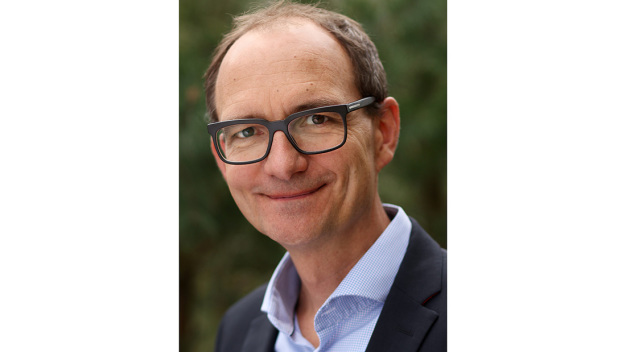
Professor Dr. Johannes Herrmann heads the Department of Cell Biology at TU Kaiserslautern. (Thomas Koziol TUK / Koziol)
Professor Dr. Johannes Herrmann, who heads the Cell Biology department in the Faculty of Biology at the Technical University of Kaiserslautern (TUK), has become a new member of the National Academy of Sciences Leopoldina. The Academy functions as an independent interface between society, science, and politics by addressing societal future topics from a scientific perspective, conveying the results to politics and the public, and representing these topics nationally and internationally.
"Being accepted into the expert panel of Leopoldina is a double success and a great honor for me," explains Prof. Herrmann. "On the one hand, I am pleased that my active work within the scientific community is recognized by the Academy. On the other hand, the induction into Leopoldina once again underscores that we at TU Kaiserslautern are excellently positioned in terms of research. Not least through research-oriented education and many excellent students, we are particularly successful in assembling very strong research teams whose work is visible internationally."
In addition to his research and teaching activities at TUK, Professor Herrmann is also involved in numerous professional committees. For example, he is President of the German Society for Biochemistry and Molecular Biology and spokesperson for the "Fundamentals of Biology and Medicine" specialist college of the German Research Foundation.
At Leopoldina, he will contribute his expertise to the Section of Biochemistry and Biophysics. Already represented within the Academy are two other Kaiserslautern researchers: Professor Dr. Ekkehard Neuhaus, also from the Department of Biology, and chemist Manfred Regitz, an emeritus professor at TUK.
About Leopoldina
The German Academy of Natural Scientists Leopoldina was founded in 1652 in Schweinfurt and is the oldest continuously existing scientific-medical academy in the world. With around 1,500 members, Leopoldina brings together outstanding scientists from Germany, Austria, Switzerland, and many other countries.
In 2008, it was appointed as Germany's National Academy of Sciences. In this role, Leopoldina has two special tasks: representing German science abroad and advising politics and the public.
Since its founding, more than 7,000 individuals have been inducted into its ranks. Among them are Marie Curie, Charles Darwin, Albert Einstein, Johann Wolfgang von Goethe, Alexander von Humboldt, Justus von Liebig, and Max Planck.
Technische Universität Kaiserslautern
67663 Kaiserslautern
Germany