- Translated with AI
Process optimization for bioreactors
PAT measurement method enables timely determination of the volumetric mass transfer coefficient
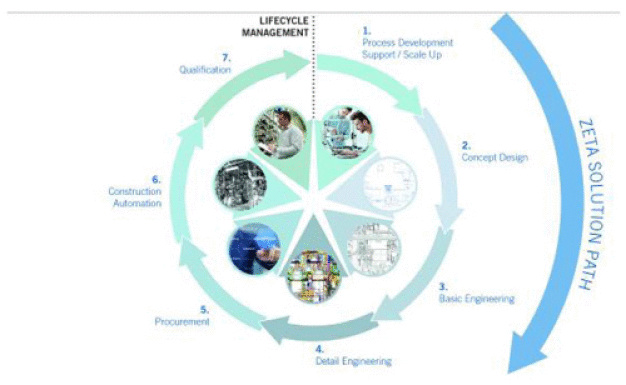
Numerous preparations in the pharmaceutical industry are highly sensitive and require careful planning of the manufacturing processes. Most errors in drug production occur early on and lead to costly and time-consuming changes during scale-up. At the beginning of the development process, it is rarely considered how a specific work step can later be integrated into a large production facility. Therefore, ZETA supports its customers throughout the entire manufacturing process – from the laboratory through various clinical phases to industrial production. This ensures that the products reach market readiness in the shortest possible time. (Source: ZETA Biopharma GmbH)
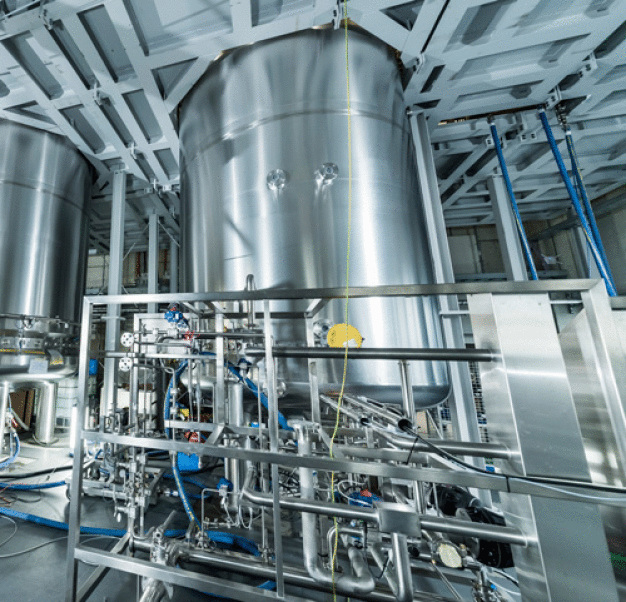
The bioreactor presented at ACHEMA is the scale-down model of a bacterial fermenter with a typical height-to-diameter ratio of 2:1 and is equipped with the new sensor technology for kLa measurement. (Source: ZETA Biopharma GmbH)
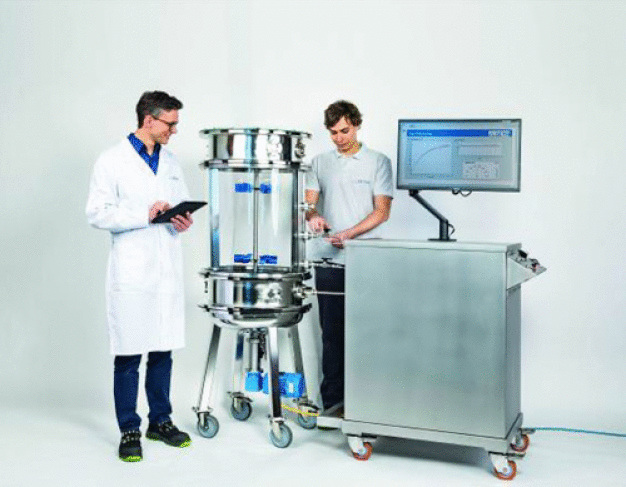
The bioreactor presented at ACHEMA is the scale-down model of a bacterial fermenter with a typical height/diameter ratio of 2:1 and is equipped with the new sensors for kLa measurement. (Source: ZETA Biopharma GmbH)
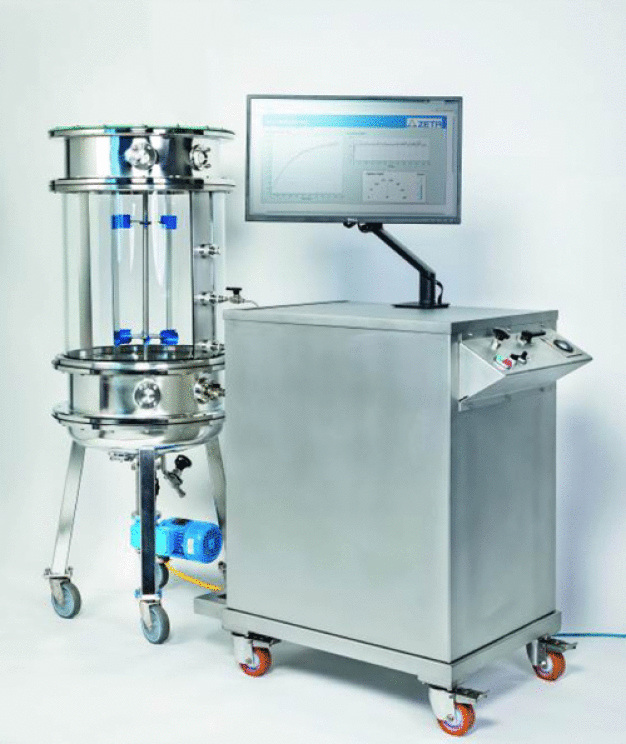
The measurement in the bioreactor is achieved using an electrode that is connected directly to the reactor via a sampling cell through a nozzle. This method is particularly suitable for existing systems, as samples can be taken from almost any point inside the fermenter. (Source: ZETA Biopharma GmbH)
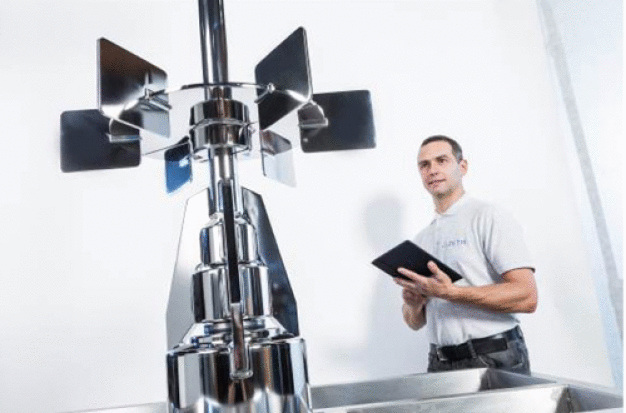
Together with Boehringer Ingelheim and TU Hamburg-Harburg, ZETA has developed a new type of agitator for container sizes of up to 30,000 liters. It will be presented at ACHEMA as a scale-down model within the bioreactor showcased there. With appropriate modifications, such as double storage, it can also be used for large industrial bioreactors with a working volume of 15 m³ and container sizes of up to 30,000 liters. (Source: ZETA Biopharma GmbH)
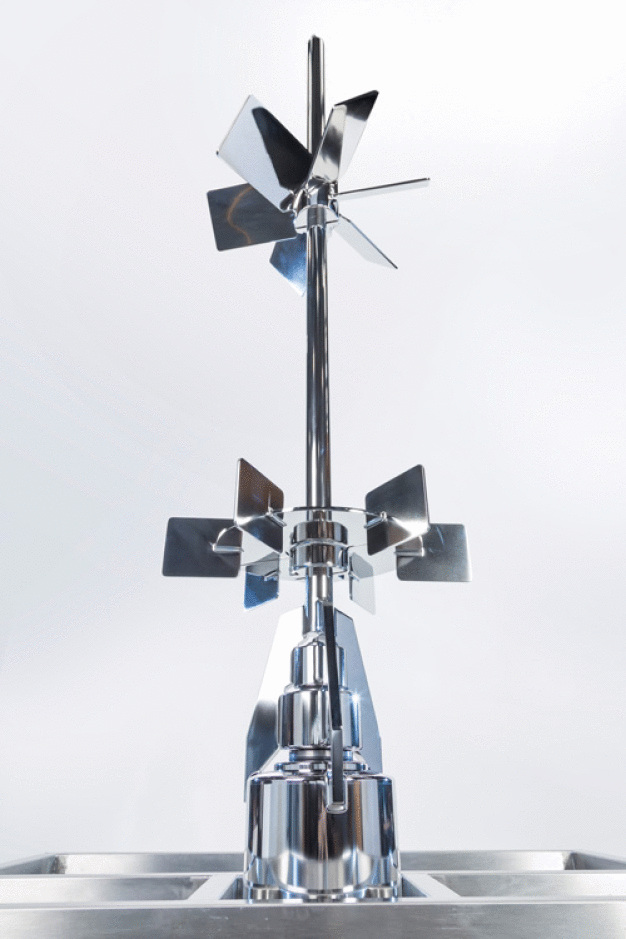
Together with Boehringer Ingelheim and TU Hamburg-Harburg, ZETA has developed a new type of agitator for vessel sizes of up to 30,000 liters. It will be presented at ACHEMA as a scale-down model within the bioreactor showcased there. With appropriate modifications, such as double staging, it can also be used for large industrial bioreactors with a working volume of 15 m³ and vessel sizes of up to 30,000 liters. (Source: ZETA Biopharma GmbH)

"In the pharmaceutical industry, medication and thus patient safety must always be guaranteed," reports Thomas Maischberger, Process Engineer & Project Developer at ZETA Biopharma GmbH. "Therefore, institutions and regulatory authorities such as the FDA or EMEA are urging operators of biopharmaceutical facilities to better understand their processes on a scientific basis. That is why we developed a new sensor technology within the framework of a study on the kLa value at ZETA, which makes the biotechnological process more transparent." (Source: ZETA Biopharma GmbH)
In recent years, the pharmaceutical industry has advanced the improvement and performance capability of biological cell cultures, requiring bioreactor technology and process control to meet increasingly higher standards. For functional preparations, a high volumetric mass transfer coefficient (kLa) is particularly essential. However, existing standard oxygen sensors have been extremely sluggish in measuring this parameter and are highly limited in their positioning within the process. Therefore, ZETA Biopharma GmbH has developed a new method for measuring kLa as part of a study, which will be demonstrated in practical application at this year's ACHEMA 2018 using a bioreactor. The system is equipped with two highly sensitive and quickly responsive optical oxygen sensors and can measure kLa values of up to 2,000 h-1 at any desired position. Since the bioreactor can be adapted with different impeller geometries and aeration types, it serves as an effective scale-down model for bacterial fermentation and cultivation of animal cell cultures, even in larger production facilities, and aids in optimizing gas entry into the liquid phase.
In biological systems like a bioreactor, numerous factors influence cell growth, but their individual effects are often not assessable. This turns the process into a black box and makes it difficult to predict. "In the pharmaceutical industry, drug safety and thus patient safety must always be guaranteed," reports Thomas Maischberger, Process Engineer & Project Developer at ZETA Biopharma GmbH. "Therefore, institutions and regulatory authorities such as the FDA or EMEA require operators of biopharmaceutical plants to better understand their processes scientifically. That’s why we developed a new sensor technology for the kLa value in a study, making the biotechnological process more transparent." With this method, measuring the kLa value at different process phases and positions within the vessel is possible.
High cell growth through optimal gel oxygen levels
When designing bioreactors, oxygen transfer rate and specifically the volumetric mass transfer coefficient (kLa) are crucial. It describes the efficiency with which oxygen can be introduced into a bioreactor under certain process conditions and dissolved in the medium. "This kLa value is of great importance in any biotechnological process because it indicates how well microorganisms can be supplied with gases," explains Maischberger. "Often, gel oxygen is the limiting element in microbiological fermentations. For example, the critical oxygen saturation for bacteria and yeasts is between 10 and 50 percent." For optimal cell growth and maximum product formation, it is therefore important to keep the gel oxygen level in the entire bioreactor above this value by aerating with air or pure oxygen through a sparger. In a highly efficient bioprocess, the oxygen mass transfer rate from the gas bubble into the medium (OTR – oxygen transfer rate) should be equal to or greater than the rate at which the growing cells consume oxygen (OUR – oxygen uptake rate).
With plant expansions and the manufacturing of new reactors, the precise and timely determination of the kLa value is increasingly central to process engineering and mechanical planning. Once this kLa value can be reliably determined, it is also guaranteed that the critical gel oxygen level can always be maintained. During their study, ZETA found that standard oxygen sensors currently used cannot determine the gel oxygen content quickly enough to enable real-time measurement. "This is due to their thick membrane, which is primarily designed for robustness and process safety," explains Maischberger. "However, this makes oxygen molecule diffusion noticeably slower than with sensors used in our kLa study." Additionally, measurements with conventional sensors were usually only taken at one point in the vessel – at the probe ring. Since no reactor achieves perfect mixing, the medium does not have a uniform supply, leading to the formation of zones with different saturation levels. This can distort the measurement results.
Determination of the kLa value at any point in the bioreactor
"Therefore, we explored ways to achieve a better measurement of this parameter," continues Maischberger. "Through our know-how from years of practical experience and successful application in our internal technical center as well as in large industrial systems, we developed an appropriate testing methodology." To determine the kLa value, ZETA’s solution specialists iteratively adapted various calculation models to the experimentally obtained gel oxygen curves to identify the best scale-up/scale-down model. They considered not only the kLa value but also the response time of the oxygen sensors and the dead time, which is the interval between the signal change at the system input and the signal response at the system output.
To characterize each zone, representative samples must be taken from as many points in the vessel as possible. This allows a comprehensive depiction of the physical conditions within the reactor. For this purpose, ZETA developed a sensor system for the so-called Dynamic Startup Method (DSM) within the framework of the kLa study. It determines the kLa value based on temporal concentration differences. In a first step, the gel oxygen in the bioreactor is chemically or physically completely removed and later reintroduced in a controlled manner by feeding air. This enables a controlled determination of the kLa value at critical points within the vessel. The measurement in the bioreactor is performed using an electrode connected directly to the reactor via a flow-through cell through a nozzle. This method is particularly suitable for existing systems, as it allows samples to be taken from almost any point inside the fermenter.
Scale-down bioreactor enables effective process optimization
The bioreactor presented at ACHEMA is equipped with this sensor technology. The system shown is a scale-down model of a bacterial fermenter with a typical height-to-diameter ratio of 2:1. The specially manufactured impeller flange allows for the accommodation of various impeller designs and geometries. The integrated torque measurement determines the power input of different impellers under various aeration rates. Additionally, the circuit breakers can be modified to assess their influence on mixing time and power input. The magnetic impeller minimizes contamination risk and ensures uniform gas bubble distribution. With appropriate modifications, such as double bearing support, it can also be used for large industrial bioreactors with a working volume of 15 m3 and vessel sizes up to 30,000 liters.
The PAT bioreactor, equipped with this new measurement technology, will be demonstrated to the public at this year's ACHEMA 2018 in Frankfurt am Main, Hall 9.1, Stand D10. The calculated kLa value is displayed and calculated based on an increase in the current oxygen concentration. This allows live observation of how the impeller performance and aeration rate influence the kLa value. The magnet impeller installed in the bioreactor will also be presented via a film at regular intervals. For questions about the kLa study, the PAT bioreactor, or the magnetic impeller, Nicole Zangl (Product Manager ZETA Impeller Technology) and Alexander Lausecker (ZETA Head of Sales) of ZETA Biopharma GmbH are available. Additionally, customers can analyze their entire process together with the ZETA team using the Solution Path via a touchpad.
ZETA GmbH
8501 Lieboch/Graz
Austria