- Furnishing & equipment
- Translated with AI
Matthias Lorenzen
Precision under challenging conditions
Humidity measurements in cleanrooms and climate chambers
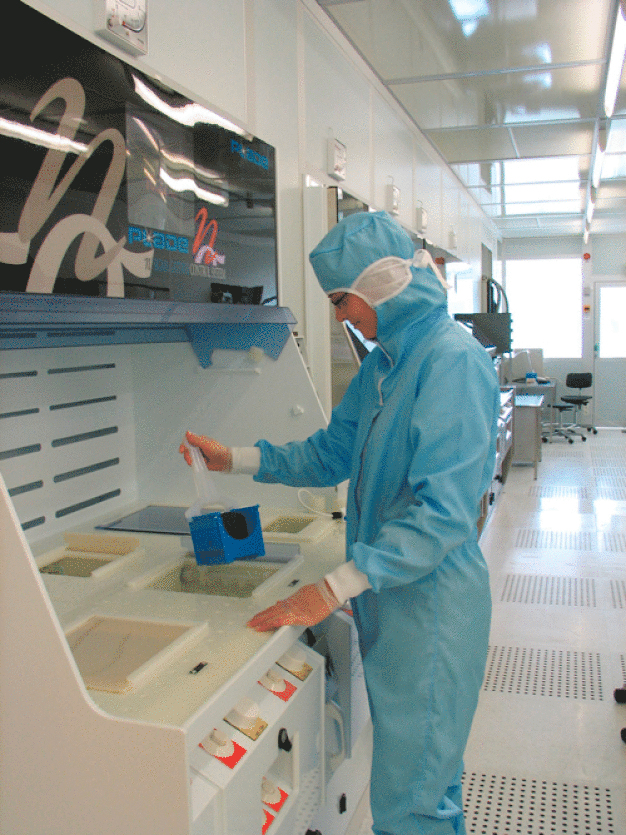
Special conditions prevail in stables.
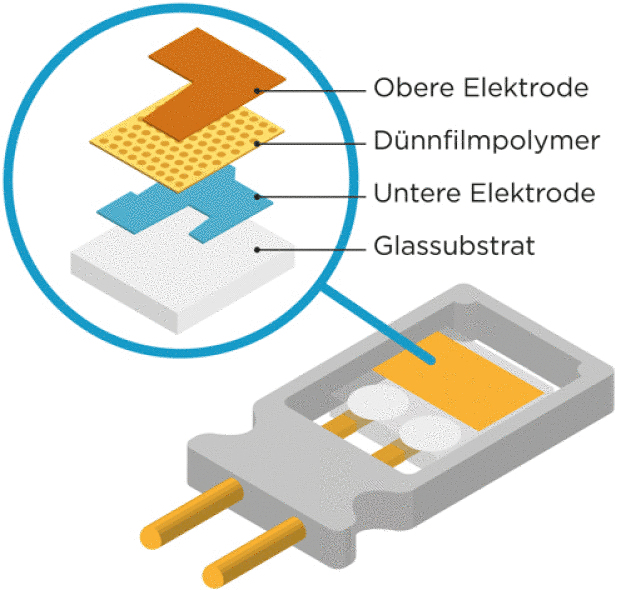
The structure of the HUMICAP sensor from Vaisala.

Matthias Lorenzen, Business Development Manager, EMEA, Vaisala.
The choice of the right measuring devices is of great importance for achieving optimal measurement results. A particular challenge in this regard is humidity measurement, as conducted in cleanrooms and climate chambers. Critical environments like these rely on high-performance measurement procedures, because parameters such as humidity or temperature, for example, have a significant impact on product quality and productivity during manufacturing. Not least, their control and recording are subject to strict guidelines. To maintain continuous operation with defined specifications, the measuring devices used must guarantee high accuracy consistently – even under challenging conditions.
The selection of the right humidity measuring devices for cleanrooms and climate chambers requires careful consideration. Off-the-shelf solutions are hardly available due to the varying applications and conditions in these environments. In the semiconductor and electronics industries, with their increasingly shorter production cycles, monitoring humidity or dew points during the manufacturing process is becoming ever more important. In the mini-environments of production facilities, highly accurate measurement systems with deviations of +/-1% relative humidity (rH) are increasingly demanded. When monitoring humidity in systems for manufacturing liquid crystal displays and paints, besides accuracy, sensor durability plays a major role. Especially in such environments, unwanted air pollutants often occur, which can influence the sensor elements. When selecting measuring devices in climate chambers, among other things, the question arises whether humidity measurements are continuously required across the entire operating temperature range, whether condensation can occur during a test cycle, or whether the chamber is operated over a longer period at nearly 100% relative humidity. Aggressive gases or extremely dry environments can also pose challenges – not all measuring devices are suitable for such conditions.
This is where specialists are needed
Cleanrooms and climate chambers put measuring devices to a tough test, as conditions often make precise measurements difficult:
High humidity – Environments with saturated atmosphere are problematic for most electronic humidity sensors. Psychrometers are better suited, as they provide accurate values. However, they require continuous maintenance and reach their limits when low humidity levels or extreme temperatures are present. An optimal solution for such cases are capacitive sensors with an intelligent preheating function: the temperature of the probe is maintained slightly above ambient temperature. This prevents condensation or icing of the probe and ensures continued measurements even in condensing environments. Heated probes can also be operated at temperature-humidity combinations where psychrometers are not effective enough or not usable at all.
Aggressive gases – Humidity sensors are usually in direct contact with the gas (mixture) of the environment. In some applications, particularly high concentrations of aggressive chemicals can occur, leading to a mostly reversible gain drift of the humidity or dew point sensor. A simple humidity sensor quickly reaches its limits here. In such cases, especially high-quality humidity sensors are used, characterized by the selection of sensor polymer and an optimized sensor design. An example is the Vaisala HUMICAP®180R capacitive sensor, produced in the company's own cleanroom based on many years of experience in humidity sensor manufacturing. Another solution Vaisala offers for the problem of potential sensor drift is "chemical sensor cleaning." By heating the sensor, foreign molecules responsible for drift are vaporized, restoring the sensor's original properties.
Extremely dry environments – To measure the water content of the air, different sensors are used depending on the humidity range. A standard humidity sensor is typically used from about 10% rH. However, in climate chambers, humidity levels of only 3% rH or less may be required. Most humidity measurement devices, designed for a range of 0 to 100% rH, no longer operate reliably at such low humidity levels. In such cases, dew point measurement devices are used, which, for example, can reliably measure dew point thanks to a special polymer sensor technology. Capacitive sensors working with this technology can be used across a very broad temperature range. With a span from -70 to +180 degrees Celsius, they are not limited by freezing or boiling points.
Calibration also plays a role
To ensure the high accuracy of measuring devices permanently, regular precise calibrations are essential. Generally, laboratory calibration is preferable to on-site calibration. In a laboratory, the effects of the environment and thus the number of influencing factors can be minimized significantly. However, calibrations during operation are a quick and simple way to verify measuring devices without removing them from the process or area. Portable universal indicator devices are used for on-site calibrations, which display measurement results graphically over time or transmit them to a PC. Ideally, they can be connected directly to the measuring devices. This possibility should already be considered when selecting the measuring devices.
The described "hard" decision factors, which are oriented towards usage, help in choosing the measuring devices. If, in addition, softer factors such as easy installation and maintenance, low maintenance requirements, the possibility of individual customization, and the manufacturer's service are considered, the optimal equipment for humidity measurement in cleanrooms and climate chambers is found.
Service Tip: Be cautious when choosing calibration services
Calibrations should in any case be performed by certified service providers. These can be manufacturers offering calibration for their own products or laboratories that calibrate measuring devices in general. Without accreditation, the competence of the services is not proven. Therefore, the competence of such service providers should always be checked before making a decision. Every provider of calibration services should be able to demonstrate a valid traceability chain. At least one laboratory reference must have been calibrated in an external laboratory, which is then used for internal calibration. Furthermore, the scope of services should be clarified before cooperation: some commercial providers only specify measurement uncertainties in their calibration certificates if they are ordered separately. Others are not capable of calculating measurement uncertainties at all.

Vaisala GmbH
Rheinwerkallee 2
53227 Bonn
Germany
Phone: +49 228 249710
Fax: +49 228 2497111
email: vertrieb@vaisala.com
Internet: http://www.vaisala.de