


- Planning
- Translated with AI
Dirk Steil
Plan, build, and operate indoor spaces sustainably – but how?
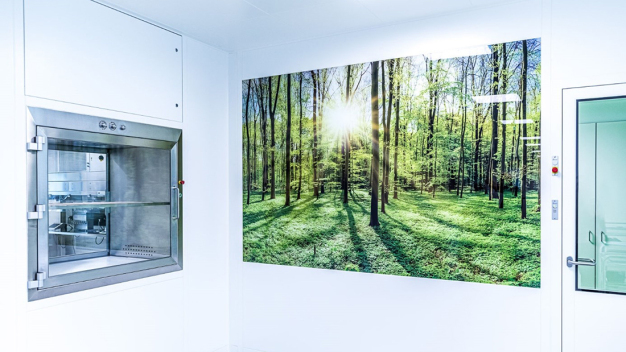
Fig. 1: The prospects in the cleanroom can be so green if everything is done correctly from planning to operation.
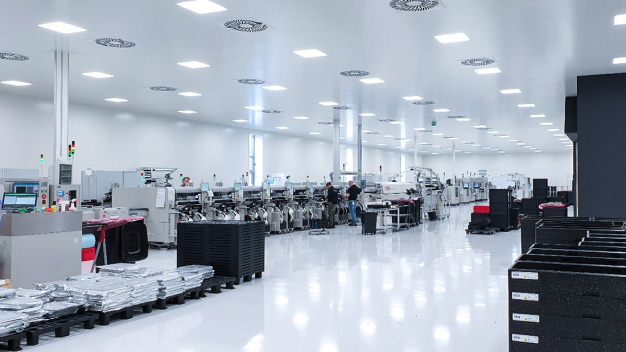
Fig 2: A cleanroom never stands still – the lowering operation must be well thought out to save maximum energy.
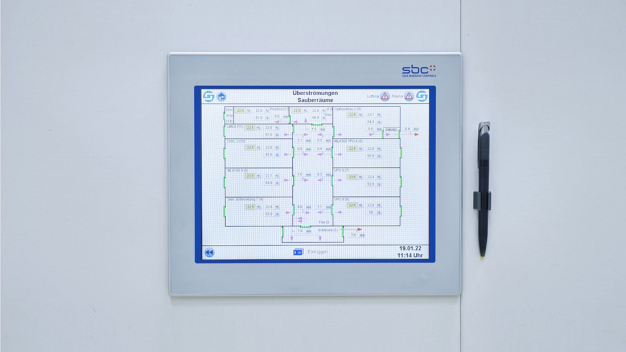
Fig 3: On the control panel next to the personnel lock, you have access at all times to all relevant data, particularly ensuring the flow directions with minimized overpressure.
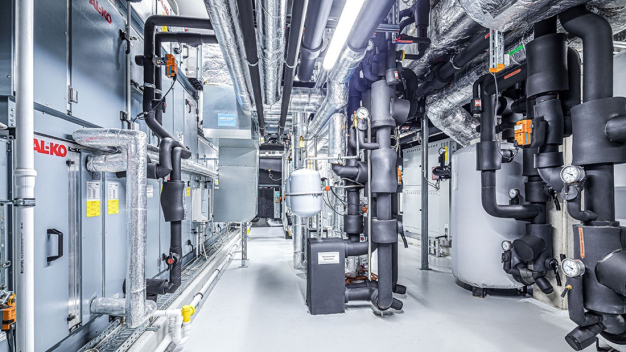
Fig. 4: The selection of high-quality and durable aggregates and components, as well as their proper installation, significantly increases the lifespan of cleanroom systems.
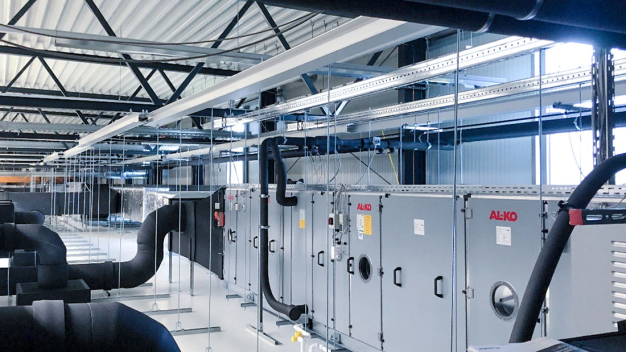
Fig 5: Decentralized ventilation units on the cleanroom ceiling ensure short air paths and thus optimal energy efficiency.
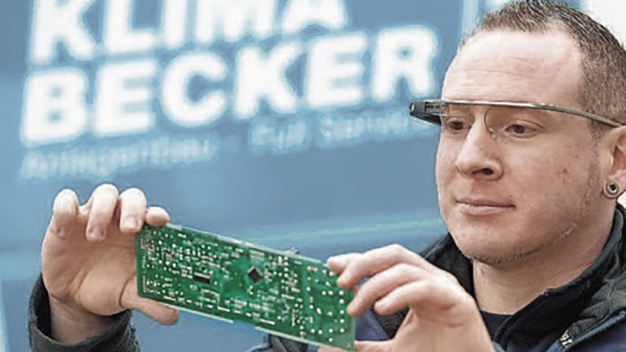
Fig. 6: Proper servicing of cleanroom systems and preventive maintenance have a significant impact on energy consumption and thus the sustainability of the systems – demonstrated here with an innovative AR glasses that overlays the necessary data into the service technician's field of view.
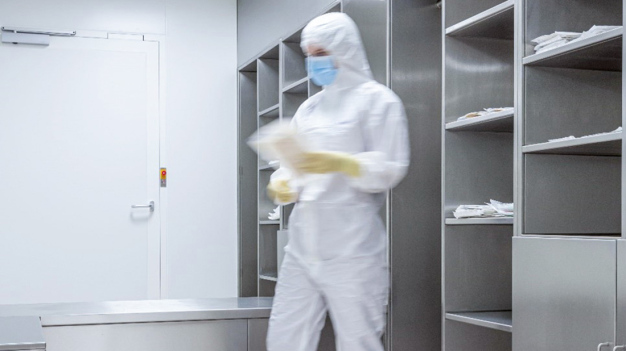
Fig 7: The use of single-use and consumable materials in the cleanroom requires a conscious selection of products and a detailed disposal plan.
Author: Dirk Steil, Managing Director BECKER Cleanroom Technology GmbH, www.becker-reinraumtechnik.de
Few terms have developed as strongly in recent years as the term "sustainability." But what exactly is sustainability, and what does it have to do with cleanroom technology?
According to Duden, sustainability means meeting the needs of the present in such a way that the possibilities of future generations are not limited or, in other words, that future generations are not worse off in satisfying their needs than those living today.
Primarily, this means handling existing resources carefully and, especially in light of climate change, also reducing the CO2 footprint.
The CO2 footprint (carbon footprint) assesses the total amount of greenhouse gases (in tons of CO2) caused by a person or a company within a specific period. The CO2 footprint constitutes a significant part of considering the human lifecycle (Life-Cycle). Particularly by avoiding fossil fuels for power generation, the CO2 footprint can be significantly reduced.
So, where are the approaches to sustainability and reduction of the CO2 footprint in cleanroom technology?
Let's start with the first phase in the "life" of a cleanroom: planning – here, the most important foundations for the future are laid. We all know that operating a cleanroom is a very energy-intensive process. If energy efficiency is incorporated into the design of the cleanroom, an energetically sustainable solution can be achieved over the entire lifespan.
It begins with the layout of the cleanroom itself and thus also the determination of the room volume. "As large as necessary, as small as possible" initially sounds trivial but is often neglected or underestimated during planning: the larger the room, the larger the ventilation system and thus the energy consumption. The room air volume is exchanged from 10 to over 100 times per hour.
In addition to the rooms, the technical systems must be designed so that they provide the necessary performance with the least possible electrical energy. For example, if energy recovery is already mandated by law, there are still numerous technical "tricks" to drastically reduce power consumption: decentralized air systems, outdoor air pre-dehumidification, replacing fixed pressure stages with targeted and safe overflows, and innovative methods of air humidification are just a few of them.
Here, the experience of the cleanroom provider is crucial to determine which concept is suitable for which application and what successes have already been demonstrated in reference projects – not everything that sounds good in theory works in practice.
An additional foundation of sustainable planning is working with BIM methods ("Building Information Modeling"). Here, each component already in the planning phase receives a multitude of data that cover the entire lifecycle, from design, installation, spare parts procurement, to eventual disposal during deconstruction, making them useful multiple times.
The construction phase of the cleanroom also decisively influences sustainability. For example, the choice of components and systems has a crucial impact on the lifespan and the environmental burden of a cleanroom. Ventilation devices, for instance, which are inexpensive initially but develop increasing leaks over their service life, lead to the loss of increasingly valuable and costly conditioned air before it even enters the cleanroom. The same applies to the duct system if it is not properly installed, sealed, and insulated.
The question of which cleanroom wall and ceiling systems are installed also contributes to the ecological balance: it makes a difference whether a wall is made with inexpensive PU foam, which may off-gas, is flammable, and difficult to dispose of, or whether a flexible double-shell wall with optimal insulation between the layers is used. The same applies to the cleanroom ceiling: using thin metal cassette ceilings in a hall where heat accumulates above the ceiling in summer causes the entire heat to transfer into the cleanroom, requiring costly cooling.
If the cleanroom is efficiently planned and professionally constructed, there are also many approaches to sustainability during operation:
Cleanrooms are often not continuously optimized after commissioning. Here lies enormous potential: adjusting air exchange rates according to actual needs, for example, when the cleanroom is used with less personnel, can save many kWh of electricity annually. The same applies to significant changes in process equipment, provided they affect thermal loads and exhaust air quantities. Our recommendation is to regularly review the cleanroom – ideally annually – and adapt it to the actual conditions.
Maintenance
Regular maintenance of all systems is generally important and offers additional savings potential for greater sustainability. This includes timely filter replacement and eliminating measurement deviations. The differential pressure across filters does not increase linearly but exponentially, meaning that as filters become dirtier, more and more pressure (and thus energy) is required to overcome the resistance. Therefore, filters should be replaced before this exponential increase begins.
The type and scope of maintenance can be assessed and evaluated based on risk. Where possible, predictive maintenance should also be considered. Temperature and motion sensors on active components can warn early and prevent unnecessary failures and energy costs.
Recycling and disposal: ensure that used disposable products are properly recycled or disposed of. A clear recycling plan can help minimize the ecological footprint.
The dismantling of a cleanroom can also be carried out sustainably. Data from the BIM model used during planning can assist here. All materials, devices, and components used have their data stored from the start. This can include information on material composition and disposal recommendations.
These are the insights into planning, construction, and operation of sustainable cleanrooms. Beyond this, there are many other exciting approaches to reducing our cleanroom CO2 footprint: e.g., clothing, cleaning, packaging.
A related event organized by the Cleanroom Network www.Cleanroomnet.de will take place in June 2024, and we cordially invite you to participate.
Conclusion
In recent years, not only has interest in energy savings and CO2 footprint reduction increased across the entire industry, but also the willingness to invest. Optimization measures today no longer fail due to fundamental concerns or profitability considerations. The industry is investing wisely in technical cleanroom infrastructure and can also expect unconventional ideas from us, the cleanroom specialists. Future decisions will not be based solely on investment costs but on lifecycle costs and the CO2 footprint of a cleanroom. Interested? Then contact us: info@becker-reinraumtechnik.de

BECKER Reinraumtechnik GmbH
Von-der-Heydt-Str. 21
66115 Saarbrücken
Germany
Phone: +49 681 753890
email: info@becker-reinraumtechnik.de
Internet: http://www.becker-reinraumtechnik.de