

- Service
- Translated with AI
Matthias Gaul
Particles on the trail
Nebler suitcase open 01kweb
Nebler_front_01kweb
Nebler_Lanze_624px_web
Nebler_Fog_K_01kweb
Particles on the trail
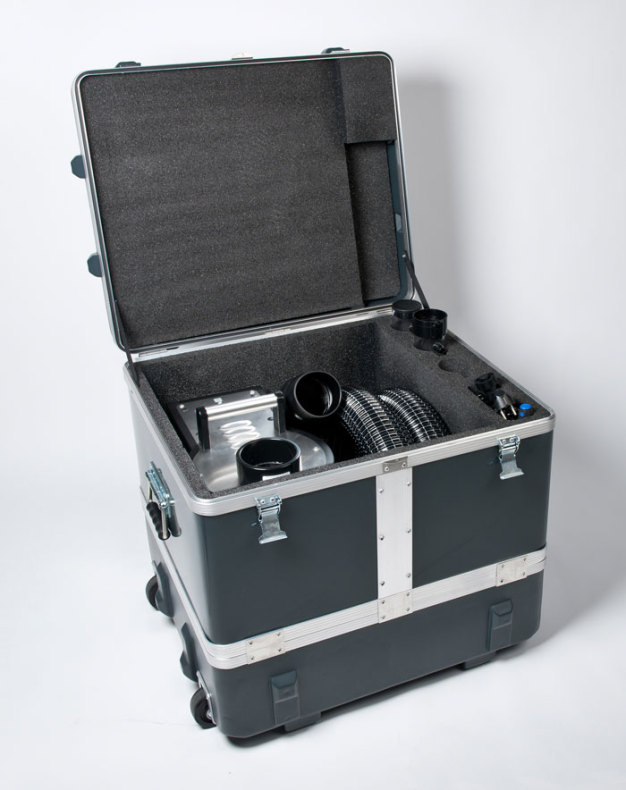
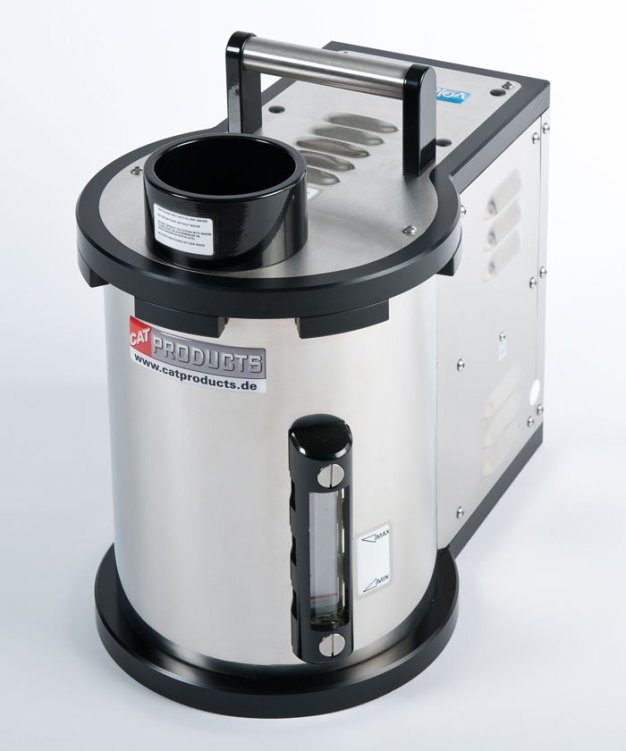
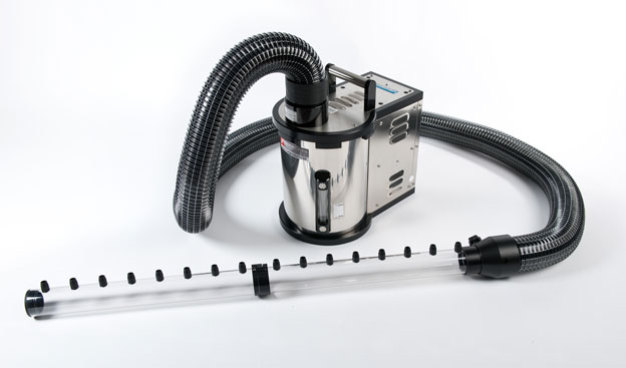
Around airflow visualization in cleanrooms, CAT Clean Air Technology GmbH has expanded its product portfolio with the even more powerful ultrasonic fog generator VP18-2012.
Whether microelectronics, surface technology, semiconductor manufacturing, hospitals, medical technology, pharmaceutical industry, biotechnology, food industry, and many other fields: Particles in cleanrooms cause damages worth millions annually, especially in Germany. Often, the cause is only recognized when it is already too late. Against the background of increasingly strict quality assurance procedures and the resulting liability risks in case of damage, airflow visualizations are therefore a very essential preventive measure. According to ISO 14644-3 Annex B7 and VDI 2083-3, which prescribe periodic inspections, airflow visualizations reveal areas with low or inadequate air exchange as well as areas where particles can accumulate.
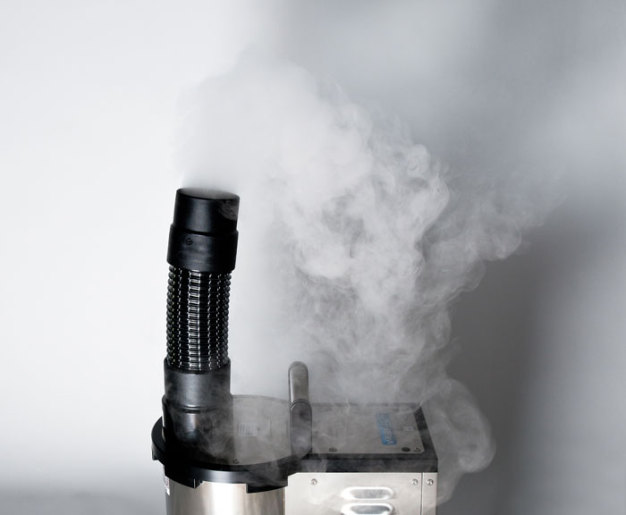
The CAT Clean Air Technology GmbH, founded in 1995 and based in Stuttgart, introduced ultrasonic fog generators made from pure water of its own manufacturing six years ago for this purpose. Continuously developed over the years, the series was expanded with the VP18-2012 in new design at the Achema 2012. The mobile, pure water-based generator for airflow visualization in cleanrooms is said to be one of the most powerful devices of its kind worldwide. Compared to its sister models VP6-2012 and VP12-2012, the VP18-2012 generates an even higher, denser, and more contrast-rich fog output by disintegrating deionized water via ultrasonic modules, enabling more conclusive results.
"Before commissioning a cleanroom, airflow visualizations are indispensable," explains Patrick Siegel, Sales Manager for CAT Products. The same applies after renovation work in the cleanroom or when, for example, installations and machines are adapted to the manufacturing processes of a new product. Even then, it must be demonstrated that the airflow conditions are not negatively affected.
Current state analysis as a basis for optimization potential
Like its sister models VP6-2012 and VP12-2012, the VP18-2012 uses only pure water — no oil and no fluid. This means that re-cleaning of visualized areas is not necessary, and airflow visualization can be performed both during the idle state of the cleanroom and during operation. Additional advantages of the VP18-2012 include that fog generation occurs without any delay, and the intensity of the fog output can be individually regulated via a potentiometer — an electrical resistance component — on the device, as well as additionally via a throttle valve mounted on the generator hose. An external system control is optionally available. The device can be refilled quickly and without delay through the fog outlet nozzle. Like the basic model VP6-2012 and the mid-range model VP12-2012, the VP18-2012 features a monoblock design, with all system components housed in a protected unit.
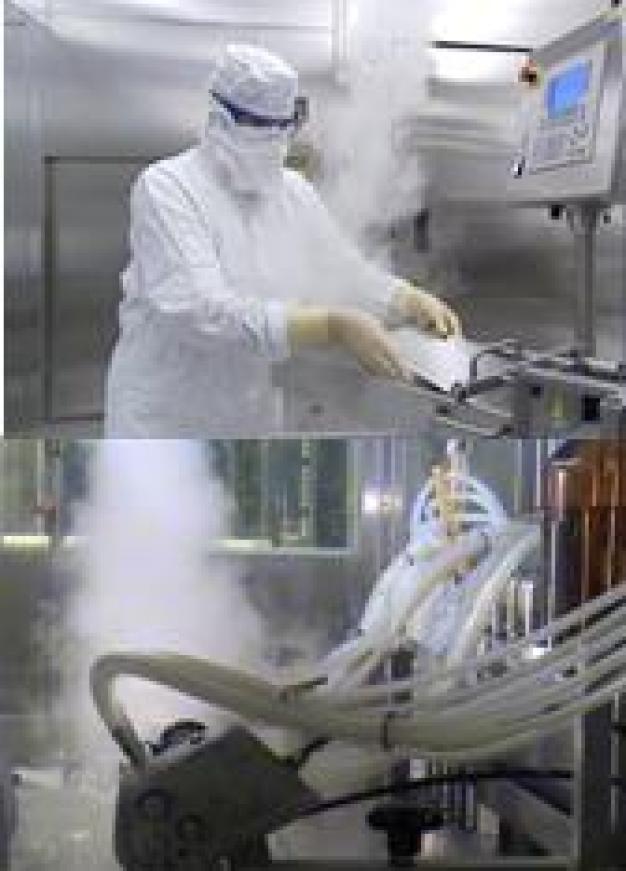
"With our fog generators, customers receive devices that enable them to optimally position production facilities through airflow visualizations, conduct situation audits or inventory assessments of airflow conditions, and track down unresolved particle and contamination sources," emphasizes Patrick Siegel. Customers can perform the airflow visualizations themselves or commission CAT to do so. CAT engineers document the current situation with videos and digital photos, then analyze the results and identify potential improvements.

CAT Clean Air Technology GmbH
Motorstraße 51
70499 Stuttgart
Germany
Phone: +49 711 365919937
email: info@catgmbh.de
Internet: http://www.catgmbh.de