




- R+D & Community of Interest
- Translated with AI
Nano against Corona?
Strong change in nanochemistry
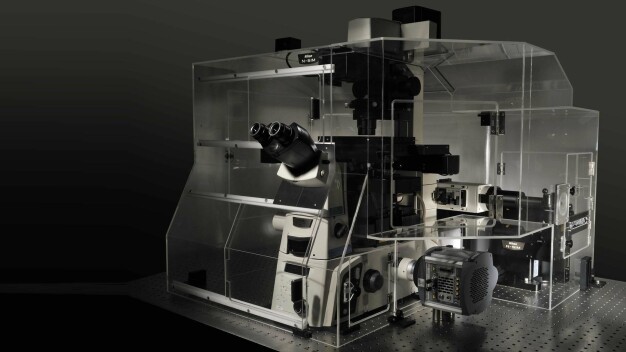
Are nanometer-sized structures too small to see? – Today, it is possible with special microscopes: microscopy systems based on structured illumination (N-SIM, Nikon), resolution down to the lower nanometer range thanks to stochastic optical reconstruction (N-Storm, Nikon), ergonomically designed research microscope, inverted research microscope as a basis for super-resolution techniques (N-Dtorm N-SIM). (Image: Nikon)
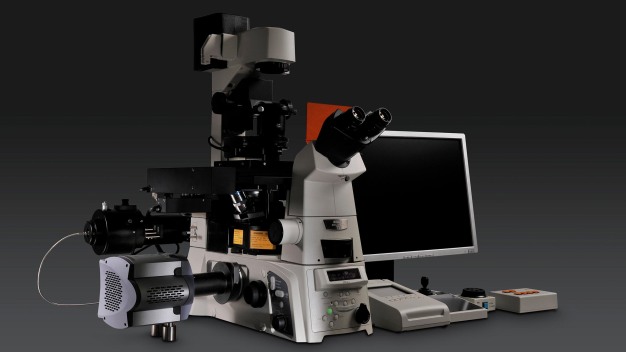
Are nanometer-sized structures too small to see? – Today, it is possible with special microscopes: microscopy systems based on structured illumination (N-SIM, Nikon), resolution down to the lower nanometer range thanks to stochastic optical reconstruction (N-Storm, Nikon), ergonomically designed research microscope, inverted research microscope as a basis for super-resolution techniques (N-Dtorm N-SIM). (Image: Nikon)
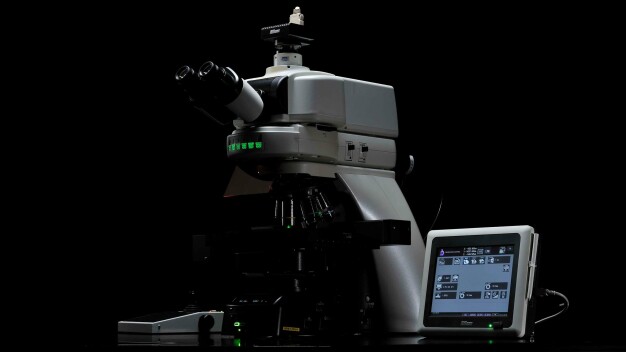
Are nanometer-sized structures too small to see? – Today, it is possible with special microscopes: microscopy systems based on structured illumination (N-SIM, Nikon), resolution down to the lower nanometer range thanks to stochastic optical reconstruction (N-Storm, Nikon), ergonomically designed research microscope, inverted research microscope as a basis for super-resolution techniques (N-Dtorm N-SIM). (Image: Nikon)
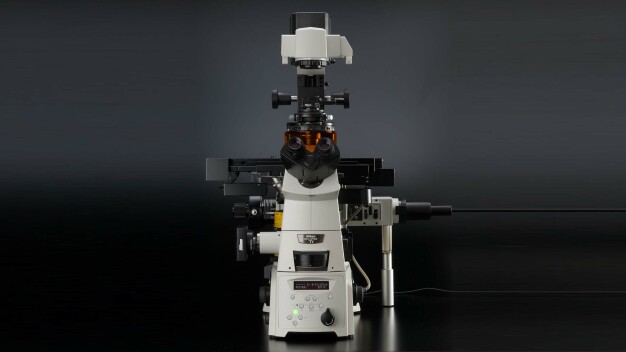
Are nanometer-sized structures too small to see? – Today, it is possible with special microscopes: microscopy systems based on structured illumination (N-SIM, Nikon), resolution down to the lower nanometer range thanks to stochastic optical reconstruction (N-Storm, Nikon), ergonomically designed research microscope, inverted research microscope as a basis for super-resolution techniques (N-Dtorm N-SIM). (Image: Nikon)
We know iron oxide as rust, which we try to avoid. But nano-iron oxide is a potent contrast agent for medical imaging procedures. Nano-graphene provides, among other things, the basis for new far-infrared detectors – and finally: nanoparticle-based vaccines could render the novel SARS-CoV-2 virus harmless.
Live vaccines pose a safety risk because they can revert to their virulent state. Inactivated vaccines are comparatively weaker and more complex to produce. Nanobiotechnology offers solution concepts for both weaknesses of conventional vaccines.
The nanoparticles used resemble a virus in shape and size and are therefore particularly well enclosed by antigen-presenting cells. These, in turn, activate the desired specific immune response. A characteristic of many nanoparticle vaccines: the epitopes, i.e., the immune response-triggering molecular fragments of an antigen, repeat themselves (repetitive epitopes) – which makes them easily recognizable.
Nanoparticle-based vaccines are not entirely new. For example, a hepatitis B vaccine was approved as early as 1986. Today, there are various options. For instance, particles in the range of 1 to 1000 nanometers can serve as carrier materials, as in the hepatitis B vaccine.
One of the most promising concepts, however, is realized by the Riehen-based company Alpha-O Peptides in its self-assembling protein nanoparticles. The proteins used come together due to hydrophobic and ionic interactions to form protein nanoparticles. Primarily α-helix structures form, which, through strong cross-linking, develop into "supercoiled" structures. Based on this, a nanoparticle platform for vaccines has been built, essentially a basic structure with a specific symmetry and size (more precisely: dodecahedral-icosahedral symmetry, particle size: 16–25 nm, like a virus capsid). This basic structure can be adapted to combat different viruses (e.g., by choosing different epitopes).
Alpha-O Peptides already has a malaria vaccine in the pipeline (status: clinical trials in humans, Phase I/IIa in the USA) and has now developed another against the SARS-CoV-2 virus. It is currently being tested in animal experiments to see whether it actually stimulates the body to produce antibodies and whether these can ultimately neutralize the virus.
Comfortable two-component nano-vaccine
Another innovative vaccine, already tested in primates, relies on so-called replicon RNA (repRNA). Advantage: It strongly stimulates antibody production without needing to enter the cell nucleus. Disadvantage: Outside the cells, repRNA is quickly broken down by enzymes.
This disadvantage can now be compensated by packaging the active ingredient for transport into cells in special, protective nanoparticles called "Lipid InOrganic Nanoparticles" (Lions). If the so-called HDT-301 proves successful in clinical trials, a two-component vaccine would be available; these could be produced separately and combined conveniently at the bedside – ready for injection.
Iron oxide nanoparticles for combined MRI/CT imaging
Another medical application of nanotechnology concerns MRI imaging (magnetic resonance imaging). It exploits the fact that the relaxation times of excited hydrogen nuclei vary depending on the tissue, creating a "contrast." By selectively enriching iron oxide nanoparticles, this effect can be finely tuned to improve imaging clarity. These nanoparticles alter the relaxation of hydrogen nuclei in their environment.
A range of ideas extends far beyond this. For example, iron oxide nanoparticles can be embedded in polymer nanoparticles. In the form of large-scale producible core/shell "Fe3O4@MAOETIB" nanoparticles, they can be used for both MRI and computed tomography (CT). As dual contrast agents for combined CT/MRI examinations, they hold great potential to simplify tumor imaging.
In the field of infrared analytics, fine graphene structures offer a new approach for improved detectors. These are far-infrared photodetectors with graphene nanoribbons as the photosensitive element, along with black phosphorus and arsenic. Researchers at the Laboratory for 2D Materials and Nanodevices in Moscow see the opportunity to replace all far-infrared and terahertz radiation detectors with such detectors – an exciting competition. Infrared sensors are used in various areas, such as night vision devices, remote controls, targeting drones, and heart rate sensors, but also – as an alternative to X-ray in luggage scanners.
Mass production of complex nanorods
To predict optical, catalytic, or magnetic properties of even complexly constructed nanoparticles, artificial intelligence is now often employed. This works so successfully that the bottleneck is no longer the design of new materials, but the mass synthesis of a multitude of good candidates, conceived by the computer. Using standard laboratory glassware, up to 65,000 nanorods with different combinations of metal sulfide materials can now be produced very quickly and easily; a few years ago, it would have taken months or years.
This year's ILMAC in Basel will showcase an immensely diverse nanochemistry that could develop much more dynamically than previously imagined.

ILMAC
MCH Messe Schweiz (Basel) AG
Messe Basel
4005 Basel
Switzerland
Phone: +41 58 206 3106
email: anne.klipfel@ilmac.ch
Internet: http://www.ilmac.ch