

- Furnishing & equipment
- Translated with AI
Carsten Moschner, Geschäftsführer der Dastex Reinraumzubehör GmbH & Co. KG
My cloth, it has four corners - my cloth has four corners

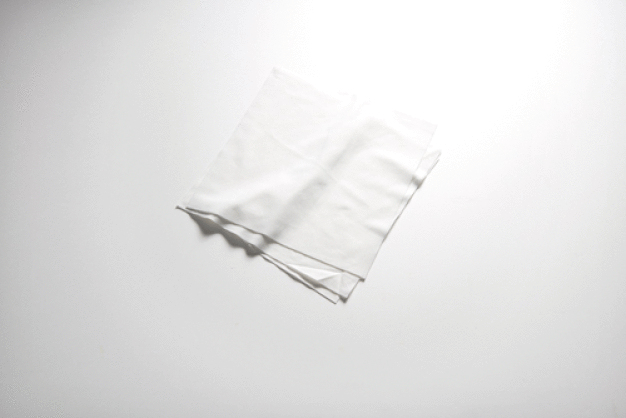
Cleanroom wipes are verifiably among the most important consumables used daily in controlled environments. Their primary function is to remove particulate and/or microbiological contaminants from surfaces and machinery. They also serve as a substrate or are used to absorb spilled liquids, for example. These wipes are often used in close proximity to the product or to clean surfaces that come into contact with the product. Therefore, when selecting and defining cleanroom wipes, it is essential to critically review the manufacturer's specifications for each type of wipe. Statements such as lint-free, abrasion-resistant, low particle release, etc., are not standardized and can be used arbitrarily. The same applies, of course, to some advertising claims, such as "This is an ISO5, ISO7 wipe." Here, reference should be made to the recently published VDI Guideline 2083, Sheet 9.2, which points out that so-called consumables (like cleanroom wipes) cannot have an air cleanliness class (according to DIN EN ISO 14644-1).
The information provided at many points regarding particle generation according to IEST-RP-CC004.3 is unfortunately not helpful upon closer inspection, but rather misleading. The specific properties of a cleanroom wipe, whether particle release, cleaning efficiency, possibly antistatic behavior, etc., must always be viewed in direct relation to the application conditions. These include, above all, the cleaning chemicals used, the surfaces with which the wipe comes into contact, and naturally, the contaminants to be removed. A so-called non-woven fleece wipe can achieve good cleaning performance on a very smooth surface but can generate significant abrasion, particles, and fibers on a rough surface. It is therefore essential that the user first precisely specifies the requirements profile for the respective cleanroom wipe and considers the above criteria and process requirements in this assessment. In addition to the already mentioned requirements/criteria, other product properties such as absorption capacity, chemical resistance, or static buildup should also be considered.
The more precisely the process requirements and the resulting minimum requirements for the cleanroom wipe are defined, the more opportunities there are to exploit optimization potentials. Besides classic cost optimization, which becomes significantly easier in such cases, efficiency improvements can possibly be implemented more easily, and handling can be optimized if necessary.
To provide users of wipes with sound information, Dastex commissioned a comprehensive and extensive study at a neutral and internationally recognized research institute at the end of 2014. A wide variety of cleanroom wipes were examined not only in terms of particle release in the dry state but also regarding outgassing behavior, particle release in the wet state, absorption capacity, abrasion resistance against defined surfaces, and cleaning efficiency.
The results of these investigations primarily demonstrate the fundamental differences between various base materials and processing methods. Further analysis shows that even with the same raw materials from different manufacturers, there can be significant differences, although similar product properties might be expected.
Based on the insights gained from this study, Dastex can now provide cleanroom operators and users of cleanroom wipes with even more expert advice in the future. Independent of sometimes unclear manufacturer specifications and supported by the results of the conducted study, the company's focus is on practical relevance for consulting and optimization.
Conclusion:
It is evident that a cleanroom wipe is characterized by more than just its four edges. Depending on the process requirements of users in controlled environments, it is absolutely necessary to define the various product properties of cleanroom wipes more precisely or to create a detailed requirement profile for the wipes. As with all consumables in cleanrooms, it is also advisable to rely on independent data for the selection of cleanroom wipes, based on comparable and reproducible testing procedures, without direct influence from manufacturers.

Dastex Group GmbH
Draisstraße 23
76461 Muggensturm
Germany
Phone: +49 7222 9696 60
Fax: +49 7222 9696 88
email: info@dastex.com
Internet: https://dastex-group.com/