

- Media, Publisher, Social Media. Blog, TV,...
- Translated with AI
More safety for people: What matters in occupational safety in the industry
https://pixabay.com/en/photos/work-safety-shield-blue-1040512/
In industrial operations, numerous hazards can threaten employees. Well-thought-out occupational safety measures reduce these risks to a minimum and create an environment where all employees feel valued and safe. But what rights and obligations do companies and employees have, and how can these measures be communicated effectively so that everyone pays attention to them?
Occupational Safety in Industry – What Rights and Duties Do Employers and Employees Have?
The term occupational safety encompasses all measures aimed at protecting employees from potential hazards at the workplace. Which methods and tools a company uses depends, among other things, on its industry and area of activity. Different steps are necessary in industrial plants and departments than, for example, in an administrative office. Essentially, the employer must ensure that health-damaging influences, accidents, injuries, and occupational diseases are prevented.
Both the company and the employees have rights and duties. The rights are, among others, outlined in § 17 of the Occupational Safety Act. According to this, employees have the right to make suggestions on all safety and health protection issues, meaning they can alert the company to appropriate measures. If there are concrete indications that safety regulations are not being properly followed, the right to complain applies: employees can report missing safety devices to the relevant authority.
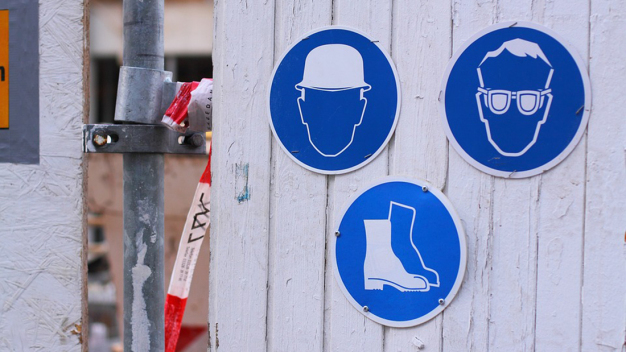
However, there are also duties. Employees must follow safety instructions and report recognized hazards immediately. Work equipment such as machines, devices, and tools must be used "as intended," and depending on the location, with appropriate protective clothing. Many industrial companies also establish behavioral rules, such as prohibitions on smoking and eating in certain areas.
The Occupational Safety Act also defines the duties of entrepreneurs. Companies are required to proactively ensure the safety of their employees. In industry, preventive measures include training on the safe handling of hazardous materials and providing protective clothing. Duties also include conducting risk assessments, an inventory of potential hazard points throughout the entire operation, and specific requirements for medical care. Haufe offers a range of literature that can be consulted for more in-depth information.
How Can Occupational Safety Be Communicated to Employees?
The best safety concept is of little use if it is not implemented. Especially in industry, neglecting safety can have serious consequences. When it comes to safety at industrial workplaces, training sessions help prevent accidents by instructing employees on behavioral rules in potentially hazardous zones. They are also legally required. Operational instructions, which explain how to handle machines and work areas, serve as the basis.
Whether mandated by law or as additional protective measures: companies should communicate all measures and their background transparently. When everyone understands why certain actions and work instructions are mandatory, they are usually followed. This benefits both employees and the company. Employees stay healthy and avoid potential dangers, while the company benefits from healthy, capable, and motivated staff, as well as lower sick leave rates.
What Measures Can Be Implemented in Industrial Companies?
In an industrial operation, numerous occupational safety measures typically need to be observed. It is advisable to assign this task to a dedicated department or a team of occupational safety experts and company doctors. Regular training sessions and workshops keep knowledge up to date and refresh practical skills.
In addition to the safe handling of hazardous substances, machines, and systems, other protective measures are important in production. These include noise protection and ergonomic design of the workstations. Soundproofers and shields, ergonomic work equipment, and providing suitable work aids can eliminate these potential health hazards.
Haufe-Lexware GmbH & Co. KG
79111 Freiburg
Germany