

- R+D & Community of Interest
- Translated with AI
Molecular loading, microsystem technology, new materials: Cleanroom in microsystems technology faces major challenges
Interdisciplinary Cleanzone Congress highlights top topics in the cleanroom
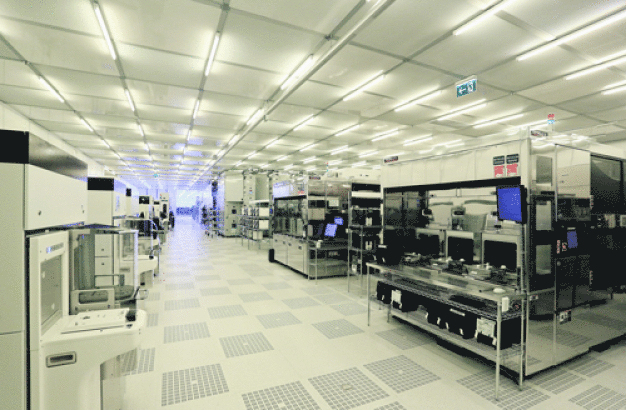
The miniaturization of structures and the increased requirements for product safety lead to ever stricter rules in semiconductor manufacturing in cleanrooms, which must be monitored continuously. Special challenges for pure production are also posed by future technologies such as OLEDs or MEMS. High-caliber speakers from Infineon, Merck, and Bosch analyze these aspects at the Cleanzone Congress on October 21 and 22 in Frankfurt am Main. In addition, the congress covers the entire range of current top topics in the cleanroom, from planning and construction to operation, and addresses all industries that produce under controlled conditions.
Airborne Molecular Contamination
The Moore's Law still applies in the semiconductor industry, postulating a doubling of computing power every two years. This requires a constant miniaturization of components. For production in the cleanroom, this means stricter regulations regarding air purity, as increasingly smaller particles must be filtered out.
Besides particles, contamination on a molecular level, known as Airborne Molecular Contamination (AMC), is becoming increasingly important in semiconductor manufacturing. This includes, for example, outgassing of acids, bases, solvents, or silicones. These molecules are not detected by traditional particle counters but can cause serious damage to microelectronic components, such as corrosion from acids and bases or, as in the case of silicones, by acting as insulators that interrupt the circuit. Christoph Hocke, Staff Engineer at Infineon, discusses what a monitoring system for AMC should look like in his lecture "Cleanroom – Monitoring under the Conditions of Highly Automated Semiconductor Manufacturing" at the Cleanzone Congress. Here, he provides an initial insight into the topic: "Qualitative and quantitative knowledge of the particulate and especially AMC content in the cleanroom air is crucial for managing the technological challenges of manufacturing ever smaller chip structures. Recently, the focus has shifted increasingly toward AMC, as particulate contamination can now be detected and controlled quite well. The variety of AMC also leads to different effects in semiconductor manufacturing, such as changes to photoresists or corrosion effects on metallized layers. Some AMC directly impact manufacturing success and are thus quality-relevant parameters that must be continuously monitored. Only in this way can negative effects on product quality be detected early. Depending on the application, an optimal monitoring strategy must be chosen, considering factors such as measurement methods, number of measurement points, number of measurements per point, investment and operational costs, etc."
Smart Sensors and New Materials
The semiconductor industry is also relying on innovative applications, new materials, and a diversification of technology. Examples include intelligent chips that contain both sensors and the associated signal processing circuits. Bosch, a leading global manufacturer of such semiconductors, discusses the challenges of manufacturing in his lecture "MEMS – Sensors for the Internet of Things" at the Cleanzone Congress. He describes the high expectations placed on MEMS as follows: "The success story of MEMS sensing can be outlined in three waves: Initially, MEMS were developed at Bosch from 1995 for the automotive sector and were used in airbag systems, ESP, and engine control. The second wave began in 2005 with sensors for consumer applications and has now taken on the role of driver in developing new technologies in microsystem technology. Key success criteria here are cost, size, and power consumption. Future sensor systems will be intelligent and connected via the internet. Intelligent sensor systems are a key component for new applications in the Internet of Things and services." Furthermore, the semiconductor industry places great hopes on new materials, especially regarding improving energy efficiency. At the Cleanzone Congress, Dr. Manfred Weigand, Head of OLED Strategic Marketing Lighting at Merck, discusses in his lecture "OLED – Technology of the Future" the major challenges that organic carbon-based lighting devices pose for production in the cleanroom.
The international trade fair with congress, Cleanzone, brings together users and manufacturers of cleanroom technology on October 21 and 22, 2014, in Frankfurt am Main. The event targets all industries that produce in cleanrooms and covers the spectrum from planning and construction to the operation of cleanrooms.

Cleanzone
Messe Frankfurt Exhibition GmbH
Ludwig-Erhard-Anlage 1
60327 Frankfurt am Main
Germany
Phone: +49 69 75756290
Fax: +49 69 757596290
email: anja.diete@messefrankfurt.com
Internet: https://cleanzone.messefrankfurt.com