



- Automation
- Translated with AI
Mini factory for cell therapy of cancer
Production Systems
Labor automation at Fraunhofer IPA is paving the way for a gene-based cancer therapy tailored to individual patients. Preparations that are currently produced in small quantities with a lot of manual labor in laboratories could in the future come from "mini-factories." Partners in the project, funded with over 4 million euros by the Baden-Württemberg Ministry of Economic Affairs, are the NMI in Reutlingen and the University Hospital in Tübingen.
The rapid production of mRNA vaccines against coronaviruses was only possible because years of prior research in cancer therapy preceded vaccine development. The immunotherapy with CAR-T cells uses the same molecular biological method as the vaccine. In this treatment, which represents a quantum leap in tumor therapy for medical professionals, T cells are genetically modified so that they recognize cancer receptors, attach to them, and inhibit the spread of the tumor.
However, the path to producing such preparations is arduous. In each case, the patient's own cells must be collected, genetically edited in various processes in a cleanroom, and then re-administered to the patient. As part of a project funded by the state of Baden-Württemberg, Fraunhofer IPA is tasked with automating this manual production process.
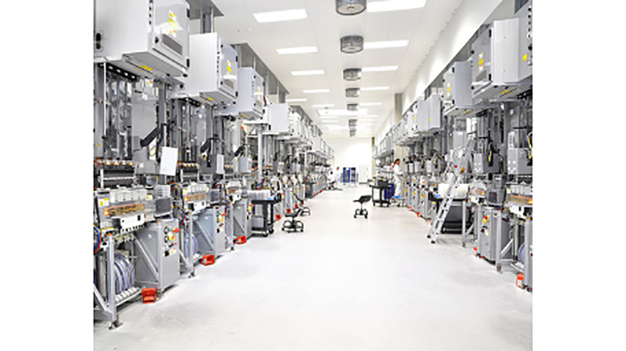
Andreas Traube, head of the Department of Laboratory Automation and Bioproduction Technology at IPA, plans a modular structure for this purpose. The central element is standardized cassettes in which the cells are prepared. They contain everything the cells need for survival and growth. Built-in sensors monitor what is happening inside the cassettes. They have standardized interfaces on the outside and can be passed from processing station to processing station. All stations are traversed step-by-step by the cassettes. "Ultimately, one of these cassettes represents a single patient and contains the product for that patient," explains Traube. The handling of the stacked cassettes in a shelving system is performed by a robot.
The concept for the mini-factory is based on Industry 4.0. "Good production organization and automation of processes also reduce cleanroom sizes and increase batch sizes, which lowers the costs for each process," says Traube. Currently, treating a patient with this cell therapy costs 250,000 euros or more. The mini-factories are to be installed directly in the treating clinics and, in the long term, ensure that every patient who needs this therapy can receive it — at costs comparable to traditional treatment methods.
The NMI (National Medical Institute) in Reutlingen, also involved in the SolidCAR-T project, contributes another element known from industrial production: the Digital Twin. Parallel to the production process, organ-on-a-chip systems serve as laboratory models to simulate what happens in the patient. This supports quality assurance on one hand and predicts effectiveness and side effects before the patient receives the preparation on the other.

Fraunhofer-Institut für Produktionstechnik und Automatisierung IPA
Nobelstraße 12
70569 Stuttgart
Germany
Phone: +49 711 970 1667
email: joerg-dieter.walz@ipa.fraunhofer.de
Internet: http://www.ipa.fraunhofer.de