




- Translated with AI
Merck Millipore introduces the technology for reprogramming RNA Simplicon™ for the efficient generation of virus-free induced pluripotent stem cells
Reprogramming Technologies
• Enables easier reprogramming in a single transfection step
• Creates integration- and virus-free induced pluripotent stem cells (iPSC)
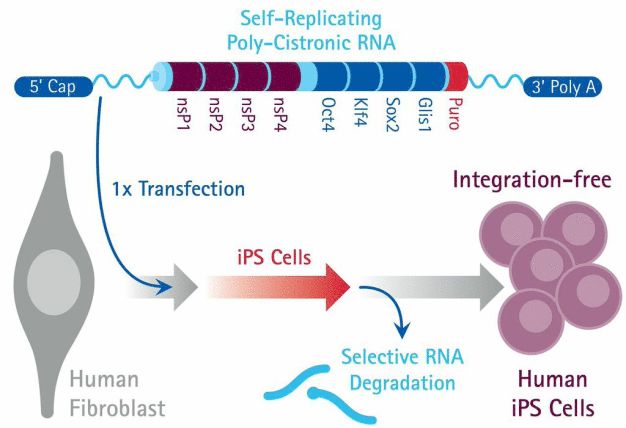
• Allows controlled elimination of reprogramming factors
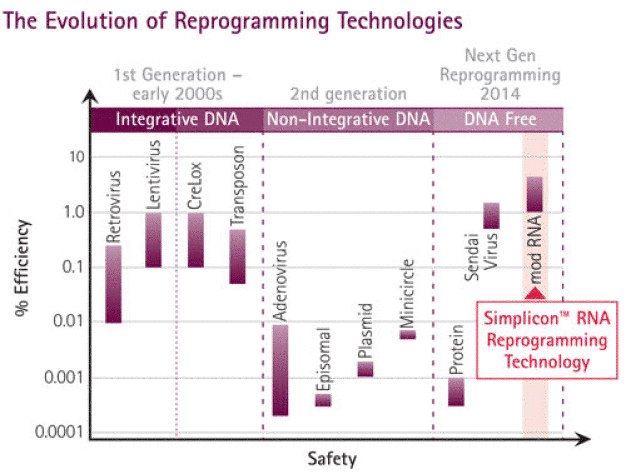
Merck Millipore, the Life Science division of Merck, introduced Simplicon™, the RNA reprogramming technology, at the end of June 2014. This technology uses synthetic self-replicating RNA to produce large quantities of induced human pluripotent stem cells (iPSC) in a single transfection step. This efficient reprogramming of somatic cells occurs without viral intermediates or integration into the host genome, making it a more sophisticated and safer system for iPSC generation.
"For stem cell researchers using iPSC for disease research, differentiation, and regenerative medicine, there is a real need for a reprogramming method that is as efficient as virus-based techniques and as safe as non-viral methods," said Christophe Couturier, Head of Life Sciences at Merck Millipore. "The Simplicon™ technology meets this requirement with a single transfection protocol that is significantly simpler than other approaches."
The RNA reprogramming technology, Simplicon™, produces a single synthetic, polycistronic, self-replicating RNA strand that mimics cellular RNA. The RNA strand contains the four reprogramming factors OCT-4, KLF-4, SOX-2, and GLIS1, enabling the production of integration- and virus-free iPSC in just one transfection step. Once the cells are generated, the RNA and reprogramming factors can be easily removed from the cell culture medium in a controlled manner.
The RNA reprogramming technology, Simplicon™, was introduced by Merck Millipore at the annual meeting of the International Society for Stem Cell Research (ISSCR), held from June 18-21 in Vancouver, Canada.
Merck Millipore GmbH
65824 Schwalbach
Germany