



- Injection moulding
- Translated with AI
Medical Technology: Ready for Series Production with Plastic
RKT supports the transition from laboratory standard materials to plastic components in mass production
(Image: ©Rodinger Kunststoff-Technik GmbH)
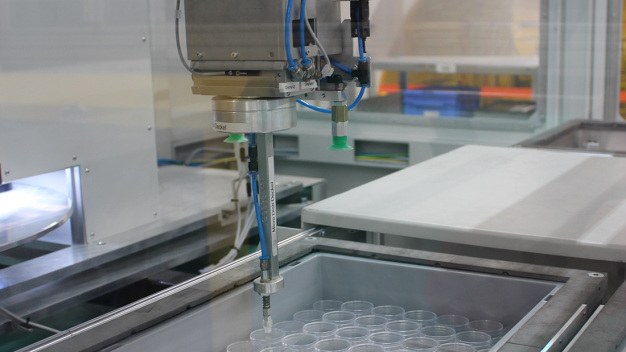
Transparency is one of the most important criteria when selecting plastics for medical device components. Transparent covers – like the stacked ones shown here – allow analysis processes through microscopy, camera technology, or fluorescence measurements. (Image: ©Rodinger Kunststoff-Technik GmbH)
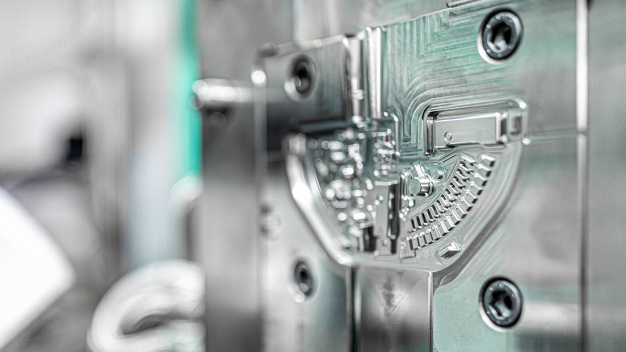
Tiny cavities of a lab-on-a-chip cartridge (right in the image): Complex and delicate geometries like these can be efficiently manufactured using high-precision tooling and specific plastics in injection molding. (Image: ©Rodinger Kunststoff-Technik GmbH)
Plastics are a sought-after material in medical technology. This ranges from packaging products, such as the outer components of an insulin pen, to diagnostic parts that come into contact with substances that are then disposed of, to products that contact substances which are later reintroduced into the body. Depending on the application area, there are various regulations and approvals for plastics, which are referred to as Medical Grades. Fundamental requirements for Medical Grade plastics include complete traceability of the products and raw materials used, biocompatibility, chemical resistance, sterilizability, and reliable delivery.
Even though plastics later dominate in mass production, products are often tested under laboratory conditions during the development phase using alternative materials such as glass, metal, or silicone. Initially, standard items available on the market are used for economic reasons and availability. These include, for example, petri dishes, titer plates, cuvettes, or glass slides. Since laboratory processes are analyzed through microscopy, camera technology, or fluorescence measurements, transparency is one of the main requirements for the utensils used, which is primarily provided by glass. There are also transparent variants of plastics. However, glass exhibits slightly higher transparency.
Plastic for complex structures
In many applications, such as complex laboratory chips, standard utensils are only suitable for fundamental experiments. When it comes to detailed process development for mass production, complex geometries and microfluidic channels require different materials, such as certain plastics. These allow the production of such delicate structures with minimal energy input.
Initial prototypes can be realized using deep drawing processes or with molds made of silicone or synthetic resin. The one-time costs for the molding tools are manageable here. In contrast, manufacturing plastic parts in the laboratory is relatively complex and involves compromises on quality. When mass production begins with injection molding, the cost ratio is exactly the opposite: the investment in a tool is high, but the plastic parts can then be produced in large quantities cost-effectively.
Trade-offs in optics and design freedom
The use of plastics in the serial production of medical and diagnostic products can involve certain limitations. Especially in the optical field, compromises must be made. Although there are very transparent plastics, they do not quite match the optical properties of glass. Further restrictions exist in design freedom. In plastic injection molding, components must always be designed to be demoldable. Additionally, demolding angles are necessary, which influence design freedom. Walls of the component must always be slightly angled for demolding, usually between 0.5 and 3 degrees, and in rare cases up to 10 degrees. "This is hardly noticeable visually but is urgently needed for demolding," explains Harald Höcherl, head of process engineering at Rodinger Kunststoff-Technik GmbH (RKT). "In general, these conditions do not cause problems in manufacturing for us."
Processing biocompatible plastics
Which plastic is suitable for which medical or medical-technical application is a very broad field. Particularly frequently used in medical technology—especially diagnostics—are COC plastics, as they are highly transparent, exhibit very low optical anisotropies, and are also biocompatible. When it comes to mass-produced disposable items, mainly cost-effective bulk plastics such as PP, PE, or PS are used, provided their mechanical properties permit. Components with high mechanical requirements (e.g., inside insulin pens) are made from technical thermoplastics such as POM, PA, or PPA. To substitute metal parts, technical plastics with high fiber content (glass fiber or carbon fiber) are often used. Enclosure parts are mainly made from impact-resistant plastics such as ABS, PC/ABS, polyamides, or PBT.
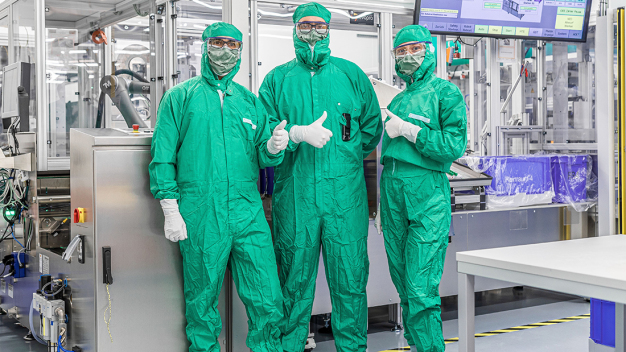
"Processing various plastics requires certain technical finesse and tricks to achieve the best results with each material," says Harald Höcherl. Challenges can include, for example, very small component sizes that require special equipment in injection molding technology, such as micro-injection units. For transparent COC plastics, there is a trick to prevent yellowing; Harald Höcherl explains: "COC is very susceptible to oxygen and reacts with it during melting, which can cause yellowing. Therefore, the processing area must be flooded with nitrogen. This keeps oxygen away during the melting process." Furthermore, COC is relatively brittle and prone to stress cracks. Here, stronger demolding angles are particularly important. Another challenge in plastic processing is cleanroom requirements for certain diagnostic components. According to customer specifications, the appropriate cleanroom class is determined, whether additional microbial testing is needed, and RKT arranges the production cells accordingly to meet cleanroom standards.
RKT supports process development
RKT specializes among other things in accompanying the process development of medical technology parts up to mass production. Ideally, a pre-engineering phase is conducted first, and a prototype tool is built when implementing the feasibility of complex geometries in plastic injection molding. Based on the component requirements, suitable plastics are advised, selected, and tested in the prototype tool. The sample component then allows further development and refinement of the product. Ultimately, the series tool is created, capable of producing guaranteed quantities of millions of parts depending on complexity.
Conclusion: Plastic injection molding – efficient and valuable
For large quantities and smooth processes, plastic injection molding is an efficient method to produce high-quality medical components according to the high standards of medical technology. Glass certainly has advantages in terms of transparency for optical inspection processes, but plastics have the edge in terms of cost-effectiveness and handling in mass production.
RKT Rodinger Kunststoff-Technik GmbH
93426 Roding
Germany