




- Industry 4.0
- Translated with AI
Manufacturers become service providers
Large-scale research project X-Forge
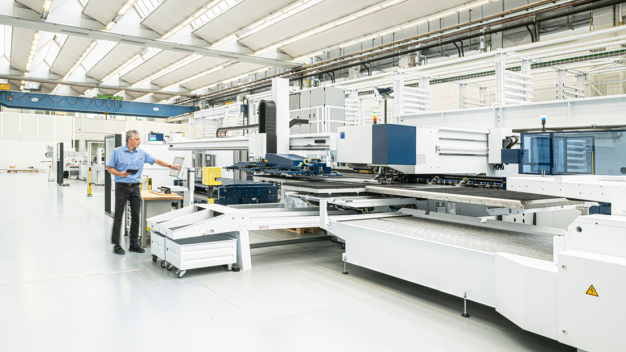
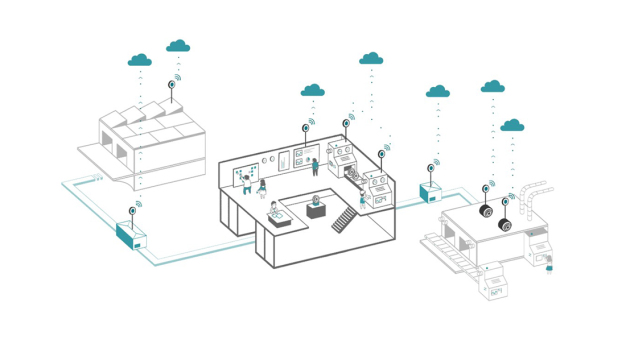
In the consortium project "Smart Factory as a Service" (FABaaS), the entire end-to-end process in a manufacturing company is being further developed into a usage-based business model – from order to production to delivery and payment. © TRUMPF/Photo: Markus Breig (KIT/CroM)
The drive system in the production plant is to be defined in the future not only as a functionally relevant component but also as a "condition detector" to ensure a consistently high level of productivity. © WITTENSTEIN SE
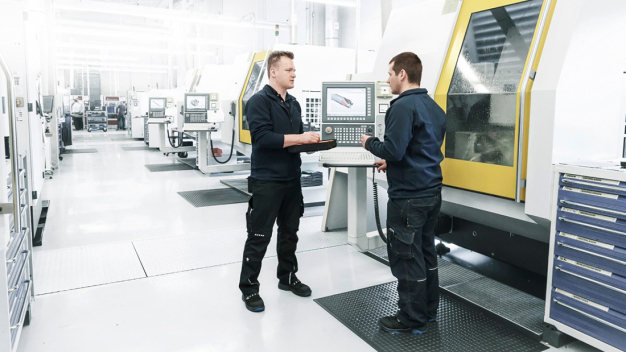
The consortium partners of the joint project "Productivity as a Service" are investigating a usage-based business model for machining centers, where companies from the metalworking industry pay for a package consisting of machine tools, cutting tools, and IT services. The high acquisition costs for the machine tools are eliminated. © MAPAL Dr. Kress KG
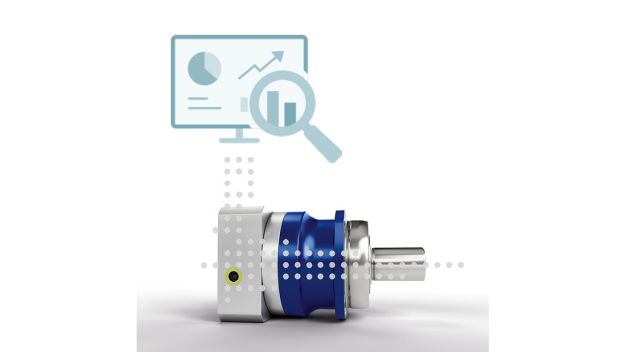
The smart transmission with "cynapse" feature from WITTENSTEIN SE is equipped with an integrated sensor module featuring an electronic nameplate and IO-Link interface. It can, for example, detect, store, output, and process temperature, vibrations, operating hours, as well as installation position. © WITTENSTEIN SE
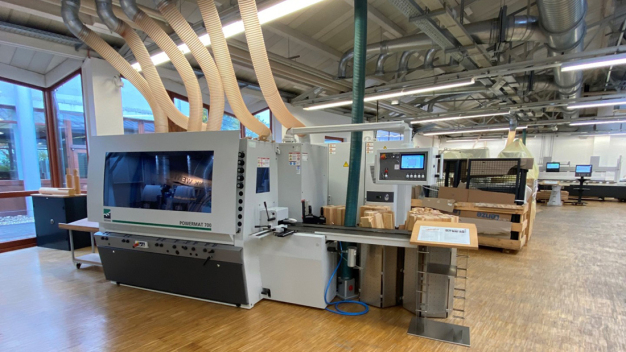
In the future, carpentry shops and furniture manufacturers will no longer need to purchase mitering machines. Instead, the machine remains the property of the manufacturer, and they pay monthly for its use. © Michael Weinig AG
There is no need to buy a machine to be able to use it: Digitalization enables new business models based on the automated exchange of data. Experts from science and industry clarify the conditions that must be met for these business models to be economically and technically feasible in the large research project "X-Forge".
Digitalization has not only changed the way manufacturing companies produce their goods. The business relationships that companies enter into with each other have also transformed during the fourth industrial revolution. From a rigid value chain, a flexible value network has emerged that no longer follows fixed processes and whose participants constantly change. This complex interplay resembles a natural ecosystem of animals, plants, and microorganisms, which is why experts also refer to a value network as a Digital Ecosystem.
Such a Digital Ecosystem is maintained by the automated exchange of data between all participants. And this constant exchange enables new, data-based business models in which manufacturers not only become service providers but can also understand all processes in a factory hall as individual services: Everything as a Service (XaaS). In the large research project X-Forge, experts from research and industry are currently investigating some of these new business models and clarifying which data need to be collected and exchanged, and how this data transfer can be technically implemented.
X-Forge is divided into four consortium projects. All involve the Fraunhofer Institute for Production Technology and Automation IPA:
When the planer sends an invoice
The woodworking industry in Baden-Württemberg mainly consists of small and medium-sized family businesses. The high acquisition costs for innovative high-tech machines are often only manageable with great effort. Therefore, they prefer to maintain their existing machinery, delay investments for years, and risk falling behind their competitors. A possible solution: Pay per Use. The woodworking machines remain the property of the manufacturer, and carpentry shops and furniture factories pay monthly for their use.
Researchers led by Oliver Schöllhammer, head of the Department of Corporate Strategy and Development at Fraunhofer IPA, are currently investigating in the consortium project "Wood Working as a Service" (WOODaaS) how such a usage-based business model must be designed to be equally attractive for manufacturers and users. The central question: What is billed at the end of the month, and how are invoicing and payment processed? To clarify this, Schöllhammer and his team need to determine whether the data generated by sensors on existing planers and moulder machines are sufficient for the new business model and which additional data might need to be collected. Ultimately, invoices, payment, and maintenance processes should be automated.
Besides Fraunhofer IPA, the consortium includes machine manufacturer Michael Weinig AG from Tauberbischofsheim (consortium leader), engineering firm Roth GmbH & Co. KG from Billigheim, and Hogra-Holz GmbH from Limbach in the Neckar-Odenwald district. The Ministry for Economy, Labour, and Tourism Baden-Württemberg funds WOODaaS with nearly 2.3 million euros from the InvestBW funding program.
The self-configuring machining center
Contract manufacturers and suppliers in metal processing face intense price pressure in international competition. Therefore, they must use their machining centers effectively, ideally around the clock, with consistently high process and manufacturing quality, even for small batches and single pieces, at low costs. This is also to be achieved through a usage-based business model: in the future, contract manufacturers and suppliers will no longer need to purchase expensive machines. Instead, they will pay for a package consisting of a machine tool, cutting tools, and IT services.
The latter should include automated billing and maintenance processes, as well as intelligent algorithms that independently intervene in the machining process and improve process parameters during operation. Excessive wear and damage to parts should thus be avoided. "CNC operators will no longer have to tinker with machine settings or hire external service providers to optimize their production processes," says scientist Schöllhammer from Fraunhofer IPA. He and his team aim to achieve this by integrating process and production data, which are currently stored separately, and making them accessible to a self-learning algorithm.
The consortium project "Productivity as a Service" (PRODaaS) also involves Karl Walter Formen- und Kokillenbau GmbH & Co. KG from Göppingen, sensor manufacturer Blum-Novotest GmbH from Grünkraut in Ravensburg district, machine builder F. Zimmermann GmbH from Neuhausen auf den Fildern, tool manufacturer MAPAL Dr. Kress KG (consortium leader), and platform provider c-Com GmbH (both from Aalen). The Ministry for Economy, Labour, and Tourism Baden-Württemberg funds PRODaaS with around three million euros from the InvestBW program.
The drive system that provides tips for better product quality
For most companies, it is becoming increasingly difficult to identify and implement optimization potentials for their products or manufacturing processes. However, thanks to digitalization, new approaches are constantly emerging to realize further improvements. Paul Thieme and his colleagues at the DigITools competence center at Fraunhofer IPA aim to collect and make accessible all data generated during the entire product lifecycle of a drive system from WITTENSTEIN SE in a central location in the consortium project "Product Life Cycle Enrichment as a Service" (PLCEaaS).
This central location is a so-called management shell, which stores all relevant data in a digital file—ranging from the production of individual parts, assembly, and delivery of the finished drive system, to the usage phase with all its disturbances, downtime, fault cases, repairs, and maintenance processes. Using an easy-to-use analytics toolkit, this data can be processed and evaluated. "This approach enables much more than just predictive maintenance," says Thieme. "It also provides insights into how the drive system can be used more resource-efficiently and reveals to the manufacturer how the product quality could be further improved."
The consortium project PLCEaaS involves Fraunhofer IPA, WITTENSTEIN SE from Igersheim (consortium leader), as well as ASCon Systems Holding GmbH and TruPhysics GmbH (both from Stuttgart). The Ministry for Economy, Labour, and Tourism Baden-Württemberg funds PLCEaaS with around two million euros from the InvestBW program.
A factory full of services
The project partners in the consortium "Smart Factory as a Service" (FABaaS) are taking a further step. Instead of developing the operation of a single machine or the lifecycle of a specific product into a usage-based business model, they are working on the entire end-to-end process in a manufacturing company—from order to production, delivery, and payment. "Delegating sales, logistics, or payment processing to external service providers has long been standard practice," explains Anja Reuter from the DigITools competence center at Fraunhofer IPA. "But dividing everything that happens in a factory hall into individual billable services from external providers is a new approach for production that only becomes possible through digitalization."
But to what extent is such a production of well-orchestrated services profitable for all involved? What data need to be collected and exchanged? What data can be exchanged without violating applicable laws? What technical requirements must individual machines meet, and how is the IT architecture structured? Reuter and her project partners are exploring these questions in the FABaaS consortium project and are ultimately implementing individual services as examples.
Participating in FABaaS alongside Fraunhofer IPA are the Fraunhofer Institute for Industrial Engineering IAO, TRUMPF Werkzeugmaschinen GmbH & Co. KG from Ditzingen (consortium leader), the software providers Heidelberg Mobil International GmbH and XETICS GmbH from Stuttgart, sensor manufacturers SICK AG from Waldkirch and Kinemic GmbH from Karlsruhe, vacuum technology manufacturer J. Schmalz GmbH from Glatten, STOPA Anlagenbau GmbH from Achern, ACD Elektronik GmbH from Achstetten in Biberach district, and the international consulting firm umlaut SE. The Ministry for Economy, Labour, and Tourism Baden-Württemberg funds FABaaS with nearly five million euros from the InvestBW program.

Fraunhofer-Institut für Produktionstechnik und Automatisierung IPA
Nobelstraße 12
70569 Stuttgart
Germany
Phone: +49 711 970 1667
email: joerg-dieter.walz@ipa.fraunhofer.de
Internet: http://www.ipa.fraunhofer.de



