

- Translated with AI
Dietmar Müller, Geschäftsführer der Munters GmbH
Low Dew Point
Very dry air for specialized production processes
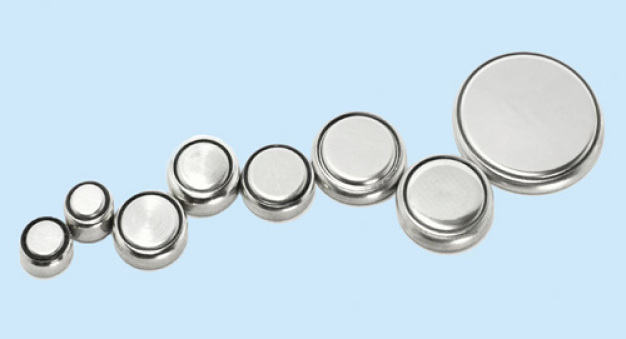
Lithium Battery
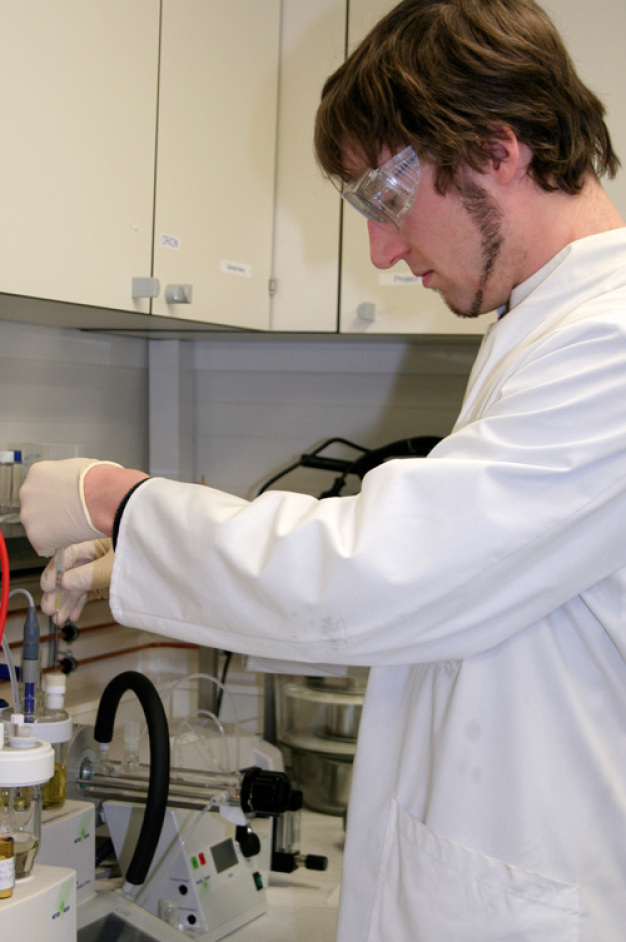
Climate-controlled dry room
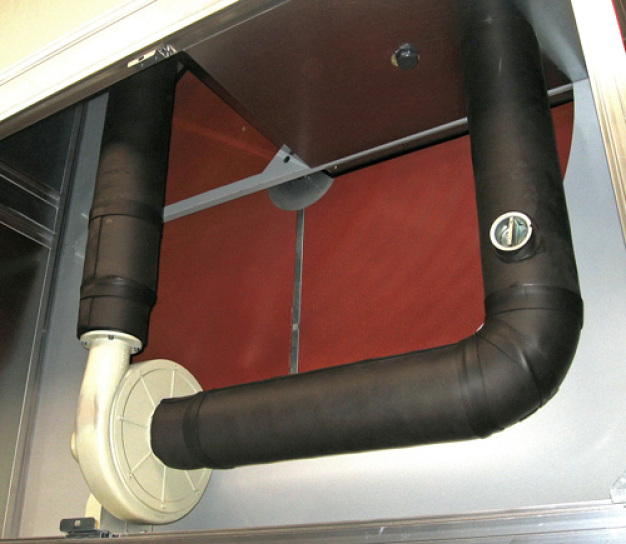
The patented PowerPurge
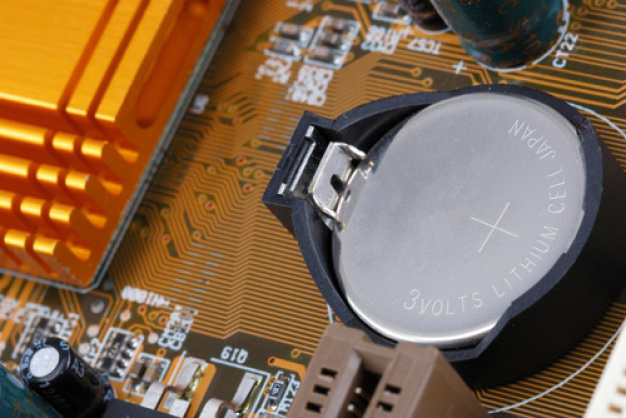
Lithium battery circuit board

Dietmar Müller, Managing Director of Munters GmbH
A somewhat more specialized type of air conditioning technology deals with providing extremely dry air for specific production processes. In technical jargon, this is referred to as Low Dew Point applications. For many years, Munters has been involved in the development, planning, and delivery of such specialized dehumidifiers. The product range extends from dehumidifiers to complete deliveries including dry rooms, up to all-inclusive worry-free packages with 24/7 service coverage.
What is meant by Low Dew Point?
Low Dew Point solutions refer to applications within the air class between a dew point of -40 °C and -65 °C. A dew point of -40 °C corresponds to an absolute water content of 0.0793 g/kg, and at -60 °C dew point, it is already considered to be an absolute water content in the air of 0.0066 g/kg.
Other special cases require even dew points of -85 °C, 0.0017 g/kg.
Application
Applications for dry air with dew points between -20 and -40 °C are numerous and range from the automotive industry, chemical industry, to applications in the pharmaceutical sector.
When it comes to truly dry air, applications are mainly found in the battery or accumulator sector or in flat-screen technology. Generally, in such production areas, reactions of the chemicals used with humidity are to be prevented. Lithium reacts very strongly exothermically with moisture and is extremely hydrophilic. Due to this property, lithium was previously used as a drying agent, among other things, in absorption rotors. Unfortunately, lithium is also very aggressive and, in various compounds, highly corrosive.
The use of lithium batteries in mobile phones, pacemakers, or other medical applications has been expanding over the past few years into the transportation sector, such as in aircraft and very strongly in automotive manufacturing. These batteries require significantly larger production facilities and consequently much larger amounts of air to reliably flood the dry rooms.
Process Engineering
Initially, for the design of plant components, information about the thermal load, the number of production employees, and potential sources of humidity in the dry room must be known.
Then, for the design of the dry room, in addition to the production area, the air distribution must be precisely planned. This can involve either direct supply of dry air at the workplace or supplying the entire work area through laminar airflow, or any combination of these techniques.
The key factor for the moisture load is the type of activities performed. For work-related moisture load, caused by sweating and breathing, typical assumptions range between 160 – 200 g H2O per person per hour. Employees of Munters GmbH are happy to assist in determining this and have many years of experience.
A moisture load of 160 g/h per employee may seem very low at first glance, but it poses a significant challenge to the plant technology given the target residual humidity in the room. Merely removing the moisture load per employee under the above conditions requires an air volume of 1,700 m³/h.
Production rooms for batteries are usually operated in a semi-open manner. This means exhaust air is removed and as much fresh air is supplied as either intentionally vented as harmful exhaust or at least necessary for the fresh air supply of the production staff.
The amount of recirculated air removed from the room will be very dry, corresponding to the agreed minimum dew point in the room. Possibly with an supply air dew point of -60 °C, resulting in approximately -40 °C in the return air due to moisture absorption.
This recirculated air must then be mixed with fresh air and dried again to -60 °C. This requires a lot of energy. Dehumidification at this level demands significantly more energy than applications at atmospheric levels, such as from about 7 g/kg to 1 g/kg in standard pharmaceutical applications. Here, the process engineering design and control concept play a major role.
But first, the main process component, the desiccant rotor. Depending on the application, Munters uses different rotors, including a 400 mm deep single-layer rotor stabilized with titanium silica gel or a hybrid rotor made of silica gel and molecular sieve. Both rotor types are extensively tested and certified, for example, as dust-free and fire-resistant.
Rotor dehumidifiers operate on the adsorption principle. This means that the process air deposits its water content within the rotor without a phase change. Water vapor molecules are adsorbed by van der Waals forces and electrostatic forces into the pores of the rotor. The adsorption rotor rotates around its axis and is then dried or desorbed in the so-called regeneration sector.
From an energy perspective, the crucial factors are both the activation or connection of the rotor within the system and careful planning of heat recovery. This careful design becomes increasingly important as production rooms have grown from glove boxes to entire manufacturing halls in recent years.
To optimize rotor activation, Munters employs the patented Power Purge® and Green Purge circuits. Understanding these processes requires an in-depth study of the physics of rotor technology, which goes far beyond the scope of this article. In short, it is essential to operate the rotor so that the moisture-absorbing surface is available with optimal temperature and rotation speed for the adsorption process.
Heat recovery can be multi-stage. Initially, as mentioned above, through internal energy optimization via Power Purge®, then through heat recovery from the exhaust air of the regeneration airflow, and also by utilizing the vaporization enthalpy released during the adsorption process. Furthermore, energy optimization can be operated depending on the desired dry room conditions, including utilizing waste heat from the cooling system.
For cost optimization, it is even possible to use directly fired natural gas burners in the regeneration area of the rotor. As is well known, burning natural gas produces carbon dioxide CO₂ and water vapor H₂O. The water vapor content in the regeneration air naturally complicates the drying process but has not proven to be a disadvantage in practice.
In general, when designing or revising a dry room concept, two approaches can be taken. The motto "all from a single source" is recommended for laboratories or research facilities, as well as for applications with extreme dew point requirements, where intensive pre-planning is necessary. Experienced system partners enable reliable and energy-optimized solutions for production rooms and modular solutions for standard concepts.
The key criterion is the correct design and assessment of the initial loads. Munters has gained extensive know-how through many projects and assignments in this area.
Munters GmbH
21035 Hamburg
Germany