- Furnishing
- Translated with AI
Labor container: Simple planning, implementation, and safe operation
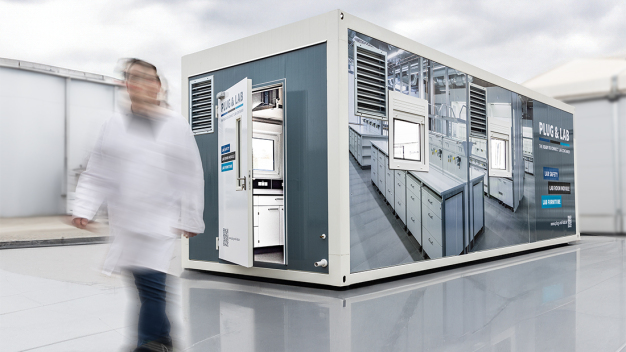
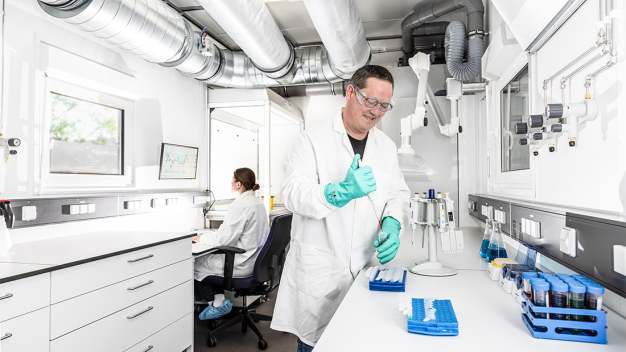
If new laboratory space is needed, it doesn't have to result in a lengthy construction project. Whether for expanding existing laboratories, as an interim solution during renovations, or for new projects in research, development, or quality control. A ready-to-connect laboratory container combines the speed of a modular solution with the requirements of a professional laboratory – including customized equipment and safety features. Whether purchased or rented: the right solution depends on requirements, duration of use, and framework conditions.
This guide shows what matters in planning and how laboratory containers can be implemented safely and easily.
Table of Contents
– When is a laboratory container the right solution?
– Decision aid: rent or buy a laboratory container
– Planning based on a proven concept
– Custom safety equipment
– Delivery, assembly, and commissioning
– Operational safety through service and maintenance
When is a laboratory container the right solution?
Laboratory containers are used wherever professional laboratory space needs to be flexible and quickly available. Typical areas of application include the chemical industry, pharmaceuticals and biotechnology, the food industry, environmental technology, as well as research and educational institutions. Manufacturing companies also use laboratory containers for quality control, analytics, and research and development.
A laboratory container is especially a sensible solution when traditional construction projects take too long, additional capacity is needed on short notice, or flexible expansion of existing laboratory areas is required. Instead of lengthy construction measures, usable laboratory space is created within a short time, which can be individually adapted to specific requirements.
The advantages of a laboratory container compared to new construction
– Laboratory containers are portable and can be set up at different locations.
– They enable significantly shorter planning times as well as quick deployment and commissioning.
– The container solution is generally more cost-effective than building a dedicated laboratory and offers a level of equipment that can easily match a permanent building.
Decision aid: rent or buy a laboratory container
Whether buying or renting is the right decision mainly depends on the planned duration of use and individual framework conditions. While rental solutions are particularly suitable for temporary requirements, purchasing allows companies to create additional laboratory space long-term and tailor it precisely to their needs.
Buying a laboratory container
Buying is especially suitable for companies that need additional laboratory space permanently (typically longer than two years). The equipment can be aligned long-term with their processes, providing a sustainable expansion of operational infrastructure. In addition to individual laboratory containers, larger container systems can be realized, consisting of multiple modules and even multi-story configurations. This creates a laboratory solution that can grow with the company's requirements over time.
Renting a laboratory container
Renting offers maximum flexibility when laboratory space is only needed temporarily. Typical scenarios include renovation or refurbishment phases, as well as temporary capacity shortages due to fluctuating demand, pilot projects, or unforeseen failures such as water damage. For such cases, laboratory containers with predefined equipment are usually available, which can be delivered and put into operation on short notice.
Both models enable quick provision of professional laboratory space – the key is choosing the solution that best fits the specific project.
Planning based on a proven concept
Planning a laboratory involves numerous technical requirements: In addition to room layout and equipment, the technical building services, supply technology, and safety requirements play a crucial role. Climate control and ventilation, electrical installations, and the necessary media must be precisely aligned with the intended use and planned workflows. The planned activities also significantly influence the later design of the laboratory container. During the planning phase, it is already determined which workflows will take place in the lab and what spatial and technical requirements arise from them.
With a pre-designed laboratory container like the Plug & Lab container, these requirements do not need to be developed from scratch. It is important to choose a proven concept that already considers key technical components. This significantly simplifies planning and reduces coordination among trades.
In addition to technical requirements, building law topics also play an important role. These include, in particular, building permits and structural design. The necessary planning and application documents are usually provided by the manufacturer. Some manufacturers also offer structural calculations. The submission of the building application is carried out by the client or the commissioned design firm.
Modular system for individual requirements
The modular concept of a laboratory container allows for precise customization for various application areas. Size, floor plan, technical equipment, and safety features can be configured individually, ensuring the laboratory container is perfectly tailored to the specific processes and requirements.
The Plug & Lab container is available in dimensions 6,000 × 3,000 mm, 9,000 × 3,000 mm, and 12,000 × 3,000 mm. Custom sizes and layouts are also possible. By placing multiple containers side by side, larger laboratory systems can be realized. Systems with up to three stories are feasible. The required staircase can be designed as internal or external, depending on the project requirements.
The division of space is also highly flexible. For example, office, laboratory, storage, restroom, or changing areas can be integrated as needed. Partition walls and doors enable clear separation of functional areas and create a structure that aligns with daily workflows in the lab.
This results in a fully functional laboratory workspace that combines the necessary work areas and infrastructure within a well-thought-out room concept. During the planning phase, the conditions are already set so that staff can perform their tasks under professional conditions – from functional workstations and sanitary/changing areas to appropriately technical equipment.
Individual safety equipment
In addition to functional furnishings, work safety plays a central role in the planning of a laboratory container. The required safety features depend on the planned activities, the substances used, and the specific requirements of the laboratory operation. The goal is to create safe workflows and protect employees handling hazardous materials as effectively as possible. A distinction can be made between permanently integrated safety features and supplementary equipment for daily laboratory operations.
Fixed integrated safety features
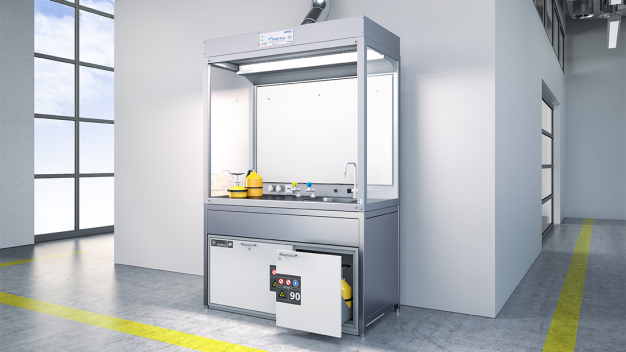
During the planning phase, various safety devices can be permanently integrated into the laboratory container. These include, for example, hazardous substance workstations that protect employees by directly capturing fumes and dust during activities involving hazardous materials. Additionally, laboratory exhausts, point extraction systems, or VARIO-Flow extraction cabins can be incorporated into the planning to ensure safe working conditions according to the specific requirements.
Further safety equipment includes emergency showers and eye wash stations, which serve as essential first aid facilities in case of chemical accidents. For the safe storage of hazardous substances, safety cabinets in various models and sizes can be integrated. Additionally, small container shelves, as well as dry and heat cabinets, can be provided to store or temperature-control materials and samples as needed.
Supplementary equipment for daily laboratory operations
Beyond the permanently integrated container equipment, DENIOS offers numerous products that support safe and efficient laboratory operation. These include spill trays for hazardous substance storage, pumps, funnels, and sampling devices for transfer and filling operations. Chemical absorbents enable quick and safe absorption of spilled acids, alkalis, or solvents, while personal protective equipment protects staff when technical or organizational measures are insufficient.
Daily laboratory supplies also include laboratory bottles and containers for various applications, safety and disposal containers for proper waste management, and hygiene articles that protect staff, prevent cross-contamination, and support the quality of laboratory results. The range is complemented by laboratory devices such as microscopes and balances, used in diagnostics, quality control, and research and development.
Delivery, assembly, and commissioning
A single laboratory container is delivered fully equipped and ready for connection. The prerequisite for installation at the site is a prepared foundation surface by the customer and the provision of necessary connections for electricity, water, wastewater, and possibly gas. The connection of the container to the media supplies prepared by the customer is also required.
Thanks to the high degree of prefabrication, on-site effort is minimized. After connecting the utilities, performing final functional tests, and instructing users, the laboratory container can be brought into operation promptly.
For larger laboratory systems made of multiple modules, assembly and outfitting take place on-site. The individual modules are precisely connected, interior fittings installed, and technical systems integrated. Subsequently, the connection to existing media and the testing of all relevant functions are carried out. After successful acceptance and technical approval, the laboratory system is ready for operation.
Operational safety through service and maintenance
Even after commissioning, regular maintenance is essential to ensure the functionality, safety, and availability of the laboratory container over the long term. Depending on the equipment and usage, technical systems such as ventilation and air conditioning, electrical components, or safety devices may require periodic inspections and maintenance. A coordinated service concept helps avoid operational interruptions and maintain the long-term performance of the laboratory solution.
By combining a proven concept, customized planning, and professional support throughout the entire lifecycle, a laboratory container can be implemented efficiently and operated safely over the long term.
Conclusion
Laboratory containers offer companies the opportunity to provide laboratory space flexibly, quickly, and according to needs. Whether as a rental solution for temporary requirements or as a long-term investment in their own laboratory infrastructure: The key to success is careful planning. When application area, room concept, technical building services, and safety equipment are aligned early on, a solution is created that is optimally tailored to the specific requirements.
The more precisely the requirements are defined in advance, the more efficiently the suitable laboratory solution can be planned. A pre-designed system like the Plug & Lab laboratory container simplifies the selection process, reduces coordination efforts, and enables rapid implementation – customized to the specific needs. Early consultation helps identify potentials, reduce planning effort, and realize a future-proof solution.
Note
The technical information on this page has been carefully prepared to the best of our knowledge and belief. However, DENIOS SE cannot provide any warranty or liability, whether contractual, delictual, or otherwise, for the timeliness, completeness, or accuracy of the information, neither towards the reader nor third parties. Use of the information and content for your own or third-party purposes is at your own risk.
Always observe applicable local and current legislation.
Source: DENIOS SE – Laboratory Containers: Easy Planning, Implementation, and Safe Operation
DENIOS SE
32549 Bad Oeynhausen
Germany