

- Furnishing & equipment
- Translated with AI
Dirk Steil, Axel Biewer
Innovative and forward-looking
Planning and construction of air conditioning systems in cleanroom technology
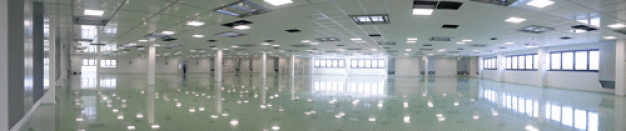
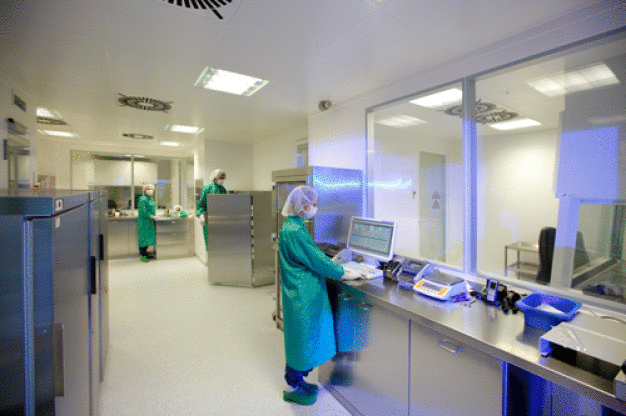
Fig. 1: Zone controls adapt individually to working and lowering times.
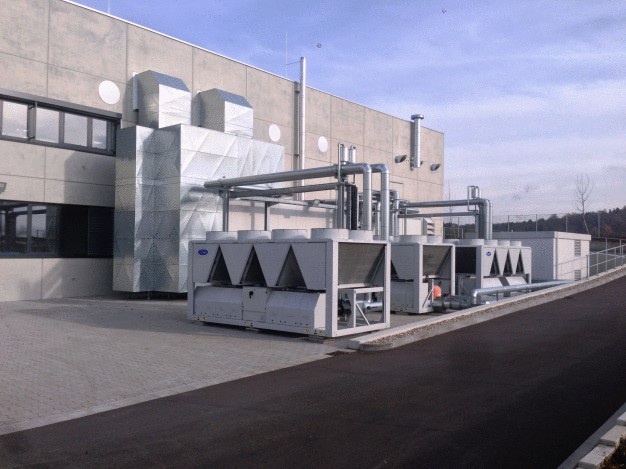
Fig. 2: Technology for operating cleanrooms must be planned energy-efficiently.
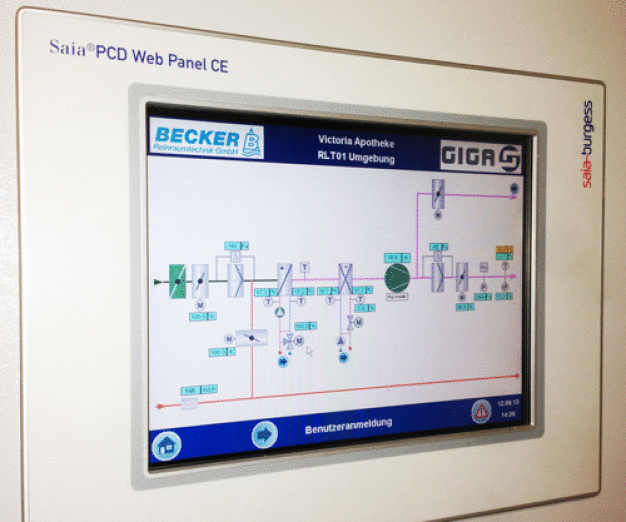
Fig. 3: Comfortable system control via touch panel, tablet, or smartphone.
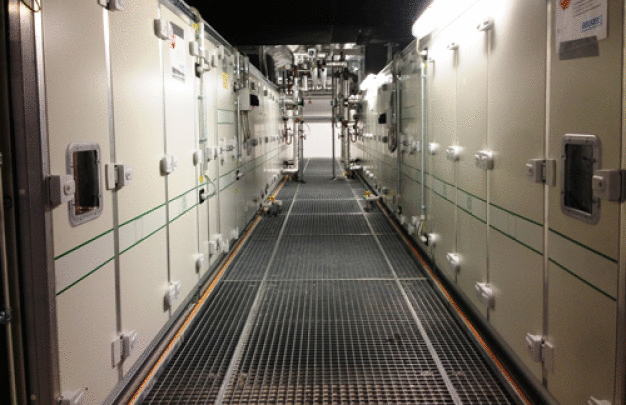
Fig. 4: When using the HVAC systems, consideration should be given to the so-called "Life-Cycle Cost".

Dirk Steil

Axel Biewer
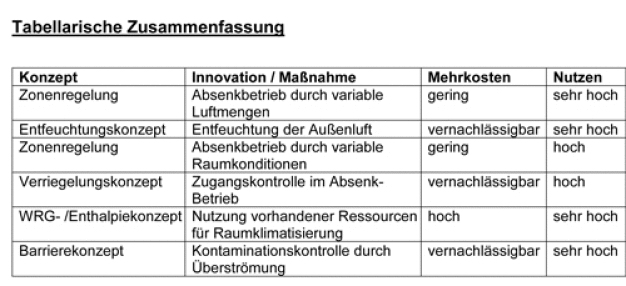
Tabular Summary
When dealing with operators of cleanrooms, one repeatedly hears the complaint: "Our cleanroom incurs operating costs to an extent that is unpredictable for us; can you help us with that?"
Looking more closely at the cleanrooms, it becomes apparent that the entire cleanroom, despite different usage units/periods, is operated around the clock and nearly 365 days a year without any reduction.
When it comes to which provider gets the contract, investment costs often still take center stage in the decision-making process. Operating costs are rarely or only critically questioned during ongoing operation. Not to mention the emissions of greenhouse gases and other air pollutants.
Once the cleanroom is built, correcting planning errors can only be achieved with a disproportionately high amount of time and financial effort, so that it is usually only possible to speak of damage limitation.
Overview
BECKER Cleanroom Technology emphasizes not only the investment costs but also the so-called "Total Life Cycle Cost" calculation when planning and constructing turnkey cleanrooms: in addition to investment costs, energy costs and especially the expected costs for maintenance and repair are presented.
Only through this presentation does the operator gain an understanding of the lifecycle costs of their cleanroom.
For the optimization of energy efficiency, 6 examples are shown and evaluated below.
1. Zone Control with Dynamic Air Volume Management
The supply air volume flows of the individual usage zones are regulated and controlled via bus-capable electronic volume flow controllers. All operational parameters are permanently transmitted via the data bus from each volume flow controller to the freely programmable control system (DDC). Here, the individual damper positions are compared with the entered setpoint, which then generates a control signal for the fan.
The control system has a changeable time switch program that automatically switches the different usage zones from normal to setback operation. Additionally, the user has the option to activate the respective scenario as needed on the control display. This user comfort has proven especially effective in practice for difficult-to-plan usage times/zones. (see Fig. 1)
System advantages:
- Demand-oriented control of the fan, so that according to the principle – "as little energy as possible and only as much energy as necessary" – only the actual required drive energy needs to be supplied by the fan.
- Individual setback operation of different usage zones with a central HVAC system.
- Dynamic regulation of volume flows even with variable plant characteristics, for example resulting from air volume reduction in setback mode or increasing filter contamination.
- Display of actual volume flows on the control display in m³/h.
- Warning and/or alarm in case of limit value violations.
- HVAC system automatically adjusts to the energetically optimal operating point, significantly reducing commissioning effort.
- Reduced operational noise and longer filter service life due to setback operation.
2. Dehumidification Concept
Air is usually cooled below the relevant dew point for the dehumidification process using a cooling coil so that moisture condenses from the air volume flow ("Cola bottle effect").
Since the external air requirement necessary for personnel or pressure maintenance is usually the only relevant influence on room humidity, we recommend, for energy reasons, cooling only this minimum outdoor air share below the dew point instead of the entire supply air volume flow. (see Fig. 2)
System advantages:
- For example, assuming a mixed air-operated cleanroom without process exhaust air with room conditions of 21°C and 50% r.F., targeted dehumidification of outdoor air at a cooling outlet temperature of about 10°C can save up to 40% of cooling power compared to dehumidifying the entire supply air volume flow.
- No energy wastage by reheating the dehumidified supply air in the warm, humid summer months from about 10°C to at least 16°C (minimum supply air temperature limit).
3. Zone Control with Variable Room Conditions
For systems with multiple different usage zones, we recommend not locating the cooling and heating registers centrally in the HVAC unit but decentralizing them within the supply air system, assigning them to the respective supply area.
In this case, separate temperature and/or humidity sensors should be installed, which control the respective cooling/heating valves as needed, so that each zone is climate-controlled in a user-oriented manner in normal/ setback operation.
The control system has a changeable time switch program that automatically switches the different usage zones from normal to setback operation. Additionally, the user can activate the respective scenario as needed on the control display. This user comfort has proven especially effective in practice for difficult-to-plan usage times/zones. (see Fig. 3)
System advantage:
- Individual setback operation of different usage zones through changed control hysteresis/ dead times (e.g., 21°C and 50% r.F. in normal operation vs. 16-26°C and 40-60% r.F. in setback operation) with only one central HVAC system.
4. Locking Concept
To minimize the risks of particle carryover (cross-contamination) from the less clean anteroom to the cleaner production area, doors in cleanroom technology are usually interlocked via access control so that only one door can be opened at a time.
An innovative concept utilizes this function by automatically locking the access to the respective zone during setback operation through communication between measurement, control, and regulation technology (MSR) and the anteroom control, thus preventing possible contamination risks from persons during this time. After reactivating normal operation, the door to the respective usage area is released again with a delay depending on room recovery time and switching behavior of the HVAC system. In case of danger to life or limb, the access lock can be overridden via an emergency "Override" button integrated into the door frame. If needed, this user-dependent locking function can also be password-protected and temporarily deactivated.
System advantage:
- Contamination risks can be eliminated during setback operation with minimal control effort without compromising personnel safety.
5. Heat Recovery / Enthalpy Concept
In an energy-efficient system design, available resources such as outdoor and possibly exhaust air volume flows should also be utilized for room climate control.
In practice, an unconventional HVAC system combining a central supply air, exhaust air, outdoor air, and exhaust air section with recuperative heat recovery has proven effective. (see Fig. 4)
System advantages:
- For room climate control, cost-neutral outdoor air is used primarily, with costly primary energy only secondarily.
- Large heat exchanger surfaces with relatively low outdoor and exhaust air volume flows, enabling an efficiency of about 80% with comparatively low pressure loss.
- Optimal cost/benefit ratio compared to other heat recovery systems.
- Reliable operation of cross-flow plate heat exchangers even with contaminated exhaust air.
- All innovations integrated into a single central HVAC system.
6. Barrier Concept
According to EN ISO 14644-4, cleaner areas are effectively protected from less clean areas with significantly lower differential pressures than the usual 5-20 Pa, provided that within a defined overflow opening between the cleanliness classes, a turbulence-free displacement flow of more than 0.2 m/s—which corresponds to a differential pressure of less than 0.1 Pa—can be demonstrated.
Once we set aside possible exhaust air volume flows or unavoidable room leaks, the outdoor air requirement in this innovative barrier concept is no longer determined by the differential pressure but solely by the number of persons.
For example, in a cleanroom with a basic area of 100 sqm, assuming it is constantly occupied by a maximum of 6 persons, the outdoor air requirement would decrease from 900 m³/h to 300 m³/h, and the cooling power for dehumidification from about 9 kW to about 3 kW, based on a person-related outdoor air rate of a maximum of 50 m³/h.
System advantages:
- Outdoor air requirement and related energy costs can be reduced by approximately 70%.
- Depending on the thermal loads in the room, heating of the air can be completely omitted.
- Airflows and the associated contamination risks can be detected with high-resolution measurement technology (± 0.05 m/s), even with doors open, allowing better control of room leaks.
- Airflows and thus contamination risks can be more reliably detected in both directions using bidirectional measurement technology.
- No external disturbances such as fluctuating reference pressures in the differential pressure concept.
- With minimal additional effort for sensors, both energy costs and contamination risks can be minimized.

BECKER Reinraumtechnik GmbH
Von-der-Heydt-Str. 21
66115 Saarbrücken
Germany
Phone: +49 681 753890
email: info@becker-reinraumtechnik.de
Internet: http://www.becker-reinraumtechnik.de