



- Translated with AI
Housing sealing concepts of Richard Wöhr GmbH for special requirements regarding IP protection class, EMC, and hygiene
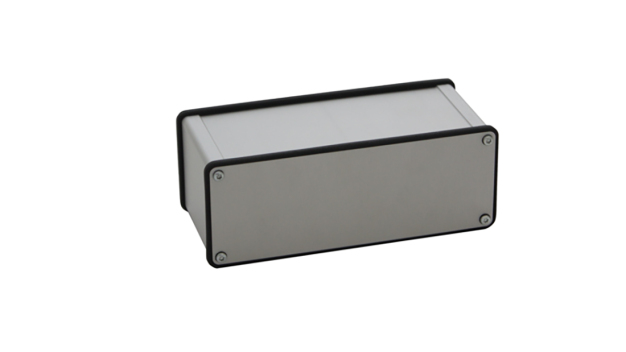
ALU-PRIMUS-Design Seal
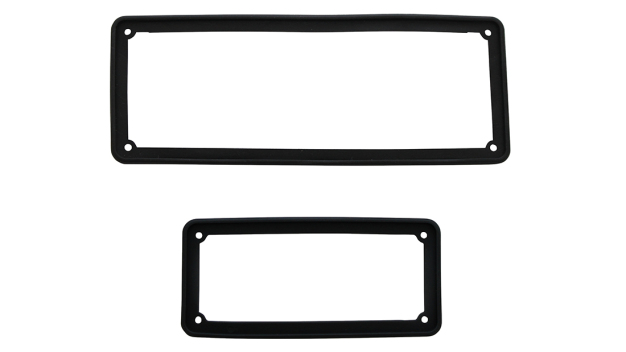
ALU-PRIMUS-Design Seal
The Richard Wöhr GmbH offers, in addition to an extensive portfolio of enclosures, front panels, and input systems (including industrial keyboards and membrane keypads), useful and intelligent accessories for the respective industrial components. Especially for the manufacturing or application of enclosures in the electrical engineering and electronic environment, Wöhr® supplies seals with various specifications, such as flat or round materials, made from polyurethane or polyethylene foam sheets, electrically insulating or conductive. These sealing and insulating materials are customized and processed in-house according to customer specifications.
However, having just a seal or choosing the right sealing material from a wide range of options available on the market is not enough. Rather, a holistic sealing concept is crucial, in which the seal itself plays a supporting role but must be properly planned in terms of design and correctly installed in manufacturing. The skill lies in selecting the right process and integrating it early during the design phase, in coordination with other components and assemblies, to achieve a reliable IP protection level.
Seals are generally installed where protected assemblies need to be accessible for service at irregular intervals or to handle unknown or challenging, non-standard installation situations. And precisely there are the vulnerabilities of a sealing solution that is not considered in the design.
A seal that has no mechanical stop and therefore cannot be reconditioned after opening the assembly or does not have a return behavior, fails to perform its function from that point onward or can only partially fulfill it.
To consider all these points, it is important to understand not only the requirements of the (new) device but also the field conditions. Only then can the mechanics, the type of seal, and the sealing material along with accessories be optimally coordinated to create a comprehensive sealing concept.
The Richard Wöhr GmbH offers the following sealing technologies: Foamed seals made from one or two components, round cord seals, surface seals, and EMC seals.
1. Foamed Seals
Foamed seals are highly elastic, non-loss (self-adhesive), allow precise positioning while compensating for enclosure tolerances, and impress with their high process reliability and flexibility. A foamed seal typically has a size ratio of 2:1 (width x height). This seal has no impact and is suitable for loads from all sides.
1.1. Single-Component Seals
Foamed seals made from single-component elastomers are directly dosed onto the sealing surface of the component.
Advantages: Complex and small seal geometries are achievable. The sealing compound is pre-mixed, usually a moisture-curing system; UV and thermally curing variants are also possible. The parameters of the seal remain constant from the first to the last part. Functional filling elements (e.g., electrically or thermally conductive additives) are possible but may affect the hardness and elasticity of the sealing compound.
Disadvantages: The seal is usually fully filled, and process parameters such as Shore hardness cannot typically be adjusted. Systems that force foaming of the sealing compound by mixing in compressed air after extrusion are usually expensive. Depending on processing and material, a start or end point of the seal may be visible, which could potentially influence sealing effectiveness.
1.2. Two-Component Seals
Two-component seals are prepared in a mixer before application.
Advantages: Excellent adhesion, fast processing, seal properties are easily adjustable, the sealing compound is cost-effective and highly resistant to chemicals.
Disadvantages: Often, fixtures are necessary to achieve optimal results; small series are usually not profitable. A mechanical stop should be present to ensure the seal returns to its original position.
2. Round Cord Seals
Round cord seals are available in all sizes (0.5 mm, 1.0 mm, 1.5 mm, etc.) and, due to the wide range of materials (such as foam rubber, neoprene, and silicone seals), also as functional variants – as solid material or as hose.
Advantages: A good alternative for small batch sizes; functional properties such as conductivity and different Shore hardnesses are possible. Three-dimensional seal geometries can be represented.
Round cords are available in nearly "endless" lengths from the roll, making them suitable for very large quantities. As ring cords, bonding is possible; surface bonding with a groove is not necessarily required depending on the application. They can also be inserted by the customer and are interchangeable if requirements change.
Disadvantages: Mainly manual installation required. The component to be sealed must have a guide (groove), and in some cases, the seal must be glued in place.
3. Surface Seals
The choice of sealing material is extremely important for surface seals, as material durability and structure (open-cell or closed-cell) influence the sealing behavior of the system.
The seal's ability to recover also plays a significant role in maintaining sealing effectiveness after service interventions.
Advantages: Can be customized for small batch sizes via laser cutting; however, manufacturing larger quantities is also very cost-effective through band steel cutting. For dust protection seals, a "stressed" L-shaped variant is possible, which is more economical due to material savings.
Disadvantages: The execution must be tailored to the component and can only be implemented with good processing and under certain conditions. Depending on the system, a mechanical end stop should prevent irreversible compression of the seal.
4. EMC Seals
Seals designed to ensure electromagnetic compatibility are usually only conditionally suitable as protection against water ingress. They are conductive and serve as a low-resistance, closed surface that suppresses EMV emissions and susceptibility.
The sealing of complete systems can also be ensured through structural measures or with appropriately intelligent accessories (additionally), such as a special sealing frame for membrane keypads, a cover of the decorative foil over the mechanics, or special drainage and vent plugs or pressure equalization elements. The latter have been part of the standard range of Richard Wöhr GmbH for many years and are introduced below because they significantly contribute to the practical durability of an enclosure over an extended period, even under changing environmental influences (such as humidity, air pressure, and temperature fluctuations).
Drainage and vent plugs (climate plugs) ensure constant pressure equalization between the enclosure/control cabinet and the environment. This prevents heat buildup and minimizes condensation, thereby protecting electronic components from corrosion. Water that enters operational devices and accumulated condensation are autonomously drained via the climate plug.
The venting element is mounted on the outside wall of an enclosure and ensures continuous pressure equalization. It is either screwed into a threaded hole or attached with a locknut through a drilled hole.
A key feature of these pressure equalization elements is their high air throughput combined with high water retention capacity. This adjusts the internal pressure of sealed enclosures to ambient pressure while preventing water ingress.
This pressure equalization can also be combined with cable glands ("breathing cable gland").
Furthermore, Wöhr offers elements that drain water from inside the enclosure and optionally enable pressure equalization. Using a membrane film integrated into the element, which is permeable to air on both sides and waterproof on one side, achieves an IP rating of IP66, IP68, and even IPX9.
The GH02/KVDAE series combines cable glands and pressure equalization elements. Thanks to a microporous, liquid-tight membrane, pressure differences inside and outside the enclosure are balanced, minimizing condensation formation. The GH02/KVDAE series is therefore ideally suited for use in control systems and switch cabinets in the food industry, building automation, transportation technology, and energy supply.
Thanks to the "breathing" cable entry, all essential properties of a cable gland are maintained, saving costs. No additional components, mounting, or drilling are required.
Due to their identical sizes, old cable glands can be easily replaced with the new GH02/KVDAE series. They are also available as EMC-compliant (electromagnetic compatibility) variants with internal parts according to DIN 89345.
Ultimately, a suitable sealing concept requires corresponding expertise and an experienced partner to support you project-related. The selection of the sealing concept must be viewed globally and is not just a minor parameter but a crucial factor for the functionality of the final product in the manufacturing process of enclosures and devices. Richard Wöhr GmbH supports its customers in selecting and developing sealing concepts from design through manufacturing and assembly.
Richard Wöhr GmbH
75339 Höfen/Enz
Germany



