

- Facilities
- Translated with AI
Highly sensitive research on land and sea
MK develops non-metallic cleanroom containers as stationary and mobile special laboratories
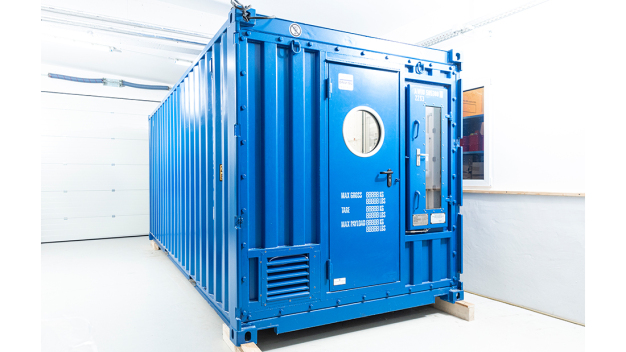
The cleanroom container that houses the metal-free cleanroom laboratory. (Photo: MK Test Facilities)
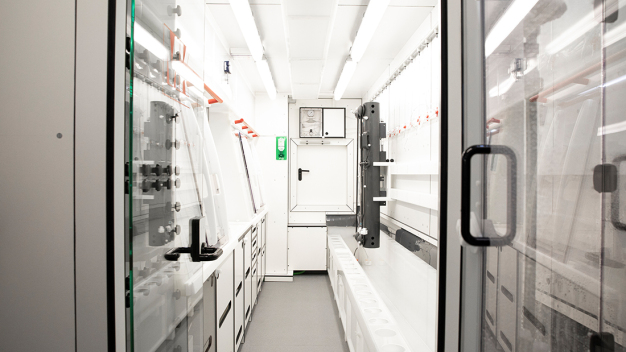
View into the container. On the left side are the work areas, and on the right are the holders for the CTD bottles. (Photo: MK Test Facilities)
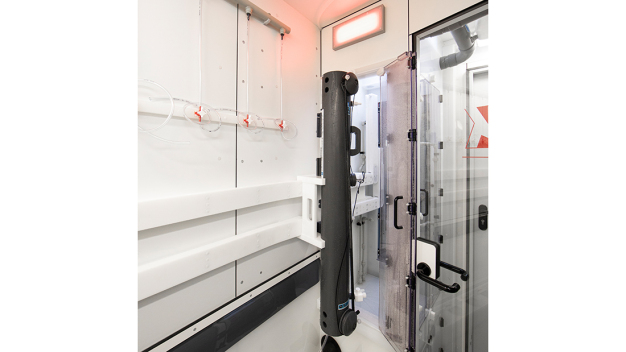
A CTD bottle is transferred from the clean air lock into the laboratory area after cleaning. (Photo: MK Test Equipment)
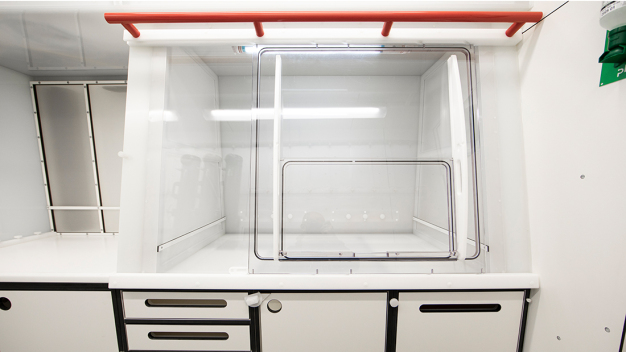
The MK container laboratory on the Polarstern is equipped with some ocean-specific facilities, such as handrails for the scientists or an emergency escape hatch. (Photo: MK experimental facilities)
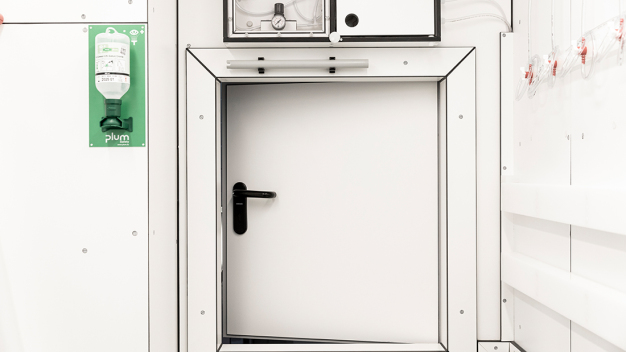
The MK container laboratory on the Polarstern is equipped with some sea-specific facilities, such as handrails for scientists or an emergency escape hatch. (Photo: MK Test Facilities)
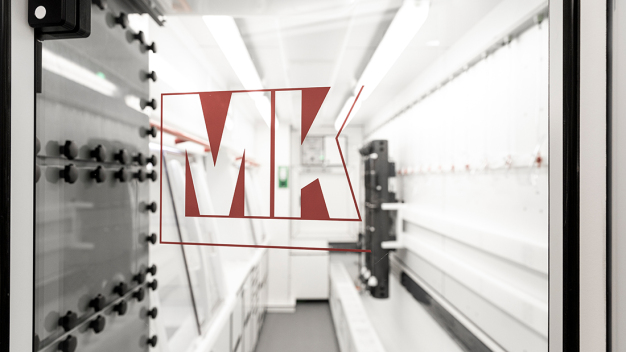
Look into the container. (Photo: MK Test Facilities)
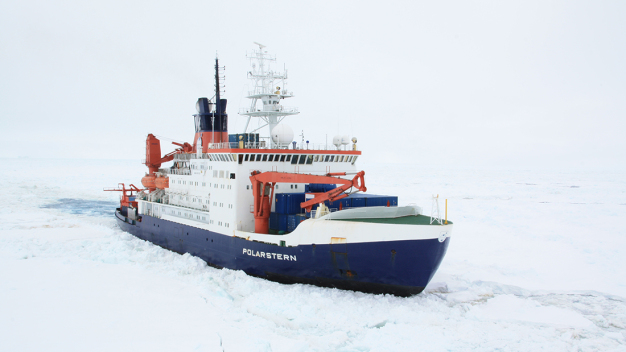
The Polar Star in operation. (Copyright: F. Mehrtens)
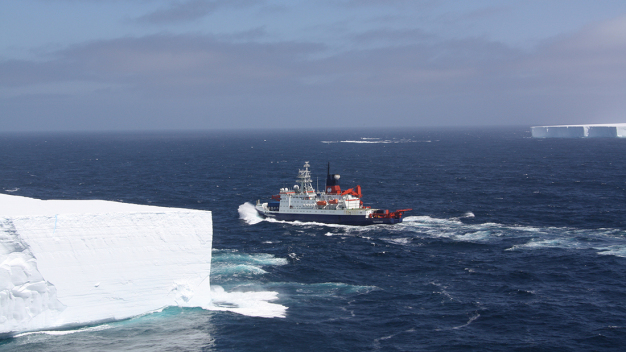
The Polar Star in operation. (Copyright: F. Mehrtens)
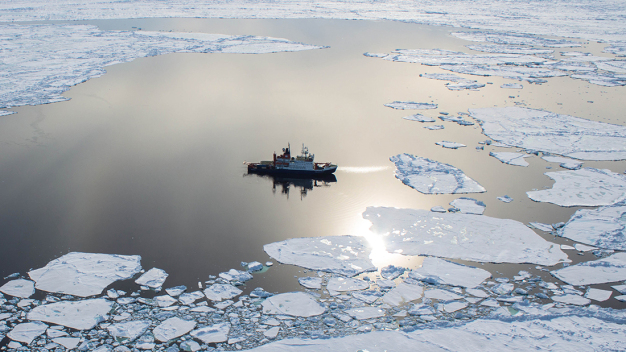
The Polar Star in operation. (Copyright: S. Arndt)
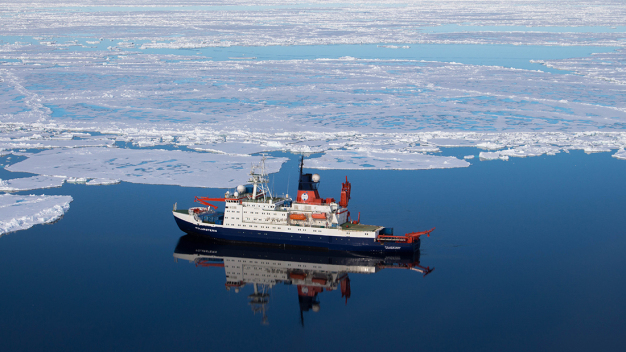
The Polar Star in operation. (Copyright: S. Arndt)
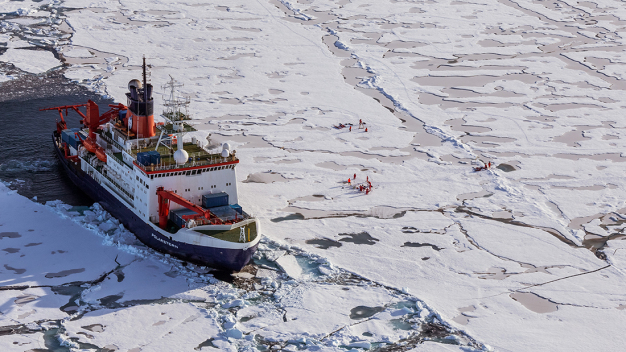
The Polar Star in action. (Copyright: M. Hoppmann)
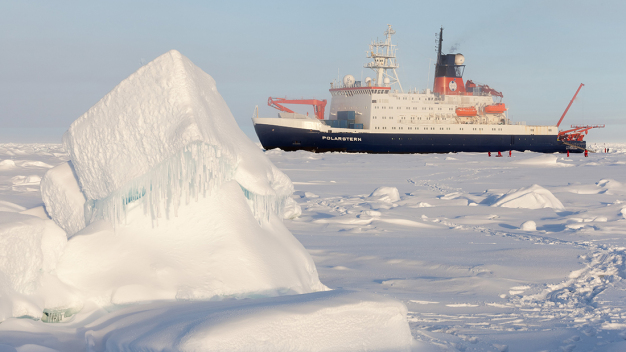
The Polar Star in operation. (Copyright: M. Hoppmann)
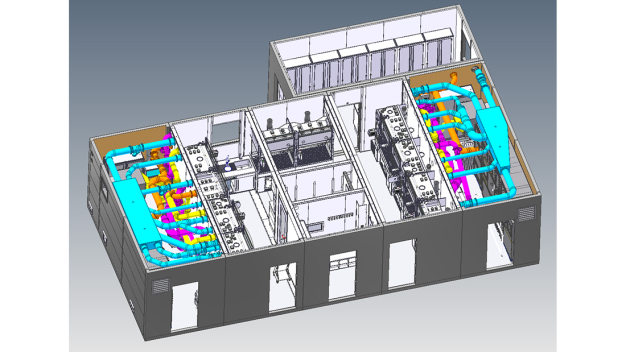
A mobile, metal-free sample preparation system based on 20 foot standard containers: the technical containers are placed on the outside. Inside the three inner containers, a metal-free cleanroom is constructed in U-shape, into which ten metal-free MK systems, two work lines, two rinses, a weighing room, and a lock are integrated. The sixth container is attached transversely as a storage container under cleanroom conditions.
One of the biggest topics in science has always been sample purity. When it comes to protecting valuable finds or samples from contamination, many research groups prefer to rely on the metal-free work environments of MK Versuchsanlagen und Laborbedarf e.K. from Mücke-Merlau in Central Hesse. Just like now, the scientists aboard the research vessel Polarstern, which serves the exploration of the polar seas and supplies research stations Koldewey Station in the Arctic and Neumayer Station in Antarctica. The ship is operated by the Alfred Wegener Institute for Polar and Marine Research (AWI) in Bremerhaven.
The idea of building mobile cleanroom laboratories that can be variably equipped depending on the deployment location and purpose has been pursued by MK Versuchsanlagen for some time (see Cleanroom Yearbook 2017/2018, p. 50ff., "4D Mobility in Versatile Cleanroom Systems"). The foundation was already laid with the development of a container solution for deploying a metal-free cleanroom on the Polarstern.
Water samples from 4000 meters depth are being examined
The Polarstern operates in the southern summer months from November to March in Antarctica and in the northern summer months in the Arctic. The vessel has nine permanently installed laboratories equipped for various scientific investigations. Additional space for laboratory containers is available on and below deck, with equipment enabling more specific research projects. The research voyage with the MK laboratory container started on December 5, 2021, in Bremerhaven.
Dr. Scarlett Trimborn, head of the EcoTrace working group at AWI, is investigating on this trip in the MK laboratory container how the availability of trace metals, especially iron, but also manganese, zinc, and cobalt, influences the growth of small-celled algae in the Southern Ocean. For this, samples must be brought into the lab free of trace metals. "Using a water sampler, samples of water from different depths up to about 4000 meters are taken. This involves the use of so-called CTD ring water samplers," explains the researcher the procedure.
Therefore, MK Versuchsanlagen was commissioned to develop a metal-free laboratory that can be installed turnkey in a container on the Polarstern. The critical process in sampling occurs when the CTD is brought on deck. Dr. Wolfgang Küstner, project manager at MK Versuchsanlagen, explains the procedure: "The rinsing of the CTD bottles, which contain the precious seawater, with ultrapure water will be carried out for the first time using a washing system. For this, ultrapure water from the integrated water treatment system in the cleanroom container is used. Once all sensors and CTD bottles are thoroughly cleaned, the first water samples can be taken. All of this takes place in the specially designed laboratory container from MK Versuchsanlagen. All CTD bottles are fed into the container via a clean air lock. This laboratory line is used for 'contamination-free' water sampling from the CTD bottles. For special applications, such as filtration, the sampling process is supported by a individually controllable compressed air system."
Besides water analysis, the MK laboratory lines in the container are, of course, also suitable for a variety of other analyses as a multifunctional, metal-free cleanroom. For example, the CTD bottle holders can be dismantled and replaced with shelving systems. The airlock can continue to serve as a clean air material lock without rinsing.
Direct connection of a turnkey container cleanroom to building management technology
On land, the first mobile cleanroom laboratories for various research institutions are already being realized by MK Versuchsanlagen. These turnkey delivered, metal-free MK container cleanrooms, with walls, furnishings, ventilation, media supply, and control, are directly connected to the existing building management system.
Currently, MK Versuchsanlagen is implementing a project consisting of six containers. Two containers are needed for technical equipment, while the remaining four form the cleanroom. The planning considers sustainability by designing the rooms to be autonomous, allowing for a division into two separate solutions of three containers each. This transitional laboratory is planned based on 20-foot standard containers (6.058 meters long, 2.438 meters wide), but with a height of 3.11 meters instead of the usual 2.59 meters. This allows for the installation of a mezzanine for technical and ventilation ducts.
This container laboratory will be used to investigate the isotopic composition of rock samples, for example from volcanoes, mines, meteorites, as well as from the Moon or Mars. The focus is on the smallest differences in concentration, which, like the water samples from the Polarstern expedition, must not be falsified by cross-contamination during sample preparation. The metal-free construction of the cleanroom and the metal-free workstations ensure conditions that are not always achievable in conventional laboratories. The so-called sample digestion using highly concentrated acids attacks metal surfaces, releasing metal particles into the air and depositing on sample surfaces, rendering them unusable. This does not happen in a metal-free, acid-resistant sample preparation system.
At the same time, personnel protection plays an important role. The control electronics are integrated into a safety chain and continuously monitor parameters such as workspace temperature and exhaust airflow. If limit and alarm values are exceeded, an alarm is triggered, and safety-relevant consumers are permanently shut down depending on the safety chain configured.
Save operating costs with intelligent room and system control
In times of rising operating costs, a smart and efficient room and system control system is increasingly in focus for system builders and operators. The MK Versuchsanlagen control system dynamically manages the air management of the entire room and individual systems separately. This ensures that efficient ventilation guarantees the highest purity at the workplace. For example, if the installed sensors detect inactivity at a workstation, the front shutter is closed, and the airflow is reduced accordingly. Energy savings of up to 50 percent are possible.
Additional interfaces are used to transmit data and alerts from higher-level safety systems, such as building alarm systems, smoke detectors, and fire alarms, to the user and integrate them into the safety chain. When integrated into a network, the user can perform monitoring of the room and system control via VNC access. Connecting the MK control system to the internet also allows remote diagnostics and software updates to be performed without a technician on site. Access is secured via a VPN connection.
As these examples show, MK Versuchsanlagen offers both research and industry the opportunity to create large-scale solutions in a small space with its turnkey container laboratories. The idea of setting up mobile, individually adaptable, metal-free laboratories in containers knows no boundaries. Whether on land, water, or in the air, the possibilities for deployment seem limitless.

MK Versuchsanlagen GmbH & Co. KG
Stückweg 10
35325 Mücke-Merlau
Germany
Phone: +49 6400 9576030
Fax: +49 6400 9576031
email: info@mk-versuchsanlagen.de
Internet: http://www.mk-versuchsanlagen.de