



- Translated with AI
High microbial contamination despite regular cleaning: Automatic disinfection of wet cells with UVC and ozone kills pathogens and neutralizes odors
Hygiene in patient rooms - Safe elimination of multidrug-resistant hospital germs
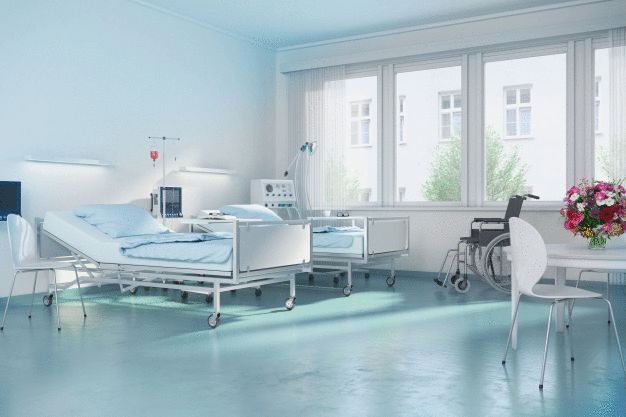
A study from 2016 found that approximately 2.6 million Europeans are infected with hospital germs each year – around 91,000 people do not survive the illness. (Source: Fotolia (157553371_XL))
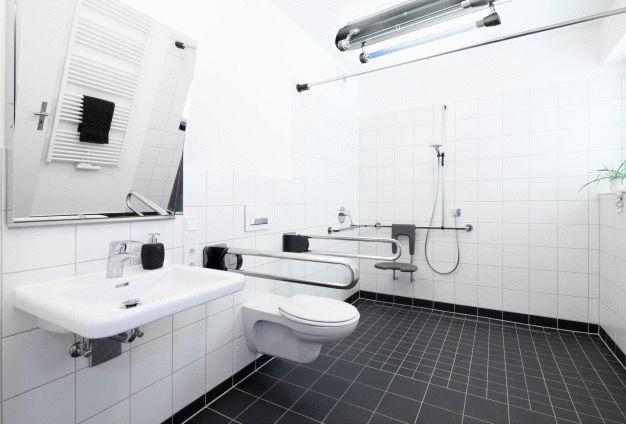
Wet cells in patient rooms often show high levels of microbial contamination when surface disinfection is only superficial due to time and cost pressures. The CleanO3Mat significantly reduces the number of germs without additional effort. (Source: Adobe Stock (83126647) / Dinies Technologies GmbH)
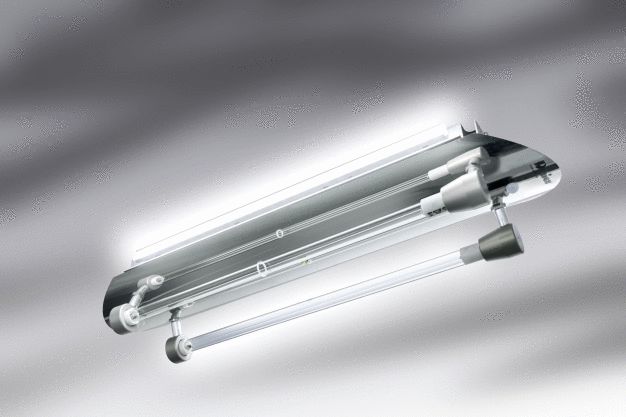
The device reliably destroys germs and mycobacteria using ozone and short-wave UVC rays. Additionally, the ozone helps eliminate unpleasant odors. (Source: Dinies Technologies GmbH)
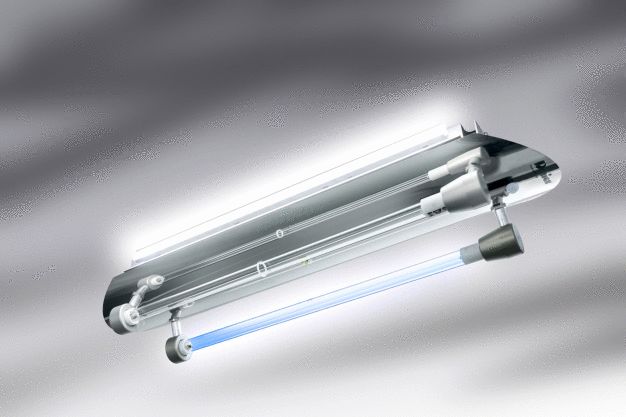
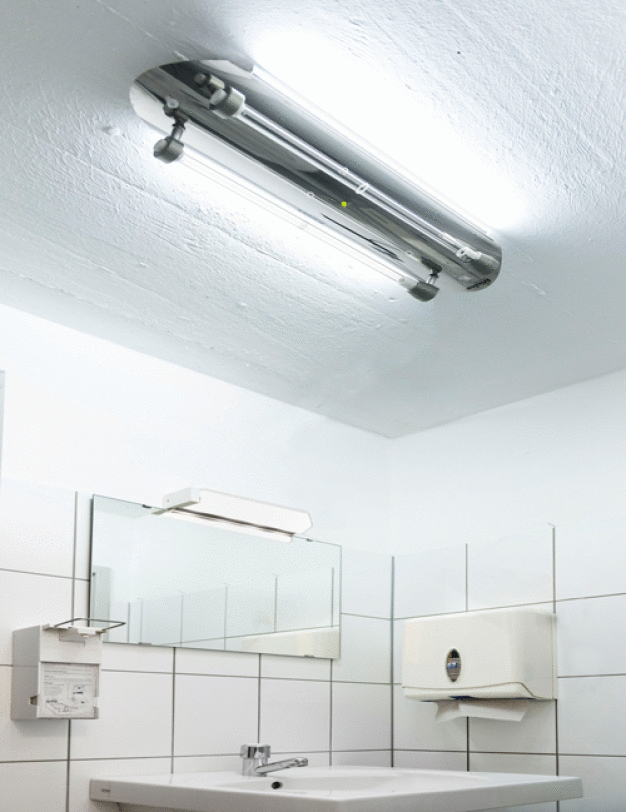
The disinfection cycle is initiated as soon as the patient turns off the light in the bathroom. (Source: Dinies Technologies GmbH)
In a field test, the measurements initially showed very high microbial contamination at various locations in the toilet area. After commissioning the CleanO3Mat, the microbial contamination was permanently reduced drastically and remained at a health-safe level – even when exposed to wiping disinfection. (Source: Dinies Technologies GmbH)
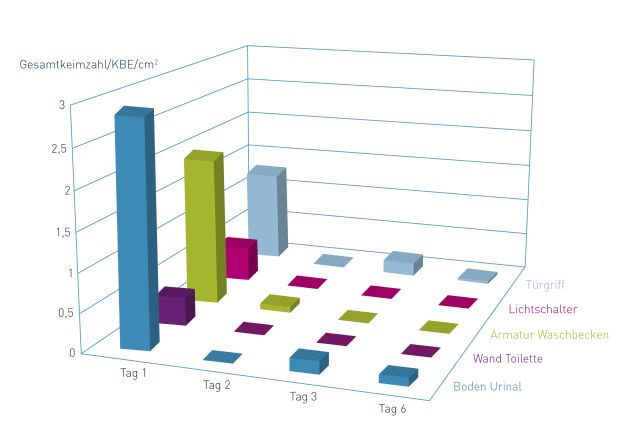
In a field test, the measurements initially showed very high microbial contamination at various points in the toilet area. After the commissioning of the CleanO3Mat, the microbial contamination was permanently reduced drastically and remained at a health-safe level – even when exposed to wipe disinfection. (Source: Dinies Technologies GmbH)
According to a 2016 study conducted by scientists from the ECDC (European Centre for Disease Prevention and Control), approximately 2.6 million Europeans are infected annually with hospital germs – with around 91,000 patients succumbing to these infections. The reasons for this include inadequate implementation of hygiene regulations as well as time and cost pressures during daily cleaning routines that must be carried out regularly in patient rooms. Particularly contaminated areas in wet rooms are often overlooked, which can impair the health of patients and visitors alike, as the risk of infection becomes especially high. To address this issue, Dinies GmbH has developed the CleanO3Mat: The permanently installed disinfection device sterilizes the wet room using both short-wave UVC rays and ozone. This not only drastically reduces microbial contamination but also permanently eliminates unpleasant odors.
“In a cooperative project with HFU Furtwangen, it was found that the pathogenic microbial load in wet rooms still amounted to 42 percent even after regular wipe disinfection,” explains Dipl.-Ing. Cajus Dinies, Managing Director of Dinies Technologies GmbH. “The pathogens are mainly found on surfaces that patients frequently come into contact with. These include door and grab handles, light switches, and also the fixtures of the washbasin.” To effectively eliminate these germs, “a quick wipe” is not sufficient – yet this is what is often practiced in most hospitals because cleaning staff have to clean a large number of rooms in the shortest possible time. As a result, the likelihood increases that hard-to-reach areas under the sink or in grout lines are not properly cleaned. Consequently, germs settle there permanently and spread quickly throughout the room from these points.
Disinfection device combines UVC rays with ozone
Dinies Technologies became aware of the problem of hospital germs several years ago. The company, which specializes among other things in sterilization using UV radiation, initially developed a mobile device in 2016 that is particularly suitable for cost-effective and rapid disinfection of operating rooms, treatment rooms, and patient rooms. However, a stationary application – for example in patient rooms – was not yet planned. “This led to the idea of developing a device for continuous use in wet rooms that automatically initiates the disinfection cycle,” explains Dinies. “We designed the CleanO3Mat so that it initially functions like a normal bathroom light.”
For subsequent disinfection, the device is equipped with a standard LED lamp as well as UVC and ozone tubes. The disinfection cycle is started as soon as the patient leaves the bathroom and switches off the light. For a duration of one minute, ozone is produced first. This completely eliminates odor molecules. Afterwards, UVC radiation destroys germs and microorganisms. “The ozone levels always remain within legally prescribed limits and are harmless to humans,” explains Dinies. “The device is also designed so that the cycle is interrupted if the patient briefly returns to the bathroom and activates the light switch.” The already released ozone decomposes spontaneously within a short time into harmless oxygen. Dangerous germs such as Enterobacteriaceae, Enterococci, Staphylococcus aureus, and Pseudomonas aeruginosa are destroyed by up to 99.9 percent. This effectiveness remains long-term because bacteria cannot develop resistance to UVC rays. The use of aggressive chemical disinfectants, which burden health and the environment and can incur high costs, thus becomes unnecessary.
Test results confirm effectiveness
After the development phase, the CleanO3Mat was tested under real conditions. First, the microbial load was measured at various points in a toilet. “These analyses showed very high values,” reports Dinies. “In some cases, the microbial load was nearly 0.36 total microbial count/CFU/cm² on the wall and over 2.88 CFU/cm² on the urinal floor. The door handle and the fixtures of the washbasin were also heavily contaminated with germs.” Subsequently, the CleanO3Mat was used for continuous disinfection. “By the second day, the microbial load had dropped to a maximum of only 0.16 total microbial count/CFU/cm², posing no more threat to human health. These low values remained long-term even after standard wipe disinfection was applied,” Dinies continues.
The CleanO3Mat has a rated power of 35 W and a rated voltage of 230 V/50 Hz, which means only a slightly higher energy consumption compared to conventional lamps. The luminous output is 8 W. Since installation is similar to that of a standard ceiling light, the lamps can be replaced quickly and easily.
Dinies Technologies GmbH
Dinies Technologies GmbH was founded in 1979 by Dipl.-Ing. Volker Dinies and is based in Villingendorf, Baden-Württemberg. The company initially produced various components such as separation adapters, simulation, testing, and adapter devices under the name Dinies Feinwerktechnik & Elektronik, mainly used in the automotive industry. The focus was primarily on prototype construction and small-series manufacturing. In the 1980s, UV technology was also incorporated into the portfolio. Today, Dinies offers a wide range of products in electronics and UV technology and regularly develops new solutions in the field of UV-sensitive paints and coatings as well as environmentally friendly sterilization. Regular audits by official testing agencies and customers confirm the high quality of the products – including certification according to DIN EN ISO 9001.
Dinies Technologies GmbH
78667 Villingendorf
Germany