




- R+D & Community of Interest
- Translated with AI
Hermann Rietschel Institute, Technical University of Berlin
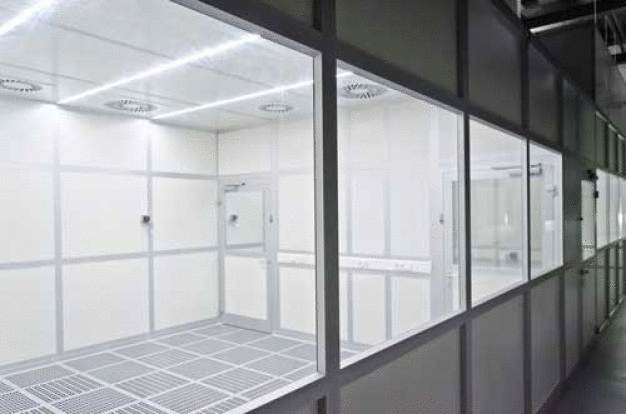
Image 1: Research cleanroom with turbulent thinning flow (TVS)
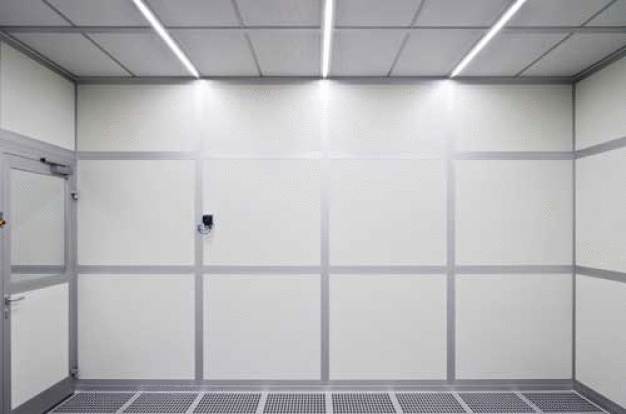
Image 2: Research cleanroom with turbulence-reducing displacement flow (TAV)
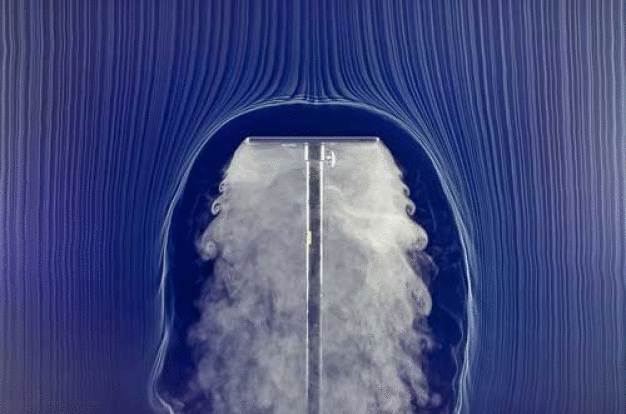
Image 3: Visualization of the disturbance of an obstacle in a low-turbulence displacement flow
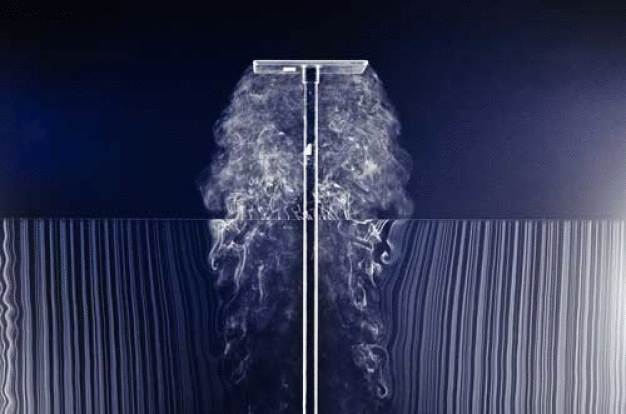
Image 4: Visualization of the backflow area below an obstacle in a turbulence-free displacement flow
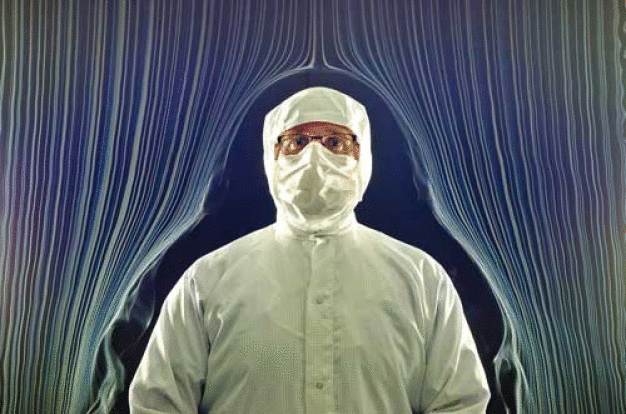
Image 5: Visualization of a person's disturbance in a low-turbulence displacement flow
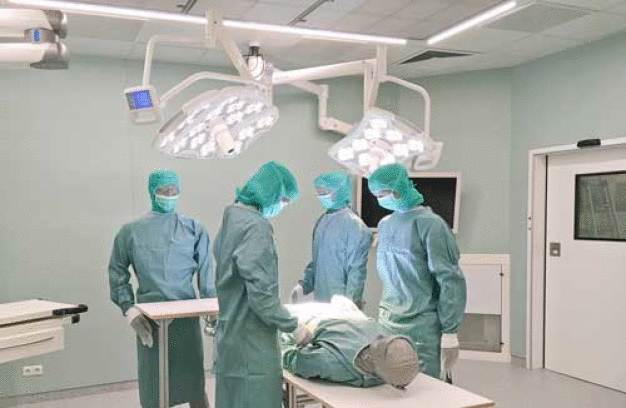
Figure 6: Research operation at the HRI with person simulators
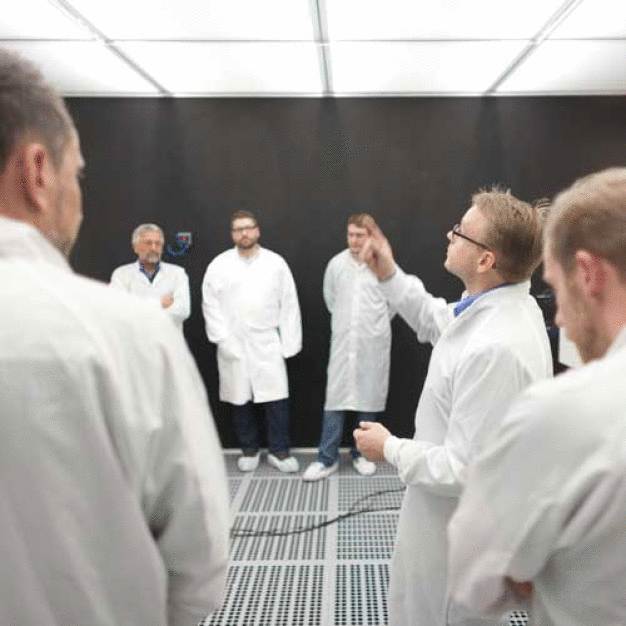
Figure 7: Training participants in the cleanroom
The Hermann Rietschel Institute (HRI), Department of Building Energy Systems at the Technical University of Berlin, originated from the "Testing Station for Heating and Ventilation Equipment" founded by Hermann Rietschel in 1885. It is the world's oldest university institute in its field.
The research work and investigation results of the HRI influence the development of heating and indoor air technology in Germany and contribute, among other things, to the development of standards and guidelines. Since June 2011, Prof. Dr.-Ing. Martin Kriegel has been leading the chair, focusing on minimizing the tension between comfort requirements, hygienic indoor climate, and energy-efficient system technology. In this context, research is also primarily conducted on clean rooms (cleanrooms and healthcare rooms).
Covering a total area of 1800 m², it houses an auditorium, seminar rooms, workshops, office spaces, a dedicated computing cluster with 400 computational cores for numerical simulations, and several testing halls 6 to 8 meters high. To investigate various issues, the HRI has corresponding test rigs, measurement technology, and software.
In particular, in addition to generic room airflow laboratories, there are also two research cleanrooms and a research operating room available.
Research Cleanroom at HRI
For experimental investigations, the HRI has a highly modular research laboratory. On an area of 75 m², two cleanrooms with associated airlocks are housed (Images 1 and 2). The configuration covers approximately 90% of the cases of cleanroom installations in practice — making this research cleanroom unique in Germany.
Two protection concepts are used for ventilation: One cleanroom is equipped with turbulent dilution airflow (TVS, Image 1) using drilled perforations and recirculation filter fan units with H14 filters. The second cleanroom (Image 2) is ventilated via a low-turbulence displacement airflow (TAV) using full-surface filter fan units with U15 filters and a raised floor. The connected HVAC system allows volumetric flows up to 13,000 m³/h. Together with the recirculation part of the FFUs, up to 600 air changes per hour are possible in the TAV cleanroom. To prevent cross-contamination, a pressure cascade from cleaner to less clean rooms is implemented with each at 15 Pa ± 5 Pa. Temperatures can be regulated between 16 and 24°C with a tolerance of ± 0.1 K, and relative humidity between 40% and 60% with a tolerance of ± 10%.
A particular strength of the HRI is the visualization of airflow, using various methods (Images 3, 4, and 5).
Research Operating Room at HRI
Since 2018, the HRI has operated its own research operating room (Image 6). In this fully ventilated room, nearly any room airflow concept can be realized: In addition to the turbulence-free displacement ventilation typical for operating rooms, turbulent mixed ventilation with eight individually controllable supply air inlets and even source ventilation is possible. Through freely assignable air inlets and outlets, local supply and exhaust openings can also be implemented. In this laboratory, research is conducted experimentally on more effective and efficient operating room ventilation methods to ensure the highest possible safety for patients and staff.
Training Program
Annually, the institute offers further training on "Systems and Concepts of Cleanroom Technology" (Image 7). Although the theoretical fundamentals specific to cleanrooms are well known from literature, actual processes in cleanrooms often differ significantly. This discrepancy between theory and practice is primarily demonstrated through experimental exercises in the training, making the differences between ideal and real airflow processes in cleanrooms vividly tangible. Solutions are presented and conveyed for the associated problem areas in the three topic blocks: flow patterns, aerosol physics/filters, and building automation/pressure maintenance. The next three-day training will take place in September 2019 in the research laboratory of the Hermann Rietschel Institute.

Technische Universität Berlin - Hermann-Rietschel-Institut
Marchstrasse 4
10587 Berlin
Germany
Phone: 030 314 24180
email: valeria.hofer@tu-berlin.de
Internet: https://hermann-rietschel-institut.de/