



- Translated with AI
Germ and pollutant filters without compromises
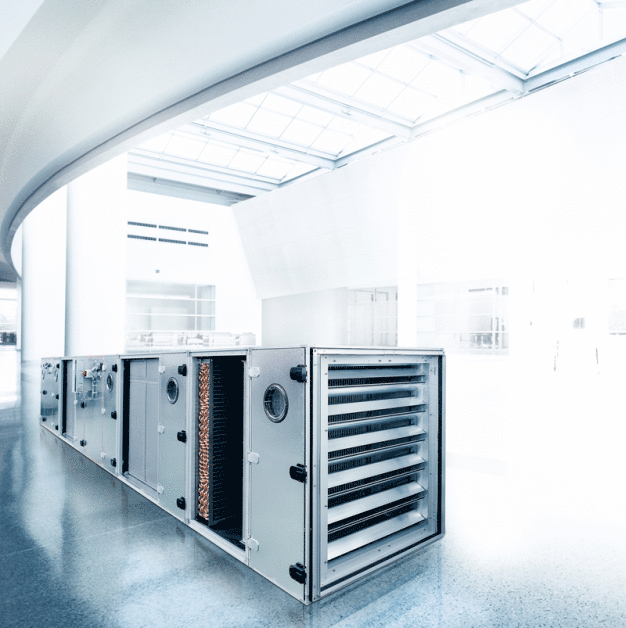
Photo: wolf-heiztechnik.de
Modern HVAC technology in commercial, industrial, and administrative buildings, as well as in larger public facilities, has long gone beyond just cooling and air exchange functions. In addition to other essential tasks such as humidity control and energy-efficient heat recovery, some systems must also meet very specific hygiene requirements. The filtering of pollen, germs, and other pollutants from incoming outdoor air is now a standard feature of air handling units (AHUs). However, in laboratories, cleanrooms, hospitals, and other areas with particularly strict air purity requirements, this standard must be exceeded. These environments often adhere to standards and regulations that add additional technical and material challenges to the already complex task of air conditioning. This includes components certified to specific filter classes, EC fans designed for hygiene with a coated, fully accessible impeller, and completely cleanable surfaces.
Off-the-shelf climate systems cannot meet these requirements, especially since each system must be tailored during the planning phase to the specific location and purpose. Therefore, it is advisable for every operator to engage in an in-depth consultation with an HVAC specialist to explore the most suitable system solution considering functionality, performance, and energy efficiency. Variable system units, which can be adapted to different building sizes, provide a good foundation for this. For example, the European market leader in cassette air conditioners, Wolf Heating and Air Conditioning Technology (Mainburg) (www.wolf-heiztechnik.de), has developed a hygiene-optimized variant of its AHU series that can be customized. These units fully comply with the structural and construction requirements of DIN 1946 - Part 4, certified through type testing by TÜV SÜD (www.wolf-heiztechnik.de). The systems are designed as plug-in frame constructions, facilitating transportation, installation, maintenance, and servicing. The modularity of these units naturally imposes even higher standards on their construction, especially with regard to hygiene. All joints and seams of the assembled units must be sealed with closed-cell, microbiologically safe sealing materials. The filter frames must be free of gaps, and droplet separators must be fully disassemblable for cleaning. Therefore, hygiene-specific HVAC systems should only be configured by qualified professionals, as even minor planning errors could compromise air purity.
Wolf GmbH
84048 Mainburg
Germany



