


- Gas
- Translated with AI
Gas alternatives for improving energy management
Pharmaceutical Production
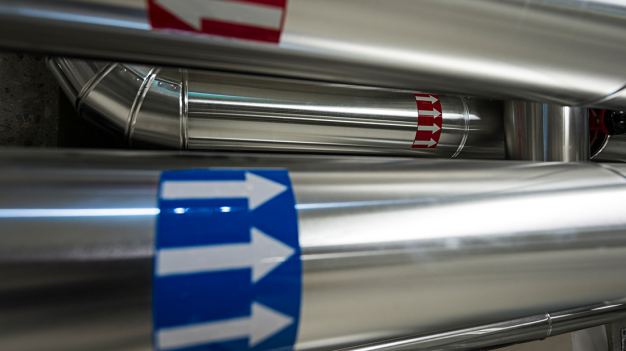
Technical center in a pharmaceutical company. © Lorenz Consult ZT GmbH
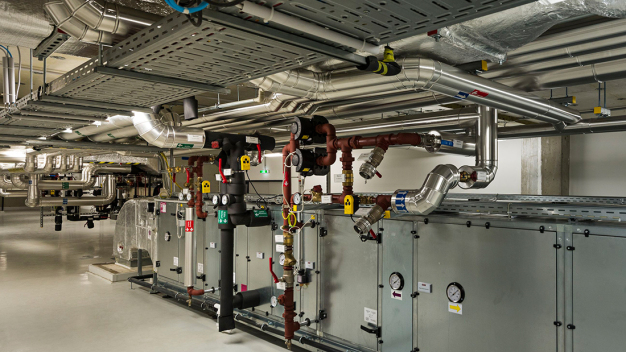
Technical center in a pharmaceutical company. © Lorenz Consult ZT GmbH
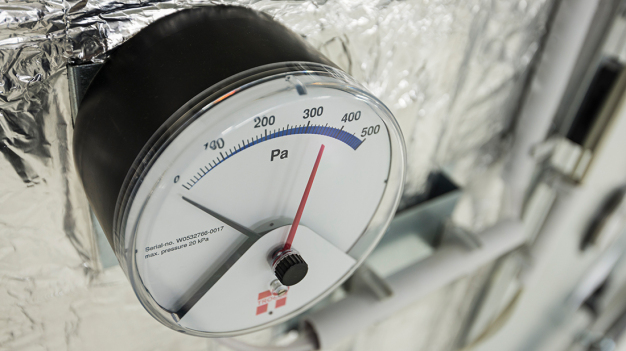
Technology center in a pharmaceutical company. © Lorenz Consult ZT GmbH
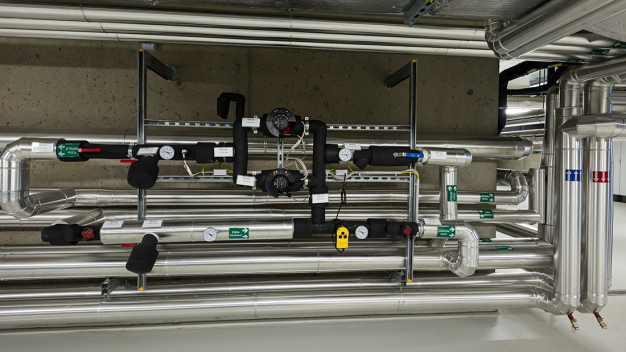
Technical center in a pharmaceutical company. © Lorenz Consult ZT GmbH

DI Christian Lorenz, Managing Director of Lorenz Consult © Lorenz Consult ZT GmbH
The transition away from gas is currently a recurring topic in the media. But what alternatives are available, what challenges are associated with them, and what does this mean for implementation? We discussed this and their impacts, for example, for a pharmaceutical site, with DI Christian Lorenz, Managing Director of Lorenz Consult. The civil engineering firm has decades of experience in this sensitive area and is a driving force behind pilot projects related to alternatives to gas and the use of hydrogen.
"Legal requirements from the EU, climate change, availability, and questions of economic viability are driving factors for improving energy management. As general planners, we know where to start to reduce energy consumption," explains Managing Director DI Christian Lorenz.
Some solutions, such as heat recovery in ventilation systems or the use of waste heat as energy alternatives, have been technically implemented for some time. Others, like the generation of steam using heat pumps or the use of hydrogen as an electricity alternative, are still in their infancy. "We are at the forefront of this development," says Lorenz. The Graz-based family business Lorenz Consult is a trendsetter in many areas of the construction industry and has also been a leader in the use of Building Information Modeling (BIM).
Gas Alternatives: Hydrogen, Heat Pumps & Co.
Systems that require electricity as an energy source – primarily heat pumps – are currently the most common alternatives to gas. Taking the site of a pharmaceutical company as an example, the electricity for this can only be generated partially on-site. The rest must be purchased from energy providers. "Improvements in the future can be achieved through the use of hydrogen. However, a general implementation is premature. The steel industry is actively researching the use of hydrogen as an energy source. These concepts can subsequently also be applied in the pharmaceutical industry," Lorenz explains. Because sustainability, alongside economic efficiency, purity, safety, and hygiene, is a key factor in the pharmaceutical sector.
The central question for all alternatives is that of energy storage. This is especially relevant for the use of waste heat. Since the timing of waste heat generation often differs from when the heat is needed again, it is important to establish appropriate energy storage solutions. "Intensive research is being conducted in this area, and interesting solutions for energy storage are expected in the coming years," promises Lorenz.
Currently, there is also active research and development into generating steam using heat pumps. For now, small pilot plants are in operation.
Options for Energy Saving
Saving energy does not require waiting for the future: The regulation of existing systems (especially ventilation systems) already helps today. "It should be considered whether ventilation systems can be set to a reduced operation outside of working hours. However, it is important to ensure the timely 'ramping up' again so that the required operating conditions are met at the start of operation," explains Lorenz.
The use of rainwater is another resource that is freely available alongside waste heat. The water collected in cisterns can be used for watering plants and as greywater for toilet flushing.
Lorenz Consult Ziviltechniker GmbH
8010 Graz
Austria