


- Company
- Translated with AI
Future Concepts in the Context of Climate Change and Sustainability
Building and Planning under Changed Conditions
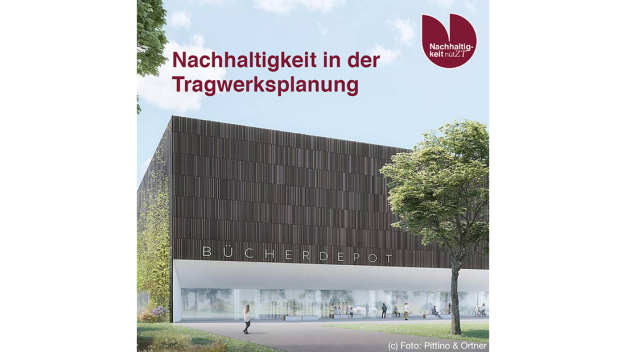
Energy efficiency or resource conservation occupy the construction industry and its clients. Both topics are associated with costs and dependencies on suppliers. The civil engineering firm Lorenz Consult from Graz finds the optimal solution for every project – whether new construction or renovation.
When building, one must sometimes be spontaneous and decide situationally, as DI Christian Lorenz, Managing Director of Lorenz Consult, knows. This is because topics such as resource procurement, construction prices, or circular economy are constantly changing processes. The Graz-based family business is not easily disturbed by this: the wealth of experience they can rely on is vast, quite literally. This applies to planning, execution, on-site supervision, and also to finding suitable energy systems. "More than ten years ago, we implemented the first geothermal system for a large office building in the Vienna area. This involved utilizing the storage mass of the concrete and using low-energy systems for heating and cooling," explains Christian Lorenz. Since then, these systems have been increasingly used and implemented in projects ranging from Graz Surgery, the Science Tower, to currently planning a laboratory building. With a future-oriented outlook, the Lorenz Consult team is exploring the possibility of energy storage and, further, the use of hydrogen and fuel cells for energy generation. "For continuous operation in manufacturing companies, these are still in an early development stage," says Lorenz.
Moving away from gas requires suitable energy alternatives
When choosing the appropriate energy system, the differences between existing buildings and new constructions are minimal. For both, phasing out gas in the foreseeable future is important. First, it is determined which other energy supply systems, such as district heating, are available in the surroundings or if enough additional electricity can still be sourced. "These considerations are always paired with identifying energy-saving potentials. If existing systems are optimally regulated, a lot can be saved. This is demonstrated by experience with shopping centers, where 70 percent energy savings in ventilation systems were achieved through inspection and re-regulation," informs DI Christian Lorenz.
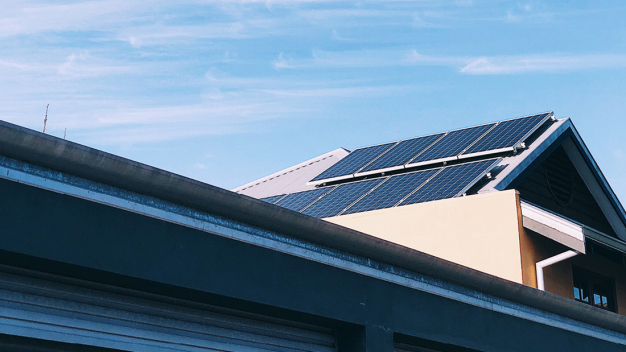
Looking at existing buildings, much revolves around questions of reducing energy consumption and additional energy generation, primarily from photovoltaic systems. Approaches also include heat recovery from process exhaust gases and process wastewater.
Building materials for sustainability
CO2 neutrality is the buzzword of the hour: the CO2-neutral construction site is increasingly becoming a topic. Similar to a Lego house, a real building should also be dismantlable and recyclable after its use. This fact strongly influences the choice of the right building materials. Lorenz believes that the boom in the use of wood as a building material will continue: "The competition between wood as a raw material for energy generation and wood as a raw material for building materials is interesting. In the interest of sustainability and multiple use, priority should be given to the building material," states the experienced civil engineer DI Christian Lorenz.
Sustainable checklist:
– Choice of the right building material in terms of sustainability
– Thermal renovation of the building envelope in existing structures
– Energy efficiency measures such as alternative energy generation, photovoltaics, heat recovery from processes, energy buffering, avoiding energy losses, regulating the system
– Adjustment of building technology systems
– Climate-neutral refrigerants such as ammonia
– Collecting rainwater
Lorenz Consult Ziviltechniker GmbH
8010 Graz
Austria