


- Translated with AI
Flow measurement to improve cleanroom monitoring systems
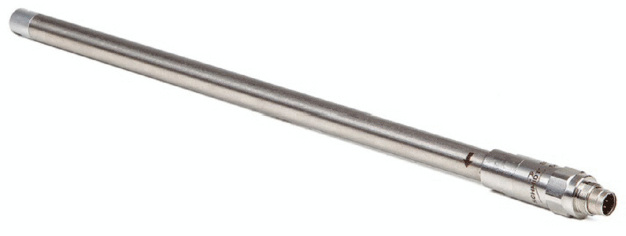
Sensor (Image source: Schmidt Technology)
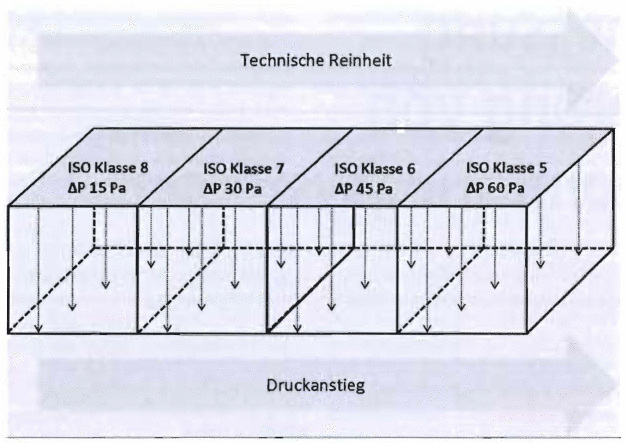
Fig. 1: Typical manifestation of a pressure cascade (Image source: Schmidt Technology).
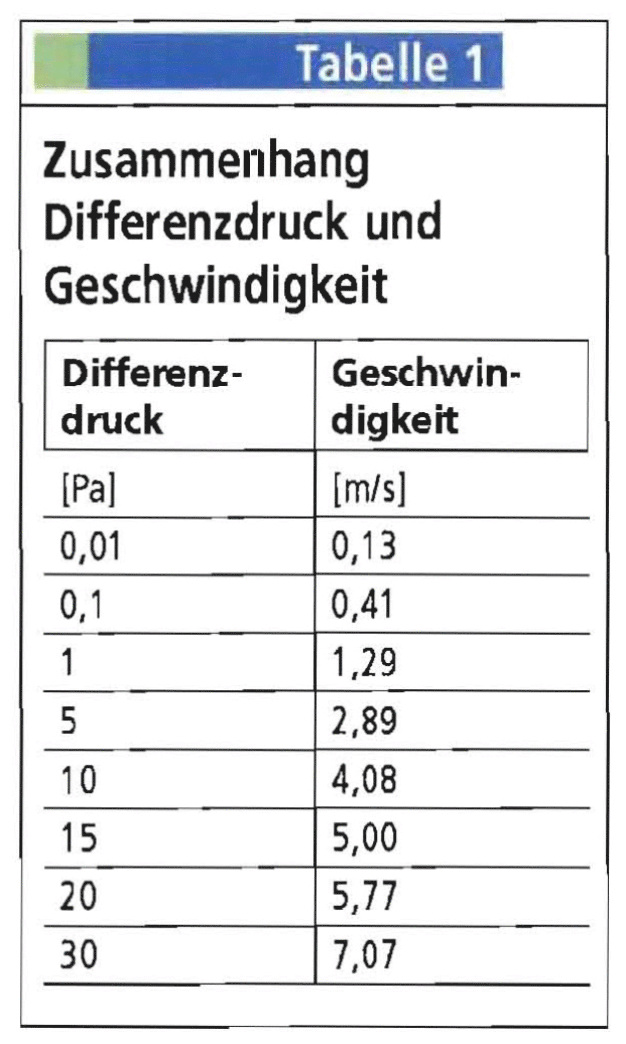
Table 1
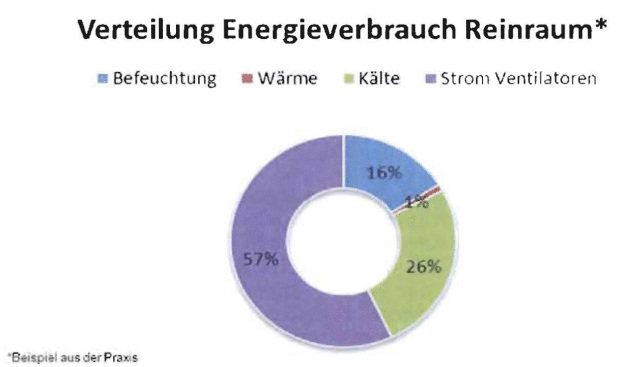
Fig. 2: The electricity consumption of the fans accounts for approximately 57% of the energy costs. (Image source: Schmidt Technology)
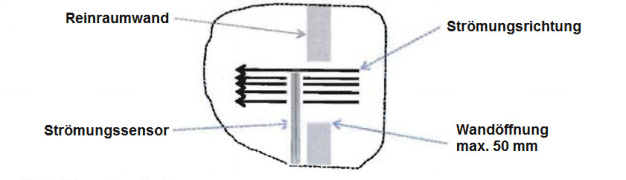
Fig. 3: Measurement principle of air volume adjustment (Image source: Schmidt Technology)
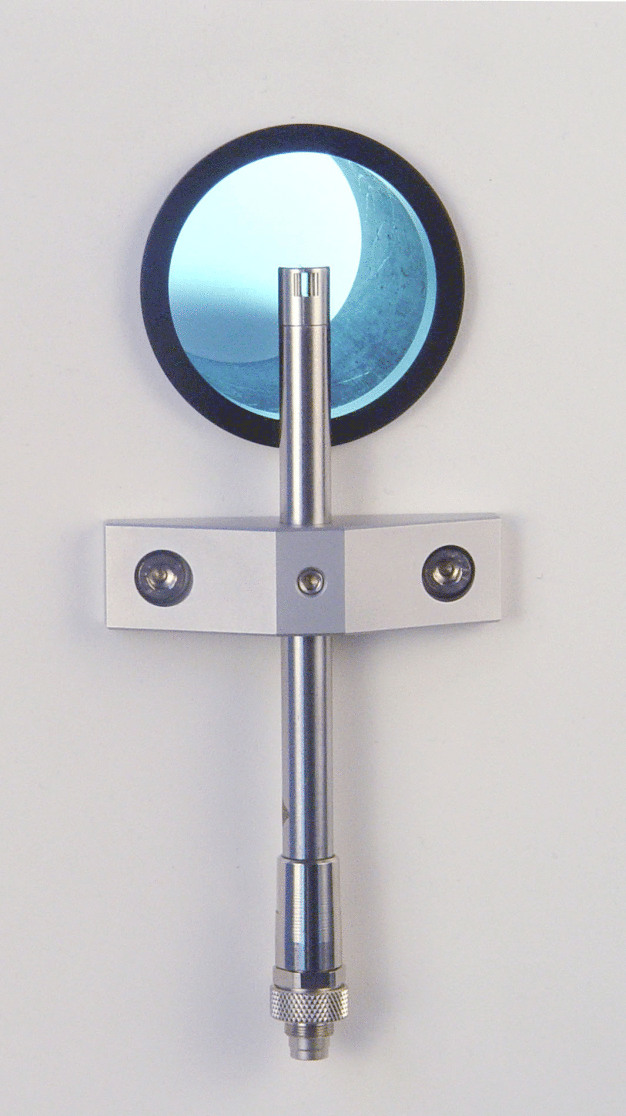
Fig. 4: Sensor with wall mount: Approximately 50 mm in diameter is sufficient to measure the so-called overflow very accurately. (Image source: Schmidt Technology)
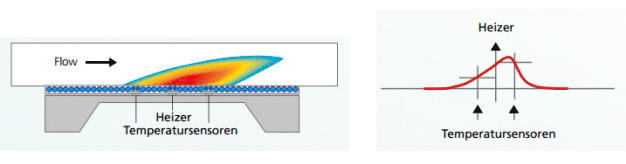
Fig. 5: A bidirectional flow sensor allows for reliable identification of the flow direction. (Image source: Schmidt Technology)
Product, process, and personnel safety in cleanrooms and cleanroom-like environments is usually ensured by maintaining defined, cascade-overpressure rooms. This creates an airflow from areas with higher cleanliness to areas with lower cleanliness (except for negative pressure rooms with opposing requirements). When the necessary pressure measurement is supplemented by measuring the airflow and flow direction, operational safety can be increased and often energy costs can also be saved.
Introduction
To ensure the protection of certain products from contamination caused by humans or environmental conditions, or conversely, to protect humans and the environment from biological hazards, various processes take place in cleanrooms. These are typically found in the medical and pharmaceutical industries, semiconductor sectors, or the food industry. The number of processes to be performed in cleanrooms is also increasing in other industries. The classification of such cleanrooms and how to ultimately separate pure areas from less pure areas is described in the standard EN ISO 14644. It recommends creating so-called impermeable areas, which, however, is very difficult to implement in practice. After all, people and materials must be able to enter and exit. Another possibility is to protect clean areas from contamination from less clean areas through displacement airflow. For this, a pressure differential concept with controlled overpressure is usually applied. The pressure sensors are connected to a monitoring system validated according to GaiVlP, and the measured pressures are continuously documented.
The pressure overpressures required by the standard are in the range of 5 to 20 Pascals, which ultimately corresponds to the pressures that can be reliably measured with differential pressure sensors available on the market. The reason for this is the resolution capability of the pressure sensors on the market. For safety reasons, medium to higher room air pressures are usually used in practice. For example, in pharmaceutical cleanrooms, these are often between 15 and 30 Pascals. A reference pressure is determined, on which the partial pressures of the cleanliness zones gradually increase. The entire control of the supply air flows for the entire ventilation system is based on this reference pressure. If fluctuations occur in the pressure sensor for the reference pressure, this affects the entire ventilation system of the cleanroom. In certain situations, however, pressure measurement does not always provide enough data to objectively demonstrate the contamination risk for the product environment. For example, when sluice doors are opened, the pressure drops in the adjacent cleanliness zone to such an extent that it can be measured. Although air flows from the clean area into the less clean area, this cannot be measured with standard techniques. The consequence is that product safety cannot be conclusively proven in such situations.
0.2 m/s airflow velocity suffices
The pressure differences between cleanliness zones, as already described, of less than 5 Pa are not necessary to maintain air cleanliness in the individual zones. EN ISO 14644-4 defines a minimum airflow velocity of 0.2 m/s to differentiate between cleanliness zones, which corresponds to a differential pressure of less than 0.1 Pa. Currently, airflow sensors are available on the market that can measure accurately and reliably at air velocities (V) of 0.05 m/s. This is well below a differential pressure of 0.01 Pa. From this, it can be inferred that with additional airflow measurement technology capable of this precision, airflow velocities of 0.2 m/s from one cleanliness zone to the next can be reliably measured, ensuring that overflows are detectable. That is, statements can be made about the protective function or a possible airborne contamination, even with low airflow rates that cannot be detected with conventional pressure measurement.
Easy to install
For installing such airflow sensors, small wall openings of about 50 mm diameter are sufficient to measure the so-called overflow, i.e., the air escaping from the cleanroom due to the prevailing overpressure very precisely. To evaluate the effects of room pressure on overflow velocity, Torricelli’s law can be applied. With room air at 20°C and standard atmospheric pressure of 1013.5 hPa, the following relationships are observed (Tab. 1). Consequently, an airflow sensor placed in an overflow opening in the wall of a cleanroom can reliably detect even very small overflows. However, the key factor is the flow direction of the cleanroom air. If it flows from the clean to the less clean area, the function of the cleanroom is maintained and product safety is ensured. With such reliable measurements, many produced batches can be released despite a warning from the pressure sensor. To ensure this safety, i.e., to detect so-called backflows, modern airflow sensors can measure flow directions bidirectionally. Their basis is a thermopile (thermoelectric) sensor that detects cooling caused by airflow through a heated semiconductor element. This is also called thermal anemometry, described in more detail at http://sensorik.schmidttechnology-aktuell.de/ facts/flow-measurement-by-forced-convection-2/. By wiring two such semiconductor elements in parallel and comparing which one is warmer, the flow direction can be reliably identified. Bidirectional airflow sensors thus provide objective measurement data even in the event of a pressure drop, allowing for quantitative assessment of product risks due to airborne contamination. When such a sensor is connected to a monitoring system, complete and reliable measurement data are available. Bidirectional airflow sensors that meet current technological standards can be easily integrated into existing monitoring systems, for example via a 4-20 mA interface. The significance of monitoring data is significantly enhanced by including flow direction measurements. Calibration, which also meets the increased requirements of the pharmaceutical industry, is readily available today.
Energy savings as an additional
High air exchange rates not only entail very high costs for conditioning the supply air but also generate significant costs for operating the fans of the ventilation system.
Practical experience shows that about 57% of energy costs are due to the power consumption of the fans. From this, it follows that adjusting the airflow to actual needs offers great potential for energy savings. Reducing the supplied airflow by 50% decreases the system’s pressure overpressure to 25% (75% less pressure overpressure than at 100% airflow), which corresponds to a sharply reduced electrical power consumption of 12.5%. This means that the required electrical energy decreases exponentially to only 1/8. Although this physical relationship can only be partially exploited in cleanroom applications, it still results in significant energy savings. For example, this involves bringing the room overpressure as close as possible to the minimum required by standards and maintaining it with minimal supply air, i.e., fan power of the ventilation system, through fine regulation. Nighttime or weekend periods are especially suitable for this. However, the operational safety of the cleanroom, i.e., maintaining a stable situation and the necessary laminar flows, must be guaranteed. The procedure must comply with standards and include clear measurements and documentation of these values. Relying solely on differential pressure sensors, as per current technology, makes this difficult. Installing airflow sensors provides sufficient reserves for this purpose.
Conclusion
Documenting airflow via bidirectional airflow sensors adds an extra layer of safety in cleanrooms. These easy-to-install sensors, which can be integrated into existing monitoring systems, can be quickly retrofitted into existing cleanrooms or similar environments. As the analysis of operational costs shows, reducing air exchange rates to a safe minimum that still complies with standards often offers enormous savings potential.
SCHMIDT Technology GmbH
78112 St. Georgen
Germany