



- Translated with AI
Efficient for the environment
1. The Exhibit: A Redefinition of the Feasible
Undoubtedly, the K-Messe 2019 takes place against the backdrop of discussions on environmental protection and the proper use of plastics. The industry is obliged to present solutions and demonstrate how future-oriented, energy-efficient, and sustainable raw materials can be plastics. On this occasion, the stand partners Beck Automation, GLAROFORM, and bfa solutions showcase a production cell that redefines the limits of injection molding in many ways and decisively supports the pursuit of a circular economy.
Produced using a 4-fold ICM configuration (Injection Compression Moulding) by GLAROFORM and Krauss Maffei High Performance (formerly Netstal), a 200 ml drinking cup impresses with groundbreaking material efficiency. The previously unmatched thin wall thickness pushes physical boundaries and leads, alongside significant material savings, to an acceleration of the traditionally competitive production cycle time. The reduced clamping force and injection pressure required by the process decrease the forces involved, which, in the spirit of sustainability, increases the longevity of the production equipment and minimizes energy consumption. GLAROFORM demonstrates its innovation capability with this tool and vividly embodies the philosophy of highest precision and uniquely stable construction.
Beck Automation presents a compact high-performance IML automation with a bandoleer label. The system is characterized by dynamic operation, process stability, and very high availability with short cycle times. The precise interplay of the individual system components—automation, injection molding machine, tooling, label quality, and optical inspection—increases productivity and value creation. The use of lightweight materials on the main arm and high-performance linear motors enable fast, dynamic movements. The main axis is driven by two motors, improving dynamics and extending the lifespan of belts and motors. Angled label magazines, where the label with the print image is oriented downward, minimize label slip. Therefore, an optimized, precise positioning of the labels is guaranteed. The labels are also separated and transferred to the cores without disturbance even at very high cycle speeds. The removal, transfer, as well as stacking and placing of products impress with outstanding autonomy. Newly integrated into the control/HMI is the modified logbook with user management, parameter monitoring, simplified error analysis, and maintenance intervals. Additionally, the IML system is equipped with a 10-camera vision system from Intravis. This inspects the cups from all 360° externally and simultaneously performs an internal inspection of the cup interior.
Furthermore, the label supplier Verstraete uses labels with a digital watermark. This new technology enables efficient sorting in recycling plants that are properly prepared. Additionally, the digital watermarks, which are not visible to the naked eye, can also be used as codes. Today, this is already known from simple barcodes or QR codes.
The MES PiSolutions from bfa solutions ltd acts as the interface between the production level and the ERP level in this demanding and forward-looking application. Its task is to collect, evaluate, and make available data from the injection molding machine, handling, and quality assurance systems. The various functions of the MES help make downtime, rejects, production progress, and much more visible in real-time. This allows for quick responses to problems or preparation of tool changes with preheated tools (Just-In-Time). The utilization and efficiency of production machines and lines can thus be significantly increased. This enables saving even more energy, time, and consequently money, further proving the concept of efficient and sustainable raw materials—plastics.
In view of changing consumer demands, the industry today has the opportunity to create a win-win situation for the environment and its stakeholder groups. The shown production system, with its clear reduction in wear and consumption regarding material, energy, labor, and the system itself, while simultaneously increasing output, is entirely aligned with a more efficient future. We will present the state of the art of tomorrow at K-Messe 2019 in Hall 12 at Stand A51-03 (Swiss Pavilion).
2. The Partners: Three Success Stories
GLAROFORM AG
GLAROFORM is globally established as a leading provider of high-performance injection molds for thin-walled applications. With its unique and consistent specialization in items such as food and medical packaging, flower pots, and cups, the company sets standards in production efficiency and continuity. Shorter cycle times, higher availability, longer lifespan, and easier handling are core themes in product development.
In the interest of a promising partnership, customer needs are of paramount importance. The individual service is as personal, reliable, and competent as it is quick and flexible. The service spectrum of GLAROFORM includes comprehensive sales consulting, lifelong product support, and assistance in product development—from advice on item design to promote stable production processes to long-term development projects for new products or assemblies.
Utilizing an extensive network and actively collaborating with leading companies in their field, as well as closely monitoring technological progress, GLAROFORM actively participates in the further development of injection molding technology, always aligning with current market needs. The latest example is the launch of high-performance injection tools (ICM technology) at K-Messe 2019. Regarding the ongoing discussion on the proper use of plastics, ICM has the potential to be a real and sustainable solution for reducing plastic consumption. The process primarily features reduced material and energy consumption and offers many other economic advantages to the industry. GLAROFORM aims to establish itself as a specialist in the still relatively untapped niche of the ICM process in the coming years.
Founded in 1986, this family-owned company develops and manufactures all tools in Switzerland. The consistently pursued strategy of solid and qualitative growth has led to structures capable of serving the market continuously with the latest technology at the highest level. The workforce has developed into a constellation that combines extensive long-term experience with future-oriented dynamism. The production infrastructure is among the most modern and well-maintained in the industry. More than ever, GLAROFORM today enjoys the trust of renowned companies from the food, medical, and agricultural industries. Since 2015, it has been listed as a global supplier for a leading brand owner group.
Beck Automation AG
Beck Automation AG from Oberengstringen (Switzerland) is one of the leading providers worldwide of automation solutions for IML labels (In-Mould Labeling) in injection molding technology. As a trendsetter, pioneer, and "Hidden Champion," Beck Automation focuses consistently on decorating and labeling caps, cups, bowls, and buckets for various industries in the food and non-food sectors.
Process-safe and economical IML robot systems are developed according to demanding customer requirements and are used worldwide. The consistent focus on the IML application area guarantees users the best state of the art regarding quality, economy, effectiveness, and durability.
The level of process design and label quality significantly influence process safety, reproducibility, part quality, and economic efficiency. A high-quality automation system that convinces equally in terms of availability, process safety, stability, and durability is crucial for return on investment (ROI) and the level of value creation.
Building and maintaining long-term relationships with market partners through a forward-looking, predictable corporate policy guides the actions of the second and third family generations. This strategy secures jobs for committed and experienced employees. Preserving traditional structures, a proven network of partners, and farsighted adaptation to changes form the foundation for continuous development and inspiration of the company, in the interest of partners, customers, and employees.
Beck Automation has existed since 1934 and celebrated its 80th anniversary in 2014. Over 700 reference systems underline the company's global importance. In 2017, the company Robobeck was founded in Braga, Portugal. There, under Swiss management, the new standardized BASIC-IML system is exclusively assembled.
From its Swiss headquarters in Oberengstringen near Zurich, around 50 systems are delivered annually. In 2018, Beck Automation achieved a turnover of 16 million Swiss Francs (CHF) with 60 employees.
bfa solutions ltd
bfa solutions ltd from Fällanden (Switzerland) is a globally established and reliable provider of solutions in automation engineering and MES solutions in the injection molding and assembly sectors. Since its founding in 1981, bfa has built a broad base of experience and expertise in industrial automation and MES (Manufacturing Execution System).
Customers benefit from concentrated, proven know-how. The topics range from project management, analysis, and design to maintenance and system support. Topics such as Smart Factory, IoT, or digitalization have always been core competencies of bfa solutions ltd.
Reliability, quality, and responsibility ensure that the areas of traditional automation and software development are closely intertwined, enabling comprehensive solutions.
With solid expertise in automation engineering, bfa speaks the same language as machine builders and differs from traditional MES providers. As an experienced partner, bfa supports its customers in making machines smarter, more efficient, and future-proof. Customer-specific programming of programmable logic controllers (PLCs) from various manufacturers is part of the portfolio, as is maintenance and support of existing controllers.
The competent MES team at bfa implements solutions for all areas of automation and digitalization for its customers. For successful implementation, the self-developed MES PiSolutions is used. MES PiSolutions is a modular and scalable production management and data collection system for all areas of injection molding. Unlike many other MES solutions, it not only supports connections to injection molding machines but also to assembly systems, quality assurance systems, lifecycle management systems, ERPs, and other systems. This way, not only the injection process is mapped but the entire process chain, bringing the customer's product into focus.
bfa solutions ltd has been supporting and accompanying its customers for over 38 years. bfa is happy to guide you on your way to Industry 4.0 and into the digital future.
3. The Technology: Modern Processes
Injection Compression Moulding (ICM)
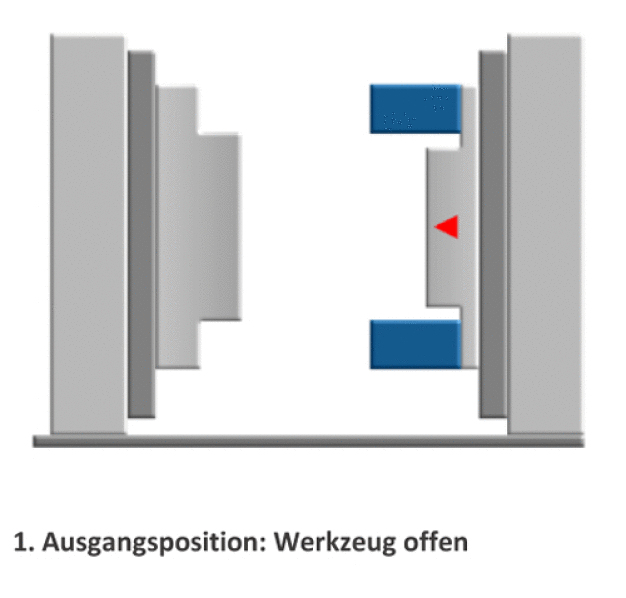
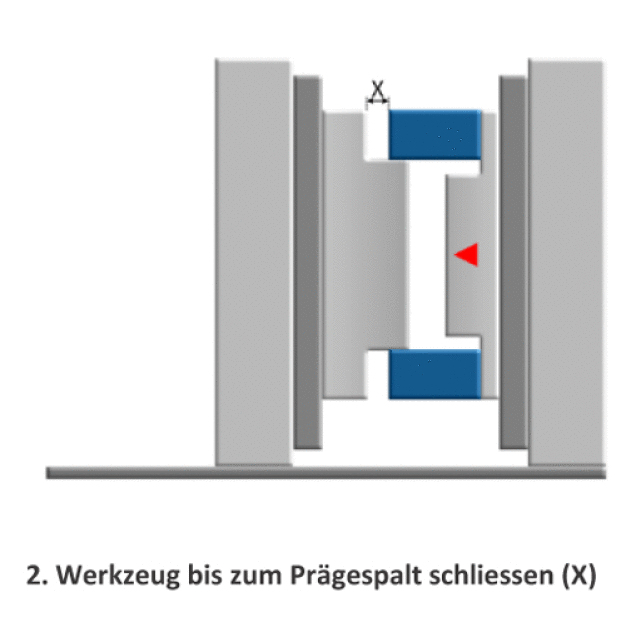
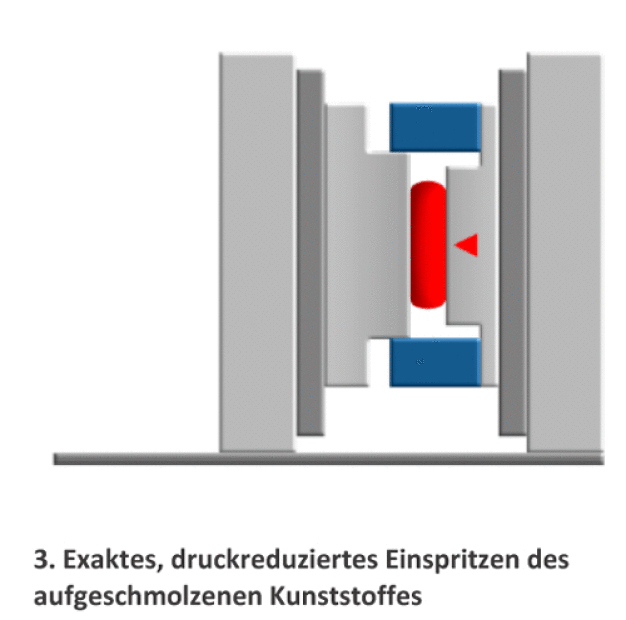
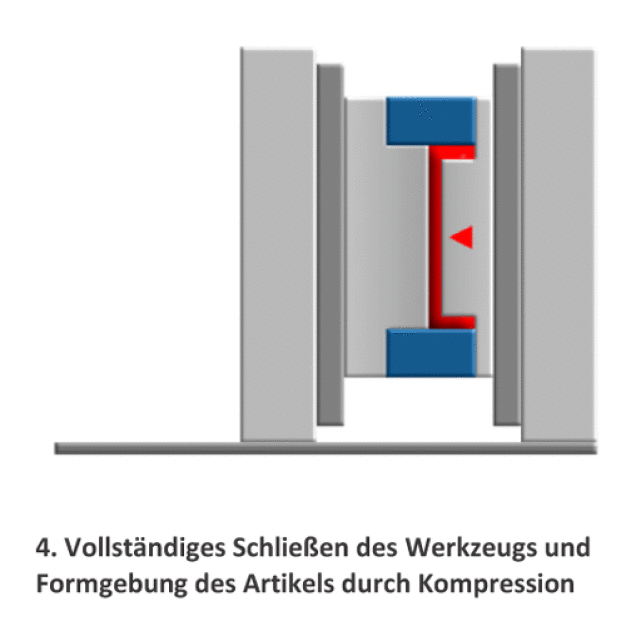
The injection compression moulding process (ICM) is a combination of injection molding and embossing. Specifically, it involves a dynamic injection process into a tool that is not fully closed, unlike conventional injection molding. As a result, the clamping force is then used to distribute the injected material throughout the mold cavity. The following illustration explains the principle of ICM.
Today, ICM is particularly widespread in the production of technical parts such as DVDs or lenses. In this context, the ICM process offers indispensable advantages regarding dimensional accuracy and the embossing of surface structures. Conversely, the market for thin-walled packaging systems is in development. Pioneers are emerging on both the supplier and user sides, overcoming the challenges of this process and creating ecological and economic benefits for the environment, society, and themselves. The following points summarize the main advantages of injection compression moulding for thin-walled packaging:
- Material savings of up to 25%
Significantly improved filling behavior with high flow path-to-wall thickness ratio enables substantial wall thickness reductions.
- Expanded possibilities regarding raw materials
Through embossing, plastics that are unsuitable for thin-walled injection molding due to their low melt flow rate ("strength") can be processed.
- Increased output by up to 5%
Due to thinner walls, cooling and thus the production cycle time are reduced.
- Reduced clamping force requirement by up to 40%
The use of clamping force for material distribution allows a significant reduction in injection pressure, which in turn reduces the need for clamping force acting as counterforce to the injection pressure.
- Reduction of energy consumption by up to 20%
Due to lower clamping and injection pressures
- Lower maintenance effort
Reduced forces acting on the system decrease the load on the production system, resulting in lower maintenance requirements.
- Reduction of production area by up to 15%
Smaller injection molding machines with lower clamping forces can be used, leading to savings in production space.
In-Mould Labeling (IML)
Since the IML process is highly dynamic, its economic efficiency depends on the level of all system components.
Initially, labels are sucked from the label magazine. In the second step, the labels are placed onto the cores and held by vacuum. To transfer the labels, the automation system's cores move into the cavities. During this phase, labels are blown off against the vacuum, electrostatically charged, and thus positioned and held "conformally" in the cavity.
The level of process design and label quality significantly influence process safety, reproducibility, part quality, and economic efficiency. A high-quality automation system that convinces equally in terms of availability, process safety, stability, and durability is crucial for return on investment (ROI) and the level of value creation.
Digital Watermarks
The pioneering HolyGrail project, led by Procter & Gamble and supported by the Ellen MacArthur Foundation, officially concluded on May 23. It was preceded by three years of innovation aimed at improving post-consumer recycling through chemical tracers and digital watermarks, bringing us closer to a circular economy.
These digital watermarks open up new possibilities that are currently not feasible with existing sorting technologies, including:
- Distinguishing between food and non-food packaging
- Correct identification of bottles with full shrink labeling
- ODR packaging (opaque and difficult to recycle, including black packaging)
- Clearly single- and multi-layer flexible packaging
- Correct identification of solid multi-layer packaging materials (thermoformed, bottles, etc.)
- Safe introduction of new materials that do not hinder existing recycling streams and correct identification of recyclable versus compostable packaging
- Possibility of a closed recycling loop.
During the project, significant progress was made in digital watermark technology, with "invisible codes" integrated into printing materials (labels, sleeves, in-mould labels) as well as directly into molds (PET bottles, HDPE bottles, thermoformed trays, injection-molded crates, etc.).
This makes packaging intelligent—a feature that can then be used throughout the entire value chain: QA and inventory management at bottlers; counterfeit controls in stores; quick verification at retailers (2D barcodes and QR codes become redundant); consumer engagement; and ultimately, to close the loop, improved sorting and recovery.
The aspect of consumer engagement is particularly interesting, as the invisible codes can be easily read by mobile phones, offering new features—transparency of ingredients, coupons/loyalty rewards, product usage/dosage information, and end-of-life disposal instructions—all with a click. The next step involves further developing the existing test line into a (semi-)industrial line before the technology can later be implemented on a larger scale.
In summary, HolyGrail has demonstrated that digital watermark technology can revolutionize industry approaches to sorting, increasing efficiency and enhancing the quality and quantity of recycled material.
Beck Automation AG
8102 Oberengstringen
Switzerland



