

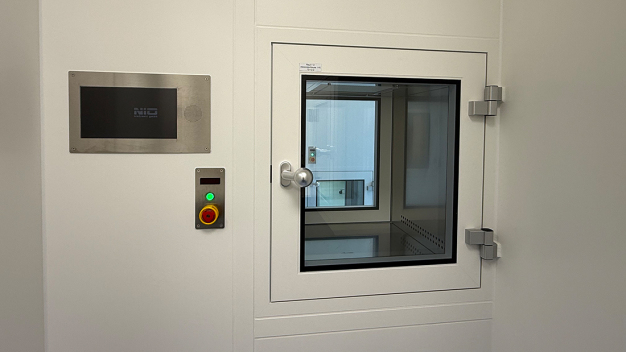
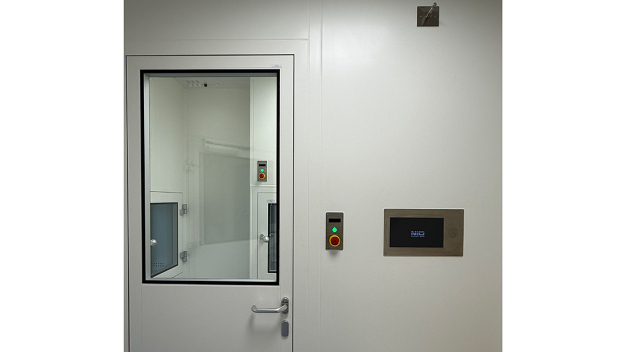
- Lock, air shower
- Translated with AI
Christina Zierler
Effective cleanroom lock control: Protection against invisible dangers
Latest developments in cleanroom technology prevent cross-contamination through intelligent control and clearly structured processes

Christina Zierler
In high-tech manufacturing – such as in the pharmaceutical, biotech, or semiconductor industries – a flawless environment is essential. Cleanrooms ensure that products are manufactured under controlled conditions. But what many underestimate: the greatest risk factor for contamination often lies at the interface between the clean and uncontrolled areas – the airlocks.
Safe Entry and Exit – More Than Just a Door
The airlock area functions as a barrier between the "outside world" and the controlled cleanroom. The goal is to ensure that neither particles nor germs or chemical residues enter the sensitive area. The airlock process begins even before entering the cleanroom itself. Employees must carefully undress and put on appropriate protective clothing. An inspection for possible contamination is also indispensable before persons or materials are allowed to enter the sensitive area. Every step is designed to eliminate potential sources of disturbance early on.
Exiting: No Less Important – Often Underestimated
The process of exiting is often underestimated but equally critical for safety. Here, not only is the cleanroom clothing checked and removed, but it is also ensured that no contamination is carried into other building areas – for example, through contaminated materials or tools. Disinfection is especially important: materials must sometimes be treated multiple times or handled in separate airlocks before leaving the cleanroom.
Identifying Hidden Sources of Contamination
The potential sources of contamination are diverse: externally, defective filters, poorly maintained air conditioning systems, or inadequately cleaned ambient air can pose a threat. Internally, human activities – careless behavior, improper handling of protective clothing, or introducing unsuitable materials – are primarily responsible for contamination. Tools or packaging can also generate particles. Therefore, precise analysis and prevention are indispensable.
Prevention Through Processes and Technology
To effectively address these challenges, modern facilities rely on a combination of processes, training, and technology. This includes regular training of personnel – not just once during implementation, but continuously in daily operations. Strict access protocols and integration of airlock control into existing systems, such as monitoring systems or building management systems.
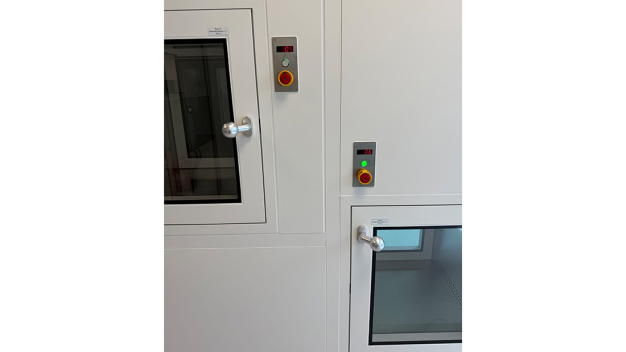
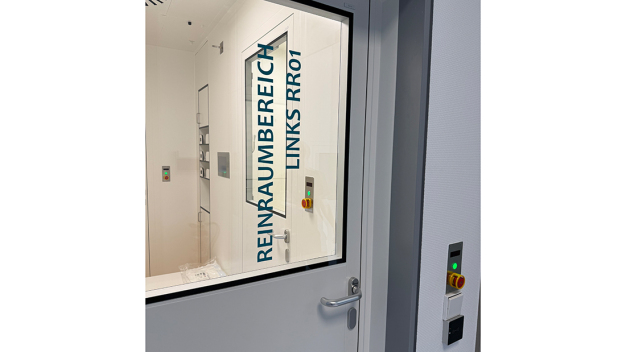
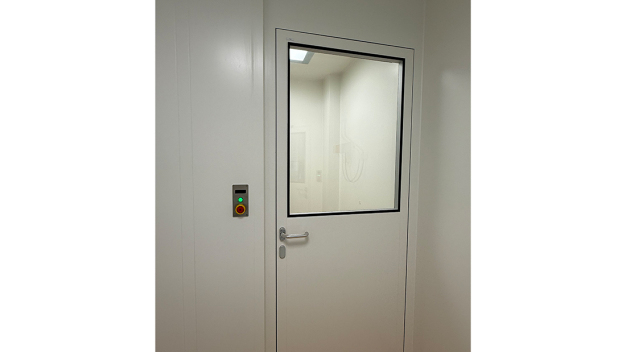
Technical solutions are also playing an increasingly important role: control systems for airlocks regulate not only door locking but also, for example, lighting control and the movement direction of personnel flows.
Direction Prioritization: Air and People in Controlled Flow
A central element of modern airlock control is the so-called direction prioritization. It ensures that movements – both of people and air – occur only in predetermined directions. This prevents contaminated air from flowing back into a clean area. Technically, this is managed through differentiated air pressure zones, locking matrices, and intelligent door controls. For example, it is ensured that never two airlock doors are open simultaneously.
Innovative Control Systems with Real Added Value
Modern systems now allow for profound adjustments without hardware modifications. Changes to access logic or operating modes can be carried out via software – without replacing control components or SD cards. Hygienic aspects also play an important role in development: panels are available in "Hygienic Design" – completely screw-free, easy to clean, and resistant to aggressive cleaning agents.
More Than Just Access – An Integrated System
Besides the airlock control itself, modern systems offer numerous additional features: such as integration with access control systems, monitoring systems, or production management systems. Lighting, discretion buttons, and video panels also ensure intuitive and secure operation. Custom solutions – for example, for particularly sensitive production lines or different spatial conditions – can be seamlessly integrated.
Conclusion: The Interface as a Key Factor in Cleanroom Strategy
In today's cleanroom technology, the airlock is not just a transition – it is a highly secure control system. Through the combination of structured procedures, intelligent controls, and strict hygiene, it plays a crucial role in ensuring the purity and safety of products and processes. Companies that strategically develop this area not only ensure regulatory compliance but also create a genuine competitive advantage in a highly sensitive industry.
Niotronic Hard- & Software GmbH
Am Eichengrund 1-3
8045 Graz
Austria
Phone: +43 316 698200
email: sales@niotronic.com
Internet: http://www.niotronic.com